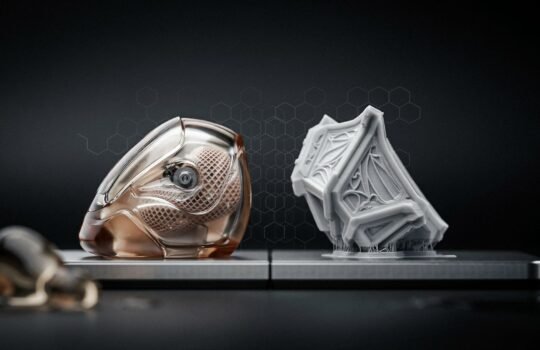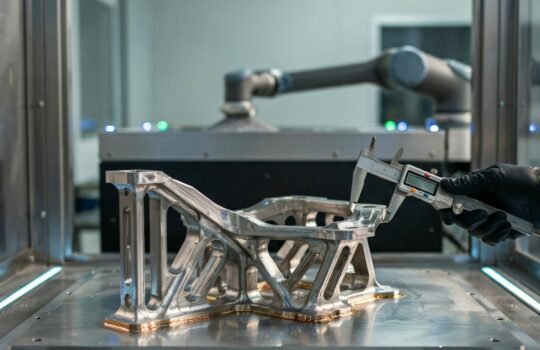
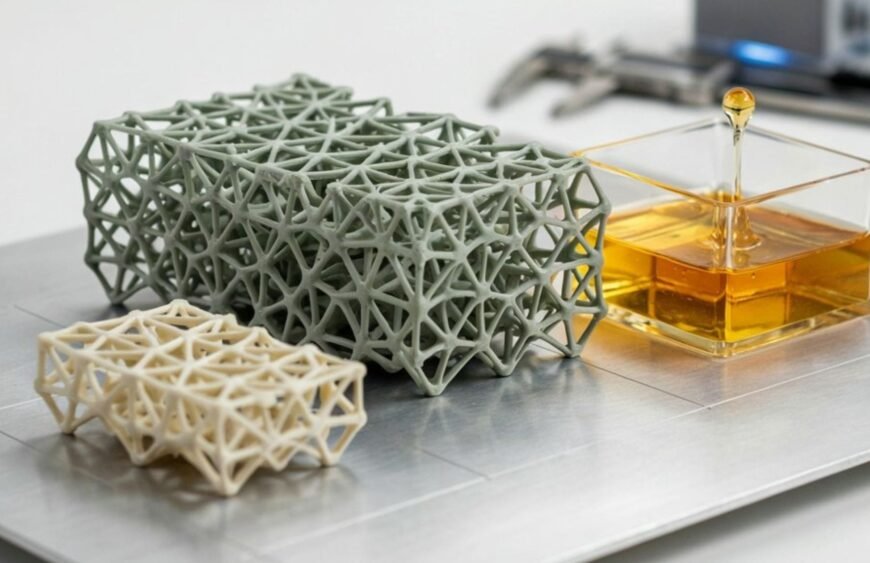
Standard SLA resin parts have real limits when a project needs high heat resistance, chemical resistance, or biocompatibility. Ceramic Stereolithography (CSL), also known as Ceramic Additive Manufacturing (C-AM), is designed to address exactly these processing and formability challenges. It fabricates structures by slicing 3D models and stacking ceramic materials layer by layer – without the need for moulds or extensive machining.
Here’s what Tesseract Ceramic Stereolithography service actually offers, based on their published specifications.
1. What Ceramic Stereolithography Is
Ceramic Stereolithography builds parts by slicing a 3D model into layers and stacking ceramic material layer by layer, eliminating the need for moulds or extensive machining. Tesseract describes this as unlocking formability challenges that traditional ceramics processing struggles with.
2. Tesseract Ceramic Stereolithography Capabilities
Tesseract CSL service is built around six core capabilities, as stated on their service page:
- High Precision – enables exceptional accuracy, down to micron-level precision, suited to complex geometries and fine details that are challenging with traditional manufacturing methods.
- Superior Finish Quality – smooth surfaces and sharp details through proprietary post-processing techniques, enhancing both aesthetics and performance.
- Wide Range of Materials – an extensive selection of high-performance ceramic materials engineered for different industrial applications.
- Fast Production – state-of-the-art 3D printing systems enabling rapid production without compromising on quality, reducing lead times and accelerating time-to-market.
- Simplified Workflow – a streamlined design-to-production process, with the team managing everything from concept to delivery.
- Biocompatibility Certifications – USP Class VI and ISO 10993 compliant, supporting ETO and Gamma sterilisation.
3. Materials Tesseract Offers for Ceramic Stereolithography
Tesseract published material offerings for CSL, with properties as listed on their site:
| Material | Key Property (as stated by Tesseract) |
| Alumina | Good mechanical behaviour at high temperatures, good thermal conductivity, high electrical resistivity |
| Cordierite | Low CTE (Coefficient of Thermal Expansion), low thermal conductivity, wear resistant, good for vacuum applications |
| Silicore | High mechanical resistance, porous ceramic, good leachability, very stable at high temperature |
| Alumina Toughened Zirconia | Great hardness and tenacity, biocompatibility, resistance to wear and thermal shock |
| Aluminum Nitride | High thermal conductivity, electrical insulation, good mechanical strength |
| HAP | Biocompatibility, excellent bioactivity, good osseointegration |
| Zirconia 8Y | Ionic conductivity, oxygen-ion conductivity, heat insulating |
| TCP | Biocompatible and bioresorbable |
| Silica (SiO2) | Good leachability |
| Zirconia | Excellent mechanical properties, chemical inertness, high hardness |
| Silicon Nitride | Good resistance to thermal shocks and wear, low wettability against molten metals, good electrical insulation, resistance to corrosion (liquid and gas) |
4. Industries Tesseract Serves with Ceramic Stereolithography
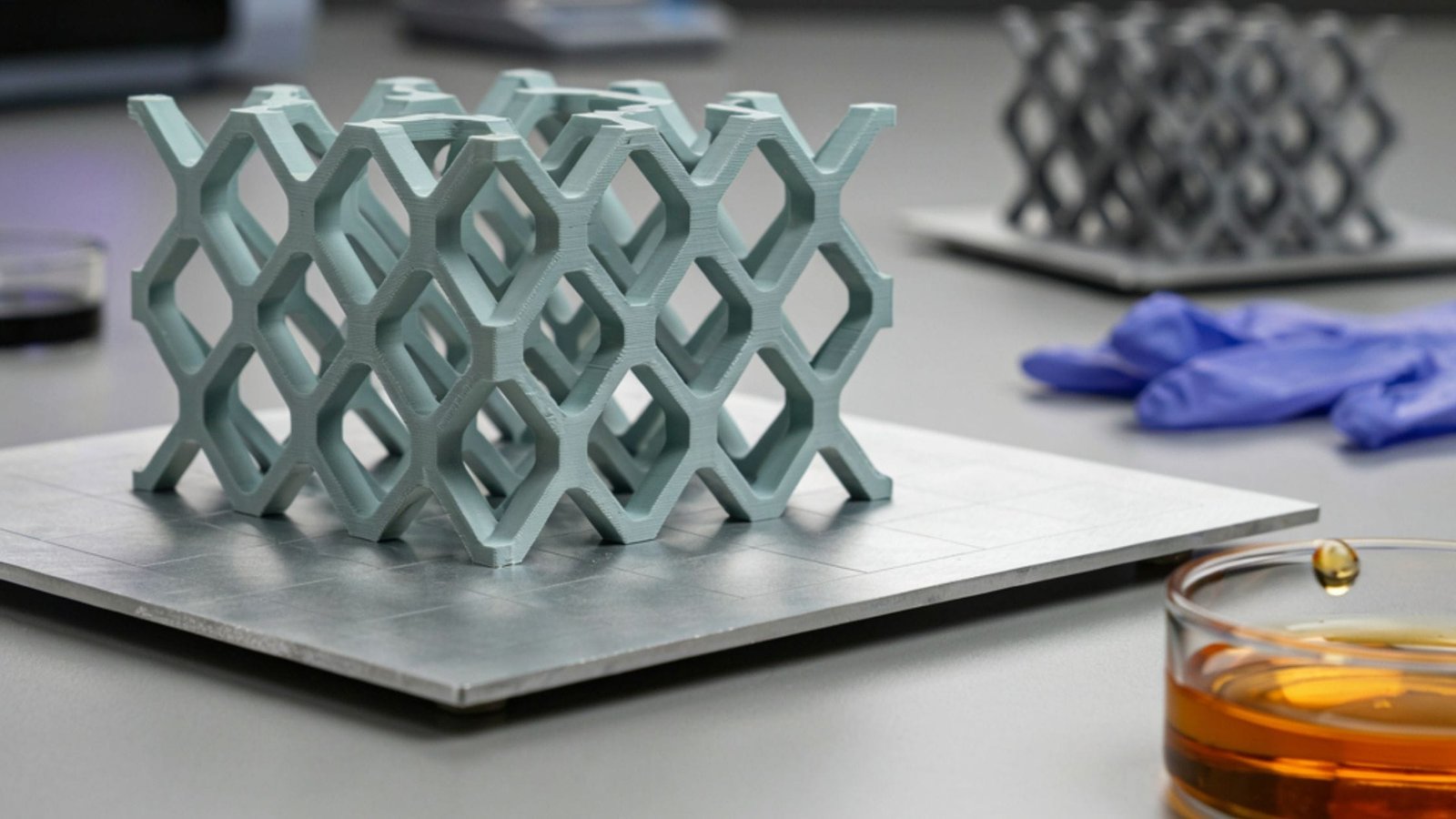
As listed on their CSL service page, Tesseract applies this process across: Aerospace, Automotive, Consumer, Defence, Medical Technology, and Robotics & Automation.
5. Post-Processing Offered Alongside Ceramic Stereolithography
Tesseract pairs CSL with in-house post-processing services, including: Electroplating, Painting, Hydro-dipping, Hydro-chroming, and Buffing/Polishing.
6. Why Tesseract for Ceramic Stereolithography
Per Tesseract’s own positioning: “Tesseract offers unparalleled precision, quality, and efficiency for industries ranging from aerospace and automotive to healthcare and industrial design.” Their CSL services are described as leveraging “the latest in additive manufacturing technology” with a team managing the process “from intricate prototypes to large-scale production.”
7. Getting Started
Tesseract, a 3D Printing Company in Mumbai, operates from its facilities in Mumbai and Boisar. You can upload your design for an instant quote or contact the team directly at +91 81698 12438 or contact@oneTesseract 3D.com to confirm which ceramic material fits your application’s requirements.
Frequently Asked Questions
What is Ceramic Stereolithography (CSL)?
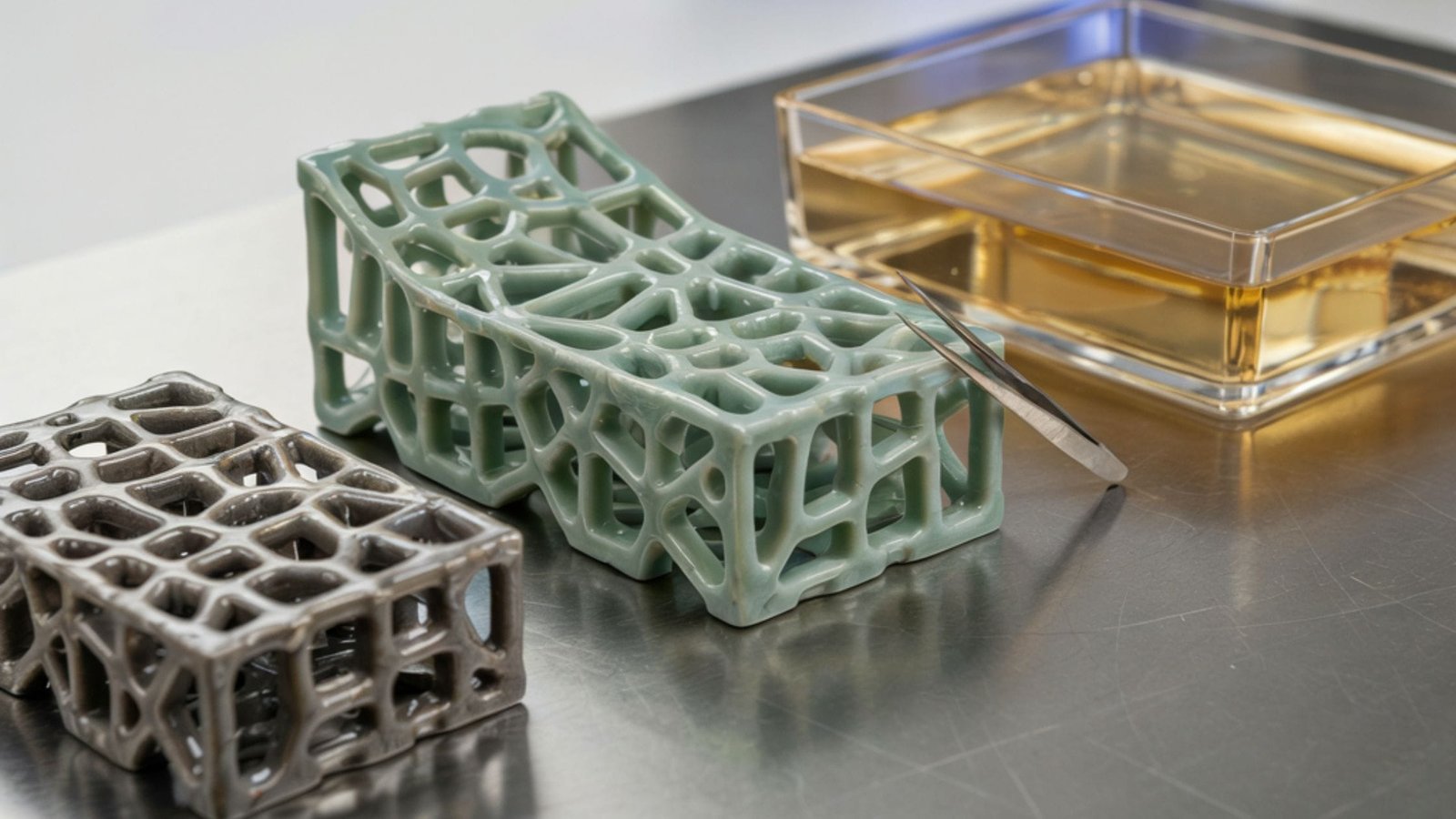
Ceramic Stereolithography, also known as Ceramic Additive Manufacturing (C-AM), is a process that fabricates structures by slicing 3D models and stacking ceramic materials layer by layer, without the need for moulds or extensive machining.
How precise is the Tesseract ceramic stereolithography process?
Tesseract states its CSL technology enables exceptional accuracy down to micron-level precision, making it suited to complex geometries and fine details.
Is ceramic stereolithography biocompatible for medical use?
Yes. Tesseract CSL materials are USP Class VI and ISO 10993 compliant and support ETO and Gamma sterilisation.
What ceramic materials does Tesseract offer?
Tesseract offers Alumina, Cordierite, Silicore, Alumina Toughened Zirconia, Aluminum Nitride, HAP, Zirconia 8Y, TCP, Silica (SiO2), Zirconia, and Silicon Nitride – each suited to different thermal, mechanical, or biocompatibility requirements.
Which industries does Tesseract serve with ceramic stereolithography?
Aerospace, Automotive, Consumer, Defence, Medical Technology, and Robotics & Automation, as listed on Tesseract CSL service page.
Does Tesseract offer post-processing for ceramic 3D printed parts?
Yes, including electroplating, painting, hydro-dipping, hydro-chroming, and buffing/polishing.