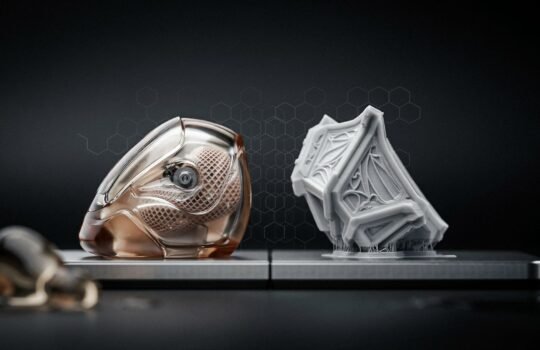
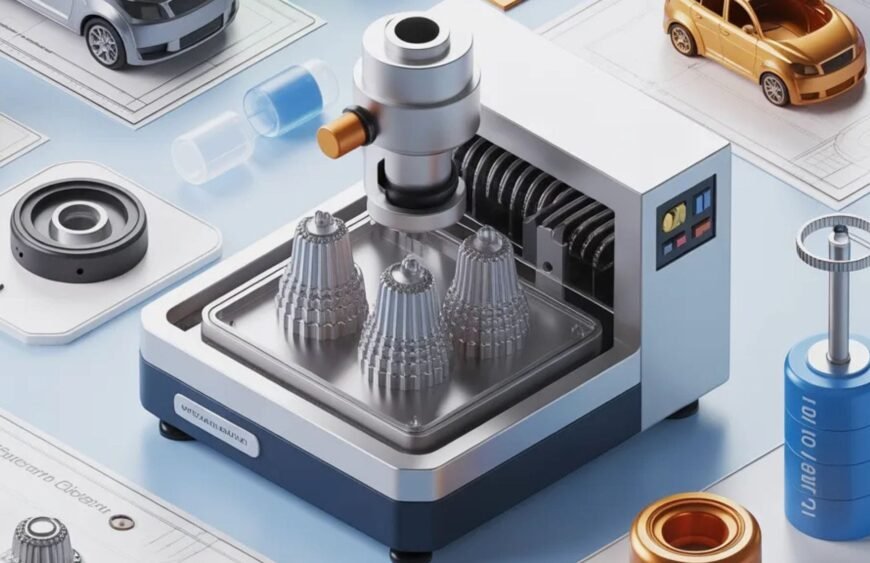
Vacuum casting is a versatile manufacturing technique designed to produce functional parts in limited volumes. The process uses two-component polyurethane and silicone moulds to create high-quality plastic parts with finishes comparable to those achieved through injection moulding.
The master model typically produced via SLA 3D printing is the foundation of the entire process. Its quality directly determines the accuracy and surface finish of every cast part produced from it. Once the silicone mould is created from the master, resin is poured and cured under vacuum conditions to eliminate air bubbles and ensure precision.
Materials Available for Vacuum Casting
Tesseract offers a broad range of materials to suit different functional and aesthetic requirements:
- ABS-like rigid polyurethane resins
- Polycarbonate (PC): for transparent or impact-resistant parts
- Polypropylene (PP): flexible and lightweight
- Rubber: for soft-touch or sealing components
- PMMA (Acrylic): for clear, optical-quality parts
- Glass Filled Material: for added structural rigidity
- Wax for investment casting patterns
Key Benefits of Vacuum Casting for Product Development
Highly Detailed Parts with Injection Moulding-Like Finish
One of the strongest advantages of a vacuum casting service is the surface quality of the output. Because the master model is typically produced via SLA, a high-resolution 3D printing service, every surface detail, texture, and geometry is faithfully replicated in the silicone mould and transferred to each cast part.
For makers working on consumer products, enclosures, or aesthetic prototypes, this means production-grade surface finish without production-grade tooling costs.
Low Volume Production Without High Tooling Costs
Traditional injection moulding requires significant upfront tooling investment, making it impractical for small batches. Vacuum casting is specifically designed for low-volume production, typically ranging from 1 to 50 parts per mould. This makes it the preferred choice for:
- Functional prototypes requiring real-material properties
- Pre-production testing and validation runs
- Limited-edition or custom product runs
- Small batch consumer or industrial parts
Swift Turnaround for Rapid Prototyping
Speed matters in product development. Vacuum casting typically delivers parts within 5–10 days, including mould creation and casting, significantly faster than waiting for injection mould tooling. When combined with 3D product design and SLA master model production, the complete workflow from CAD to functional part can be completed in under two weeks.
How Vacuum Casting Fits Into Your Product Development Workflow
From 3D Product Design to Cast Part
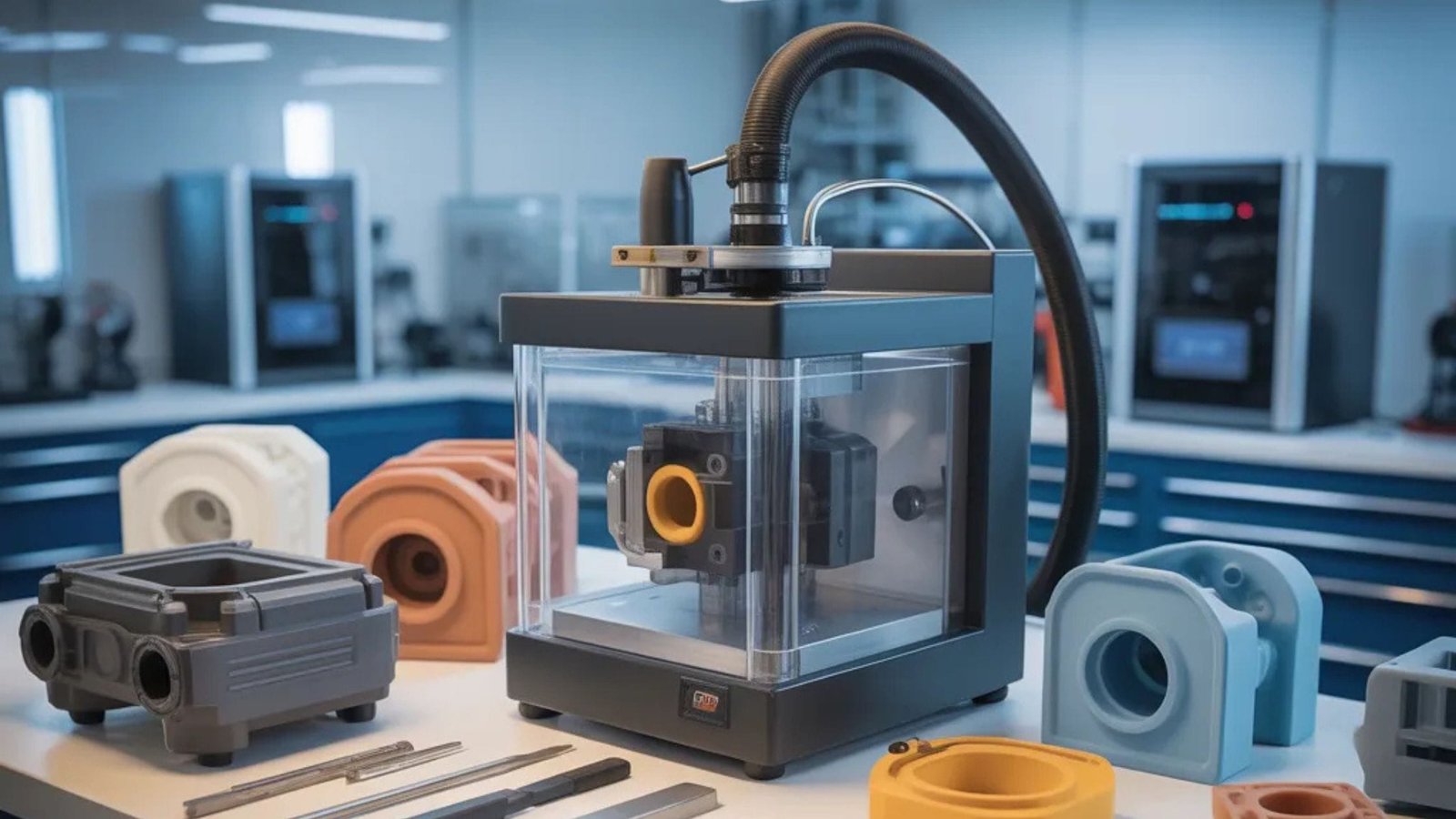
The vacuum casting process works as a natural downstream step from 3D product design. Once a design is validated digitally and a master model is printed, typically using SLA for its surface resolution, the silicone mould is cast around it. From that point, multiple identical polyurethane parts can be produced rapidly from a single mould.
This makes it an ideal bridge technology: use metal 3D printing India services like DMLS for structural metal components, and vacuum casting for the plastic housings, covers, and enclosures that complete the assembly.
Post-Processing Options at Tesseract
Cast parts can be finished further to meet specific requirements. Tesseract offers the following post-processing for vacuum cast parts:
- Painting: custom colour matching and finish
- Anodising: for cast parts with metal inserts
- Electroplating: nickel, copper, or chrome plating
- Hydro-dipping: pattern and texture application
- Sand Blasting: uniform matte surface finish
- Insert Installation: threaded or functional inserts embedded in parts
Industries That Rely on Vacuum Casting
Tesseract’s vacuum casting service supports product development across multiple sectors:
- Automotive: prototype interior and exterior parts, custom housings
- Consumer Products: pre-production units for testing and retail sampling
- Medical Technology: device prototypes and enclosures
- Electronics: custom enclosures, connector housings, control panels
- Aerospace: non-structural prototype components
- Robotics & Automation: grippers, covers, and sensor housings
- Fashion & Jewellery: wax patterns for investment casting
Why Choose Tesseract as Your Vacuum Casting Service Partner
3D Printing Service in Mumbai with Full Manufacturing Stack
Tesseract operates from Mumbai and Boisar, offering a complete product development stack from 3D product design and SLA master model production through to vacuum casting, post-processing, and beyond. This integrated capability means your master model and cast parts are produced under the same quality system, reducing handoff errors and turnaround time.
For teams looking for a reliable 3D printing service in Mumbai that also covers downstream manufacturing processes, Tesseract is a single-partner solution covering prototyping, low-volume production, and surface finishing under one roof.
Key reasons makers and builders choose Tesseract:
- Over a decade of experience in 3D printing and manufacturing
- SLA master model production for high-resolution mould accuracy
- Broad polyurethane resin selection- rigid, flexible, transparent, coloured
- Full post-processing in-house
- Quick quote turnaround with dedicated project support
Conclusion
Vacuum casting is one of the most practical and cost-effective tools in a maker or builder’s product development stack. It delivers injection moulding-quality surface finish, real-material properties, and low-volume flexibility without the tooling investment or lead times that traditional manufacturing demands.
When paired with SLA master model production and a strong 3D product design workflow, it compresses the time between concept and functional part significantly. For teams in India looking to move fast without compromising on part quality, a professional vacuum casting service backed by an integrated 3D printing service in Mumbai, like Tesseract, removes every major barrier between your idea and a finished, testable product.
Frequently Asked Questions
What is vacuum casting, and how does it work?
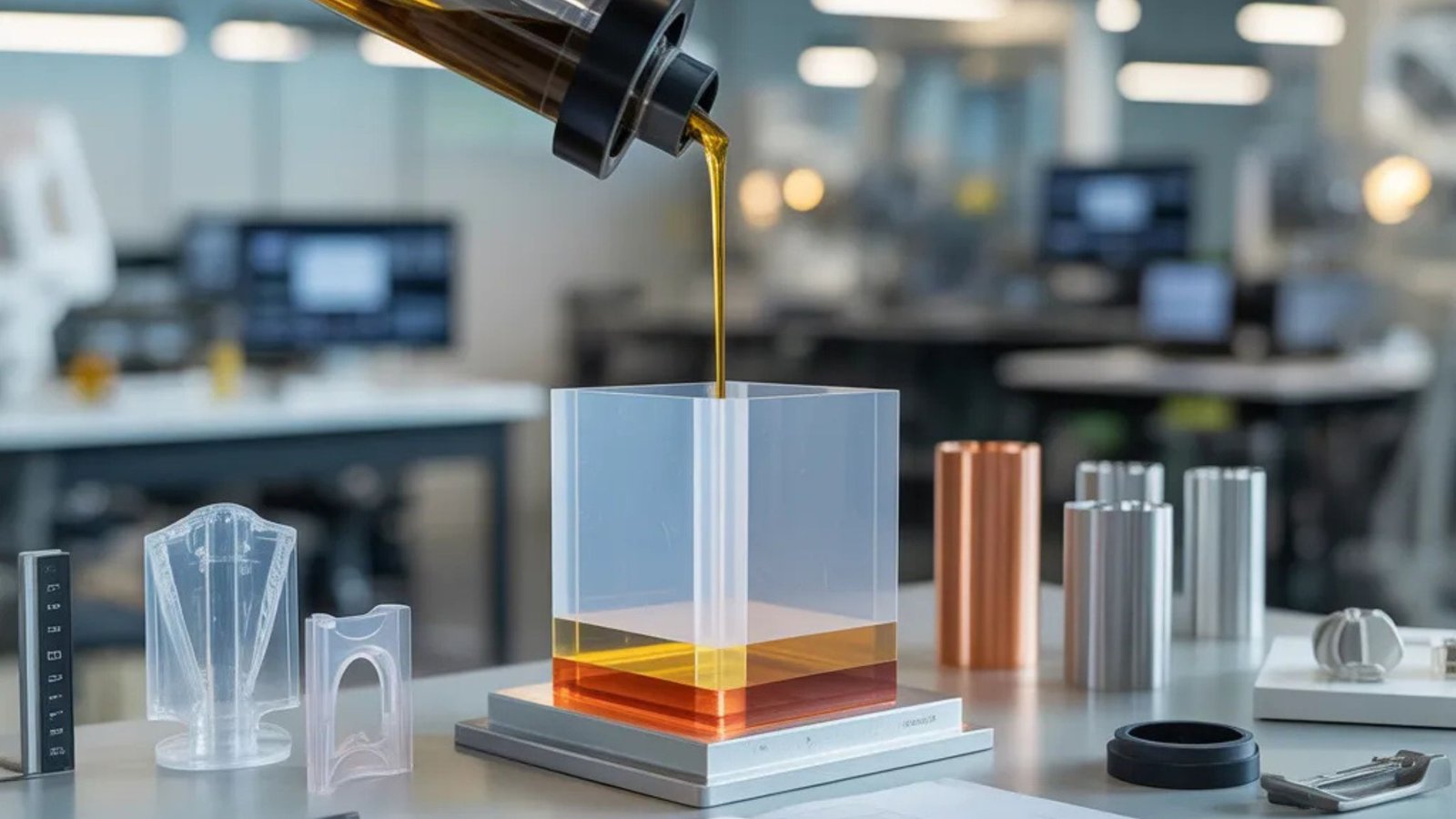
Vacuum casting uses silicone moulds and two-component polyurethane resins to produce high-quality plastic parts with injection moulding-like finishes. A master model, typically SLA 3D printed, is used to create the silicone mould. Resin is then cast under vacuum to eliminate air bubbles and ensure precision in every part.
What materials are available for vacuum casting at Tesseract?
Tesseract offers a broad range of materials, including ABS-like rigid resins, Polycarbonate (PC), Polypropylene (PP), Rubber, PMMA (Acrylic), Glass-Filled Material, and Wax. This variety allows functional and aesthetic requirements to be matched precisely for each project.
How many parts can be produced from one silicone mould?
Typically, a silicone mould produces between 1 and 50 parts before it degrades. This makes vacuum casting ideal for low-volume production runs where injection moulding tooling costs are not justified.
How does vacuum casting relate to 3D printing?
The master model used to create the silicone mould is typically produced via SLA 3D printing, a high-resolution process that captures fine surface details. This means the quality of your 3D print directly determines the quality of every vacuum cast part. Tesseract handles both in-house.
What is the turnaround time for vacuum casting?
Turnaround typically ranges from 5–10 days, depending on part complexity and quantity. This includes mould creation from the master model and casting the required number of parts significantly faster than injection mould tooling.
Which industries use vacuum casting for product development?
Automotive, consumer products, medical technology, electronics, aerospace, robotics & automation, and fashion & jewellery are all active users of vacuum casting, primarily for prototyping, pre-production validation, and limited-edition or custom production runs.