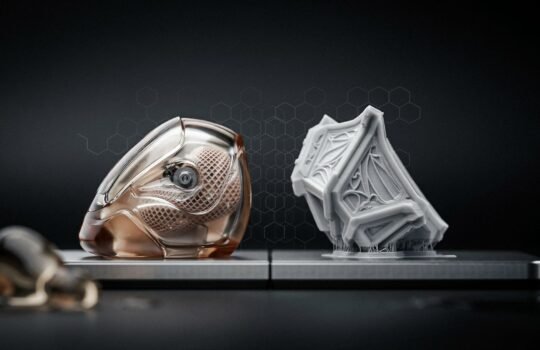
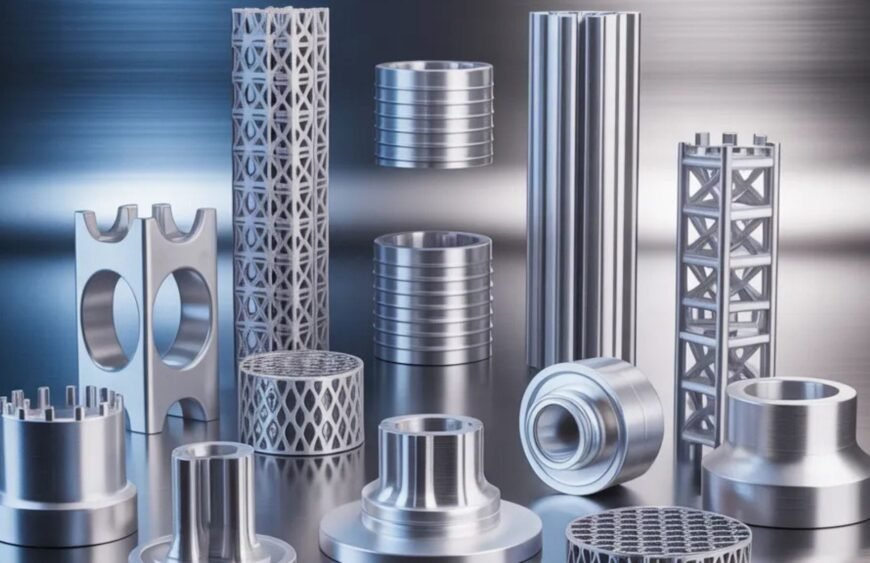
You need a lightweight, thermally conductive metal part, but which aluminium 3D printing process should you actually use? With multiple technologies now available, choosing the wrong one can cost you time, money, and failed prototypes. At Tesseract, we work with makers and product teams every day who face exactly this decision. This guide breaks down every major aluminum 3D printing technology, when to use each one, and how to match the process to your project from the start.
Why Aluminium Is a Preferred Metal for 3D Printing
Aluminium sits at a unique intersection of properties that most engineering metals cannot match. At roughly 2.7 g/cm³, it is about one-third the weight of steel while still delivering strong thermal conductivity, natural corrosion resistance, and an excellent strength-to-weight ratio. These properties make it the go-to choice for aerospace brackets, automotive components, electronics enclosures, and heat sinks, anywhere mass matters as much as performance.
The two most commonly printed aluminum alloys are:
- AlSi10Mg: Compatible with DMLS and SLM, used for structural brackets, heat sinks, and functional end-use parts
- Al6061: Available via binder jetting, suited for jigs, fixtures, and less structurally critical applications
- AlSi7Mg: Processed via SLM, preferred for thin-wall aerospace components where surface integrity is critical
Direct Metal Laser Sintering: The Industry Workhorse
Direct metal laser sintering, widely known as DMLS, is the most established aluminium 3D printing process for functional parts. A high-powered laser sinters aluminium powder layer by layer inside an inert argon atmosphere, preventing oxidation and ensuring consistent material density. Typical layer thickness runs between 20 and 60 microns, with achievable tolerances of ±0.05 mm to ±0.1 mm. At Tesseract, our DMLS build envelope reaches up to 250 × 250 × 325 mm.
DMLS is the right call when:
- Your part has complex internal channels, such as conformal cooling paths or hydraulic manifolds, that cannot be machined
- You need functional strength from 1 to 500 units without investing in tooling
- The part will be post-machined to a tighter final tolerance
- You are working in aerospace or defence and need material traceability
The honest limitation is that as-built surface finish runs Ra 6–12 µm, support structures are required on overhangs beyond 45°, and per-part cost is significantly higher than polymer printing. Budget for post-processing if surface quality matters.
Other Aluminum 3D Printing Technologies Worth Knowing
Selective Laser Melting (SLM) fully melts aluminium powder rather than sintering it, achieving near-100% part density. The mechanical properties are marginally superior to DMLS, but the process window is narrower, and machine costs are higher. SLM is the preferred route for critical structural parts where every MPa counts.
Binder Jetting deposits a liquid binder onto aluminium powder layers, then sinters the green part in a furnace. It is faster and more cost-effective than DMLS for medium production volumes and handles geometries well. The trade-off is that density binder-jetted aluminium typically reaches around 97% density versus DMLS at 99.8%.
Wire Arc Additive Manufacturing (WAAM) uses a MIG welding wire to deposit aluminium in large beads, layer by layer. Resolution is coarser than powder-bed processes, but WAAM handles large structural components over 500 mm that no DMLS machine can accommodate, at a fraction of the material cost. Uptake is growing rapidly across India for industrial and defence fabrication.
A quick process selector based on your project requirements:
- Tolerance of ±0.05 mm or tighter → DMLS or SLM
- Part dimensions exceeding 400 mm → WAAM
- 50 to 500 identical parts needed quickly → Binder Jetting
- Low-cost proof of form only → FDM with aluminium-filled filament
FDM 3D Printing vs Aluminium 3D Printing
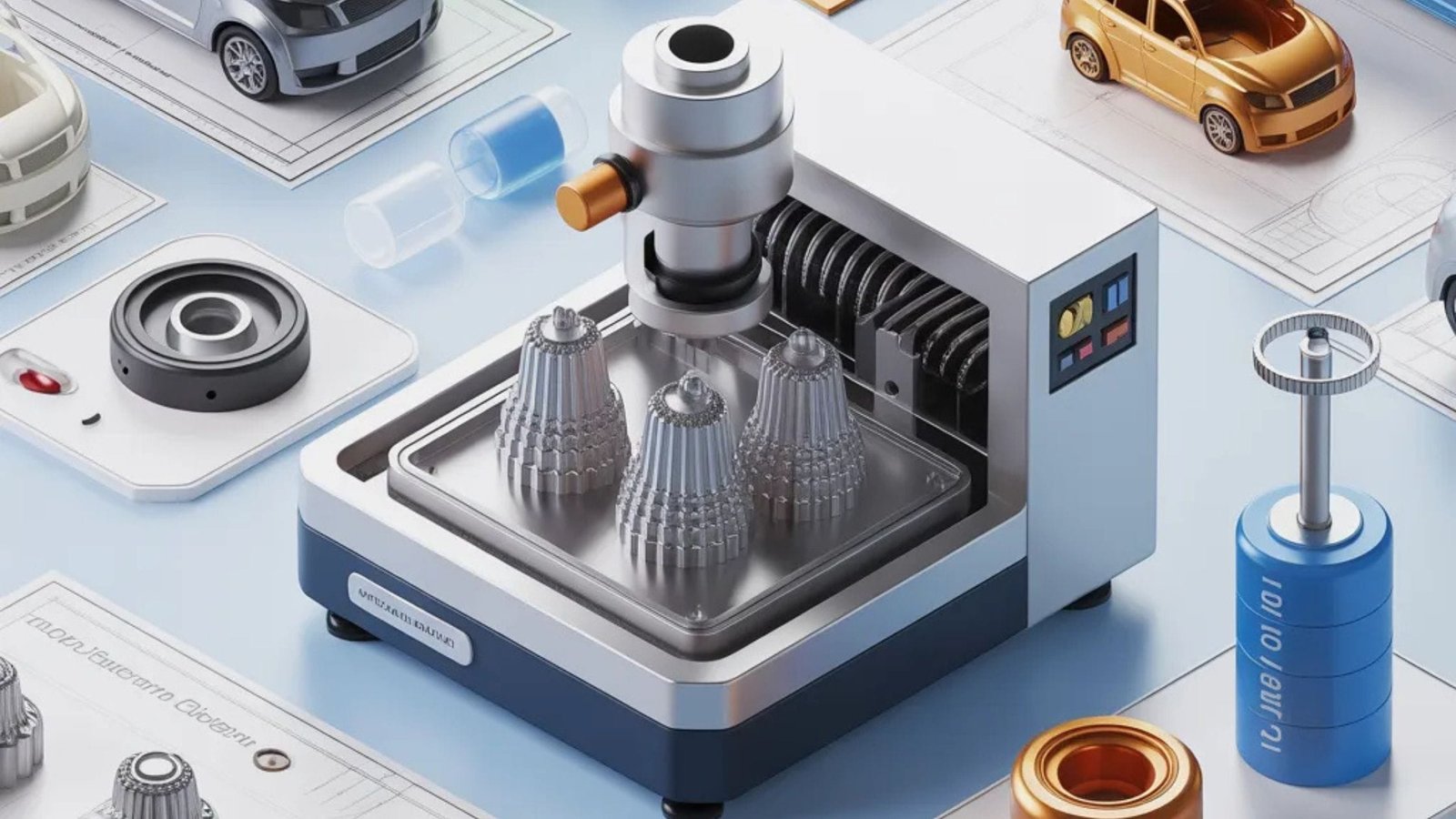
FDM 3D printing using aluminium-filled PLA or composite filament is a legitimate and smart step in the aluminium part development workflow, but only if you understand exactly what it is and is not. Tensile strength of FDM aluminium-composite prints is typically 5 to 10 times lower than sintered aluminium. It will not replace a DMLS part in service. What it will do is let you validate geometry, check assembly fit, and stress-test your CAD model in under 48 hours and at a fraction of the cost.
Use FDM when your budget is tight, you only need to confirm geometry, your lead time must be under 48 hours, and the part will carry no thermal or structural load in testing.
Switch to aluminium 3D printing the moment your part needs to dissipate heat, replace a machined metal component, survive mechanical loading, or meet any certification requirement. The two processes are not competitors; they are sequential steps in a smart product development workflow.
Aluminium 3D Printing vs Injection Moulding
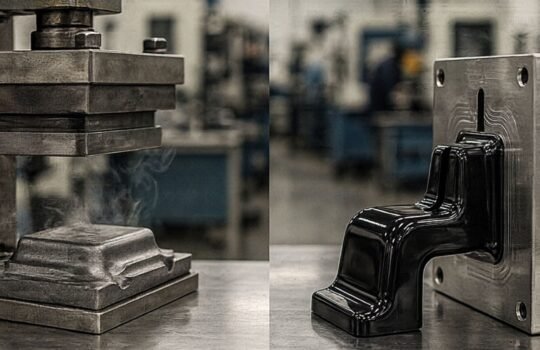
For runs under 300 to 500 units with complex geometry, aluminium 3D printing consistently beats injection moulding on both time and total cost. Aluminium die tooling in India typically costs between ₹1,00,000 and ₹8,00,000, depending on complexity, and that investment only makes sense if your design is locked and your volumes justify amortization.
Four questions that guide the decision:
- Is my volume under 500 units? → Lean towards aluminium 3D printing
- Does the part have internal channels or undercuts? → 3D printing wins decisively
- Is the design fully locked with no anticipated iterations? → Injection moulding or die casting becomes viable
- Must the part reach the market within three weeks? → Aluminium 3D printing is the only realistic route
Above 1,000 units with a stable design, injection moulding, and die casting drive per-part cost down sharply. Below that threshold, 3D printing gives you speed, design freedom, and zero tooling risk.
Design for Additive Manufacturing: What Changes for Aluminium
Aluminium DMLS is not a drop-in replacement for machining. Parts designed for CNC will print, but they will be expensive, heavy, and miss the real advantages of the process. Five DfAM rules that change outcomes for aluminium:
- Minimum wall thickness should be 0.8 mm for DMLS and 1.5 mm for binder jetting; thinner walls risk delamination
- Avoid flat overhangs longer than 10 mm without self-supporting geometry or added support structures
- Keep angles at 45° or less from vertical to reduce support volume and post-processing time
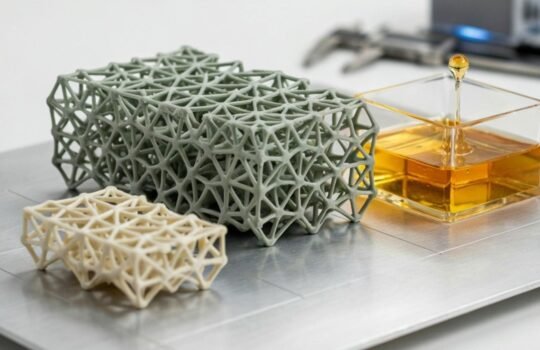
- Use lattice infill on large solid sections to reduce mass by 30–60% without sacrificing stiffness
- Integrate internal cooling channels during design. Once the part is printed, there is no way to machine them in
Tesseract’s 3D product design service includes a DfAM review, topology optimization, and simulation-led redesign as part of every aluminium project scoping, ensuring the part is built right before a single gram of powder is used.
Aluminium 3D Printing Services in Mumbai
When evaluating a metal 3D printing service provider, five things separate a capable partner from a basic bureau:
- DMLS or SLM machine availability with a verified build envelope and inert atmosphere control
- Post-processing capability, including heat treatment, hot isostatic pressing (HIP), and CNC finishing
- Material certifications and full powder traceability for regulated industries
- Demonstrated DfAM support – not just printing files but optimizing them
- Realistic turnaround time with transparent communication on build scheduling
Tesseract provides aluminium DMLS printing as a 3D printing service in Mumbai using AlSi10Mg powder stock, with standard lead times of 5 to 8 business days. Projects ship across India, and every aluminium build includes a DfAM review before the job hits the machine.
Frequently Asked Questions
What is the most common aluminium alloy used in 3D printing?
AlSi10Mg is the industry standard for DMLS and SLM. It balances printability, tensile strength, and thermal conductivity well. Al6061 is available via binder jetting for fixtures and non-structural applications.
How strong are DMLS aluminium parts compared to machined aluminium?
As-built DMLS AlSi10Mg achieves tensile strength of approximately 400 MPa at 99%+ density. Post-process T6 heat treatment brings performance close to machined 6061-T6, making it suitable for most functional engineering applications.
Is aluminium 3D printing available as a service in Mumbai?
Yes. Tesseract offers DMLS aluminium printing as a dedicated 3D printing service in Mumbai, with AlSi10Mg, full post-processing, and DfAM support included in every project.
When should I use FDM instead of aluminium 3D printing?
Use FDM 3D printing exclusively for geometry validation and early-stage design iteration. The moment a part needs to perform mechanically or thermally in service, aluminium 3D printing is the correct process.
How does aluminium 3D printing compare to injection moulding for low volumes?
Under 300 to 500 units, aluminium 3D printing eliminates tooling cost and cuts time to first part from months to days. Injection moulding and die casting become the economical choice above 1,000 units with a fully stable design.
What is direct metal laser sintering, and how does it work?
Direct metal laser sintering uses a high-powered laser to fuse aluminium powder layer by layer inside an inert argon chamber, producing fully dense metal parts with complex internal geometries and tolerances as tight as ±0.05 mm, impossible to achieve through conventional machining alone.