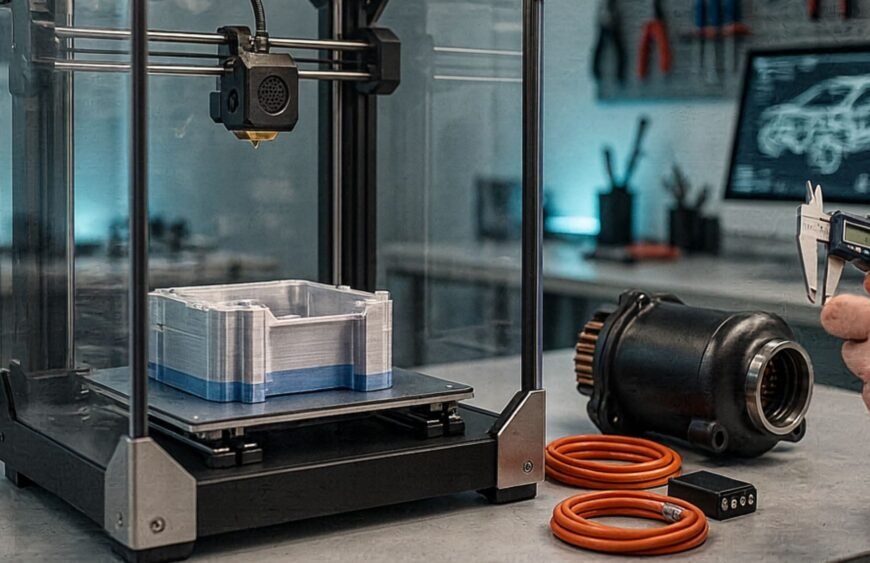
3D printing speeds up EV development in India by cutting prototyping time for battery enclosures, motor housings, and cooling components from weeks to days, while producing lightweight parts, tooling, and low-volume end-use components that reduce dependence on hard tooling and imported parts.
As India’s EV sector scales under schemes like PLI-Auto and PM E-DRIVE, additive manufacturing has moved from a novelty to a practical way for OEMs and component makers to iterate designs and get components into vehicles faster.
Why India’s EV Industry Is Turning to 3D Printing
India’s EV market has moved past the pilot stage. EV sales crossed 2.66 million units in FY26, and government-backed programs are pushing localisation across two-wheelers, three-wheelers, and passenger vehicles. That growth puts pressure on engineering teams to validate designs faster without the multi-week lead times that traditional tooling requires, or the cost and delay of importing specialised parts.
Additive manufacturing fits directly into this gap. Instead of waiting for injection moulding tools or CNC fixtures to test a new battery tray or motor mount, engineers can print a functional prototype in days, check fit and clearance, and iterate before committing to expensive metal tooling. For EV startups working with lean budgets and legacy automakers adding EV lines to existing plants, this shortens the path from concept to validated design.
Key EV Applications: Prototyping, Lightweighting, Tooling, and End-Use Parts
Rapid prototyping. Battery trays, module dividers, motor housings, gearbox casings, and cooling manifolds are printed early to confirm fit, cable routing, and thermal clearances before sheet metal or injection-moulded tooling is finalised. SLA and DLP capture the fine detail needed for connector cutouts and snap-fit closures, while dashboard panels and trim pieces are printed as proof-of-concept models that closely mirror the final finish.
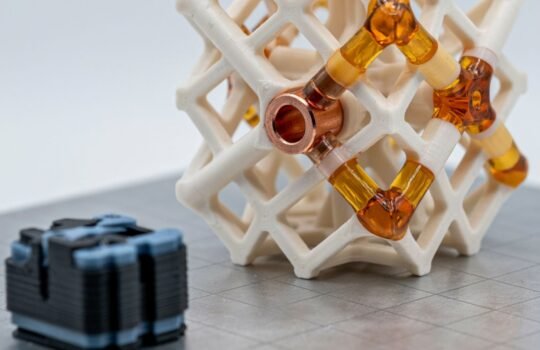
Lightweighting for range and efficiency. Vehicle weight directly affects EV range, so printing brackets, mounts, and interior structural components in carbon or glass-filled engineering plastics, or with lattice structures instead of full material fill, is one of the more direct ways 3D printing contributes to a vehicle’s efficiency rather than just its development speed.
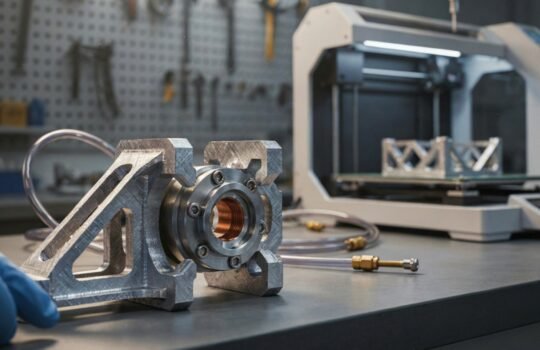
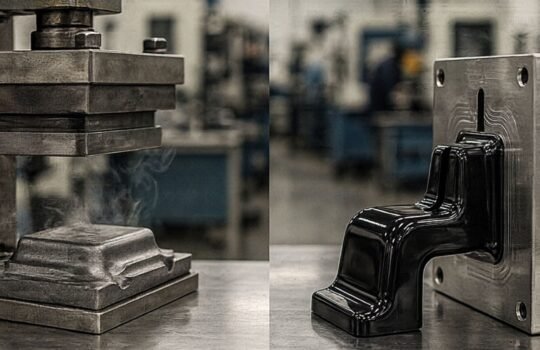
Tooling, fixtures, and casting patterns. Beyond the part itself, 3D printing produces the jigs and fixtures used on assembly lines, along with printed patterns used in metal casting of gearbox and motor housings, cutting pattern lead time compared to machined tooling.
For assembly stations near battery packs and control electronics, fixtures are sometimes printed in ESD-safe materials, since electrostatic discharge near battery cells or control modules can damage cells and boards, and printing these on demand is faster than sourcing ESD-rated tooling externally.
Functional end-use parts. With engineering-grade materials, printed parts move beyond prototypes into the vehicle itself. Battery management system enclosures, sensor housings, connectors, and brackets are practical candidates for direct production, particularly for two-wheelers, three-wheelers, and low-volume passenger EV programs.
Materials That Matter for EV Parts
Material selection depends on what the part needs to survive. Motor and battery-adjacent components often require high-temperature resistance, since EV powertrains run hotter than conventional under-hood components.
Engineering plastics such as ASA and PA6 hold up better than standard PLA or ABS here, and flame-retardant materials are often specified for enclosures near power electronics. Where a prototype needs to behave like a metal production part, DMLS and metal 3D printing let teams validate load-bearing brackets before committing to metal casting or CNC-machined production.
From Prototype to Low-Volume Production
3D printing does not have to stop at the prototype stage. For EV programs with lower production volumes, printed parts can serve directly as end-use components while volumes are still too low to justify injection moulding tools. This is especially useful for enclosures, brackets, and interior trim that do not carry heavy structural loads.
Even for high-volume programs, printed tooling and soft tooling inserts let a manufacturer start producing parts on injection moulding or vacuum casting equipment while hard tooling is still being machined, cutting weeks off the time between design freeze and first production units.
Benefits for EV Manufacturers Working in India
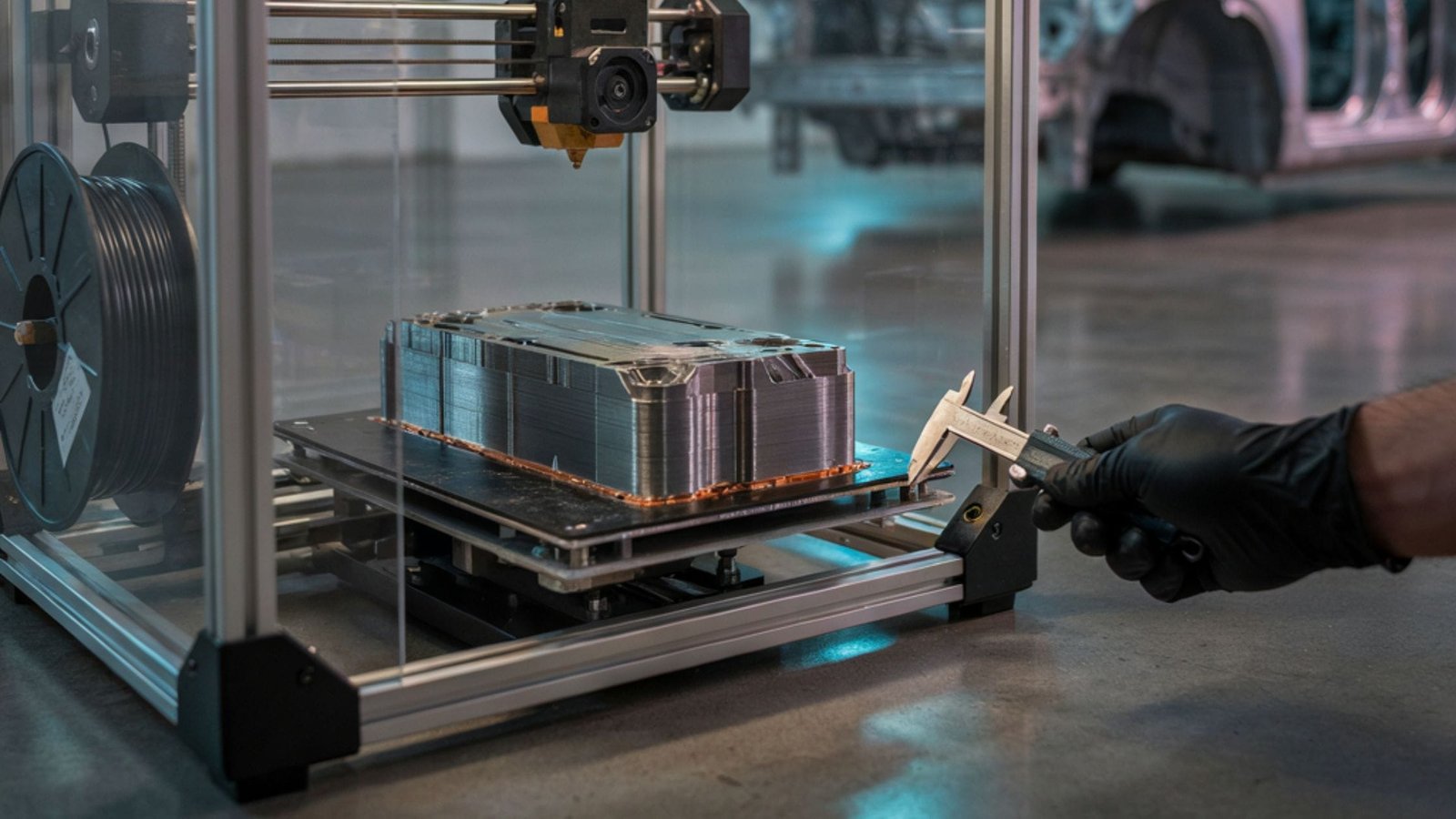
- Shorter lead times and less import reliance. Localised 3D printing bypasses the delays and freight costs of importing specialised prototypes or low-volume components, which matters for a market where component supply chains are still consolidating.
- On-demand spares from a digital inventory. Instead of stocking physical inventory for every variant, manufacturers can hold CAD files for brackets, housings, and trim, and print replacement components only when a specific order or service need arises.
- Lower waste in prototyping. Because material is added layer by layer rather than machined away, prototyping cycles generate less scrap than milling the same geometry out of solid stock, which adds up over repeated design iterations.
Where Adoption Still Faces Friction
3D printing is not a drop-in replacement for every EV manufacturing step. Industrial-grade printers and engineering materials require meaningful upfront investment, which is easier for an established manufacturer to absorb than a lean startup, and operating multi-technology setups needs trained personnel who understand both the printing process and the material behaviour of parts going into a vehicle. Sourcing certain high-performance or flame-retardant grades within India can also involve longer lead times than sourcing standard plastics. Working with a manufacturing partner that already stocks these materials and runs the equipment in-house removes most of this friction for individual EV programs.
What This Means for EV Manufacturers and Startups in India
For an EV OEM, this typically translates to a shorter design validation cycle: instead of three or four rounds of tooling changes, engineering teams can test multiple iterations of a battery tray or housing design within the same development sprint. For component suppliers and Tier 1 manufacturers, it means quoting and delivering low-volume or bridge production runs without a large capital outlay on tooling upfront.
Post-processing plays a bigger role in EV parts than it might for other prototypes. Battery-adjacent components sometimes need surface finishing for thermal or electrical performance, while exterior and interior parts destined for design reviews benefit from smoothing, painting, or coating that mirrors the final production finish. Having anodising, powder coating, and plating available alongside printing keeps a prototype’s finishing steps inside one facility, keeping timelines predictable.
Working With a Manufacturing Partner for EV Programs
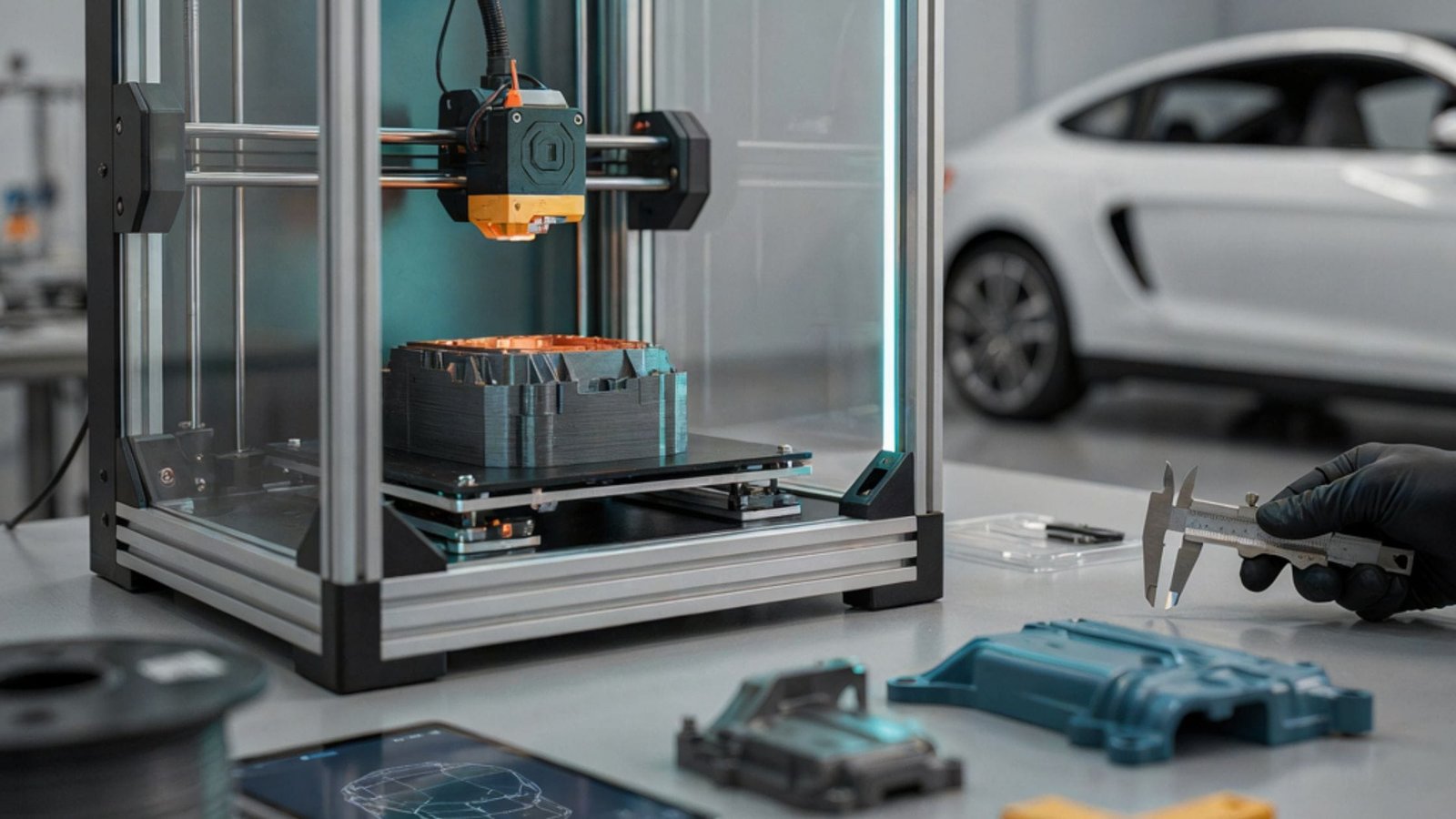
EV development moves fastest when prototyping, tooling, and low-volume production sit with one partner instead of being split across vendors. Tesseract runs FDM, SLA, SLS, DMLS, DLP, and PolyJet printing alongside CNC machining, injection moulding, vacuum casting, and metal casting from its Mumbai facilities, giving EV manufacturers and component suppliers a single point of contact from early prototype to production part.
Frequently Asked Questions
Can 3D printed parts be used in production EVs, not just prototypes?
Yes, for low-volume components such as enclosures, brackets, and non-structural trim, 3D printing can serve as the production method itself, particularly when injection moulding volumes are not yet justified.
Which 3D printing technology is best for EV battery enclosures?
SLA and DLP suit fit-check mockups needing fine detail, while glass- or carbon-filled engineering plastics printed via FDM or SLS suit functional prototypes needing mechanical strength.
Does 3D printing help reduce EV component weight?
Yes, printing brackets and non-structural components in lightweight composites or with internal lattice structures reduces part weight, which contributes to overall vehicle range and efficiency.
Why does 3D printing matter for India’s EV industry specifically?
India’s EV sector is scaling quickly under government incentive schemes, and manufacturers need to validate new designs fast and reduce reliance on imported components without the cost of traditional tooling at every iteration.
What are the main barriers to 3D printing adoption in EV manufacturing?
The main barriers are the upfront cost of industrial printers and materials, the need for trained operators, and limited domestic availability of certain high-performance materials.