A 3D printed prototype costs different amounts depending on material, printing technology, part size and design complexity. There is no flat rate. Tesseract3D, a 3D printing service in India, prices each project individually and offers a free instant quote when you upload your design, so you see the real cost for your part.
If you are planning a new product, that answer can feel vague. This guide explains what actually moves the price, so you can plan your prototyping budget with confidence.
Why Is There No Fixed Price for a 3D Printed Prototype?
No two prototypes are identical. A small enclosure and a detailed architectural scale model need different machines, materials, and finishing times.
Tesseract3D states that its pricing varies based on material, technology, size and complexity. It aims to keep its rates competitive and budget-friendly. Because of this, a quote based on your actual file is more reliable than any “per part” estimate you find online.
What Factors Affect 3D Printing Prototype Cost?
1. Which 3D Printing Technology Do You Need?
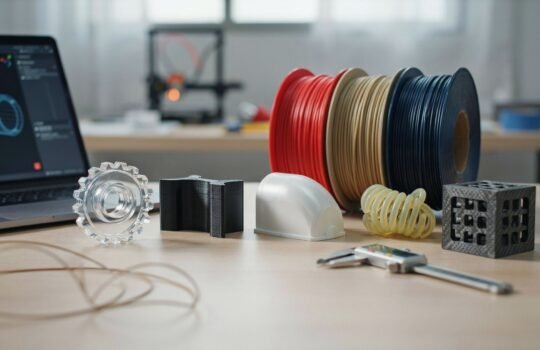
Technology is one of the biggest cost drivers. Tesseract3D offers FDM, SLA, SLS, DMLS, PolyJet and DLP printing, among others.
- FDM 3D printing builds parts from filament. It is a common choice for functional prototypes and early design checks.
- SLA 3D printing uses resin. Teams often choose it when they need finer detail.
- SLS, DMLS, and PolyJet suit other needs, such as stronger parts, metal parts or multi-material models.
Each technology uses different machines and materials, so your quote changes with your choice. If you are unsure which one suits your part, ask for guidance before you order.
2. Which Material Will Your Prototype Use?
Material affects both price and performance. The Tesseract3D eStore lists filaments such as PLA, ABS, PETG and TPU, plus engineering options like ASA, HIPS and carbon fiber composite. It also lists standard and ABS-like resins for SLA and DLP printing.
A basic material can be enough for a visual model. A functional test may need something tougher or more flexible. Choose the material based on what the prototype must do, not just on how it looks.
3. How Big and Complex Is Your Part?
Larger parts use more material and take longer to print. Complex geometry can add time as well. A small part with fine details may cost more than a larger, simpler one.
Tesseract3D’s team provides DFM (design for manufacturing) problem-solving and consulting. Simplifying a design early can save money later.
4. Do You Need Finishing or Post Processing?
A raw print is not always what you need. Some prototypes are shown to investors, clients or customers, so they need a clean look. Post processing can include steps like sanding and finishing. Tesseract3D’s VIP trophy project, for example, used sanding and a premium metallic finish.
Extra finishing adds to the final cost. Decide whether your prototype is for testing or for presentation before you request a quote.
5. How Fast Do You Need It?
Most Tesseract3D projects finish within 2 to 7 days, depending on complexity and technology. Expedited services are available for urgent deadlines. Mention your deadline when you request a quote so the team can plan around it.
6. Do You Already Have a 3D Model?
If you have a CAD file, you can upload it directly. If you only have a sketch or concept, Tesseract3D also offers 3D CAD design services, including reverse engineering and 2D to 3D conversion. The design stage can be handled in the same place as the printing.
How Can You Reduce Your 3D Printed Prototype Cost?
You cannot control every factor, but these steps help:
- Match the material to the goal. Use a simple material for a fit check and an engineering material only when you need it.
- Simplify the design. Remove details that don’t affect testing.
- Choose the right technology. Pick the process your part actually needs.
- Plan finishing carefully. Add post processing only where it matters.
- Share your deadline early. It helps avoid last-minute changes.
How Do You Get an Accurate Quote?
Upload your design on the Tesseract3D website for a free instant quote. The quote form accepts .STL, .STEP, .STP, .IGES, .OBJ, .PNG and .JPEG files up to 25MB. Tell the team your preferred material, technology and timeline for the most accurate estimate.
Tesseract3D works from a Mumbai headquarters and a 3D printing factory in Boisar, with 100+ machines, and delivers across India.
Conclusion
The cost of a 3D printed prototype depends on technology, material, size, complexity, finishing and timeline. The most reliable way to know your price is to get a quote based on your own design.
Ready to start? Upload your file for a free instant quote, call +91 81698 12438, or email contact@onetesseract.com. For more guides, visit the Tesseract3D blog.
Frequently Asked Questions
How much does a 3D printed prototype cost in India?
The cost depends on material, technology, size and complexity, so there is no fixed price. Tesseract3D prices each project individually. Upload your design for a free instant quote to see the exact cost for your prototype.
Should I choose FDM or SLA for my prototype?
It depends on your goal. Tesseract3D offers both FDM and SLA, along with SLS, DMLS, PolyJet and DLP. Share whether you need fit testing or a detailed model, and the team can guide your choice.
How long does it take to 3D print a prototype?
Most Tesseract3D projects are completed within 2 to 7 days, depending on complexity and technology. Expedited services are available for urgent deadlines, with delivery across India from the company’s 5000+ sq. ft. facility.
What file formats can I upload for a quote?
You can upload .STL, .STEP, .STP, .IGES, .OBJ, .PNG or .JPEG files, with a maximum size of 25MB. Uploading your design is the fastest way to get an accurate, free instant quote.
Can I get a prototype if I don’t have a 3D model?
Yes. Tesseract3D offers 3D CAD modelling, reverse engineering and 2D to 3D conversion. Its team can turn sketches and concepts into production-ready 3D models, then print them, so you don’t need a finished file to start.