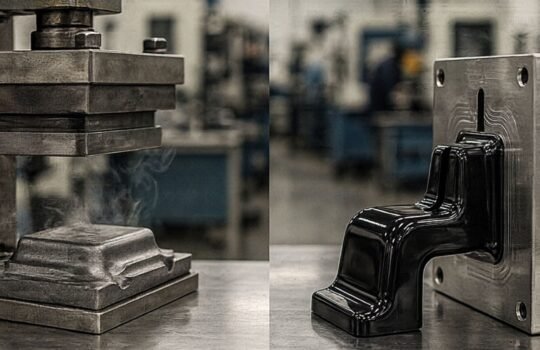
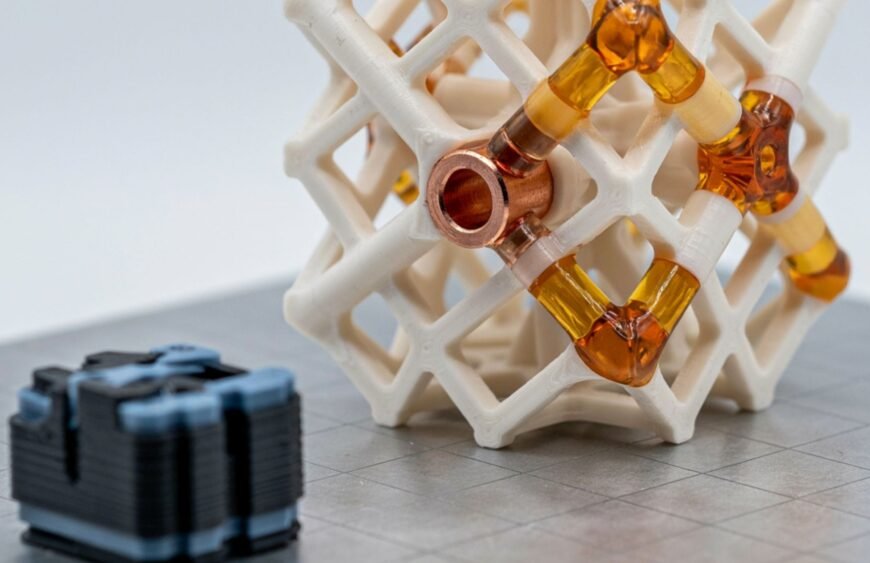
Multi-material 3D printing is an additive manufacturing process that deposits two or more materials, resins, or colours within a single print job, allowing one part to combine rigid and flexible zones, multiple colours, or varying material properties without assembly. This capability is changing how engineers and designers approach parts that once required multiple components, fasteners, or secondary bonding steps.
What Makes Multi-Material 3D Printing Different
Traditional single-material printing produces a part in one uniform material from start to finish. Multi-material printing changes that by using multiple print heads or jetting nozzles to lay down different materials layer by layer, sometimes even within the same layer. The result can be a single printed part where one section behaves like a rigid plastic, and another behaves like rubber, or where internal structures need soluble supports that dissolve away after printing.
Two technologies make this possible at a production level: PolyJet and MultiJet Printing (MJP). Both use inkjet-style print heads to jet photopolymer resin, which is then cured layer by layer with UV light, similar to how a 2D inkjet printer deposits ink but building upward in three dimensions instead of across a page.
PolyJet: Complex Geometries in a Single Pass
PolyJet is one of the clearest examples of multi-material capability in action. The process jets UV-cured liquid resin through inkjet-style print heads onto a build platform, curing each layer as it goes. A distinguishing feature of PolyJet is its gel-like, soluble support material, which allows the printer to build complex geometries and multi-part assemblies that would otherwise need to be printed separately and joined afterward. Parts come off the printer fully cured, which removes the need for additional post-curing.
Because PolyJet can combine multiple materials and colours within one print, it is particularly suited to visual prototypes that need to look and feel like the final product. A single print run can simulate rubber overmolding in one region, a clear window in another, and a rigid structural shell everywhere else. Layer resolutions as fine as 16 microns support intricate internal structures, thin walls, and detailed assemblies that would be difficult or impossible to machine as one piece.
The material range available on PolyJet systems illustrates the breadth of what multi-material design can achieve in a single part: transparent photopolymers for clear housings, colour resins capable of simulating over 500,000 colour combinations, rubber-like materials for soft-touch surfaces and non-slip grips, and rigid engineering-like resins for structural sections. Biocompatible material options are also available for applications requiring skin or short-term mucosal contact, which opens the door to medical device housings and patient-contact components.
MultiJet Printing: Precision Meets Material Flexibility
MultiJet Printing (MJP) takes a related approach using piezo printhead technology to deposit photocurable resin or casting wax layer by layer. Like PolyJet, MJP uses a meltable or dissolvable support material, which simplifies post-processing and allows gentle cleaning of delicate features and complex internal cavities. MJP is capable of the highest Z-direction resolution among jetting technologies, with layer thicknesses as low as 16 microns, making it well suited to micro-scale precision parts.
MJP’s material library spans rigid plastics, elastomers, and investment-casting waxes, so a single platform can serve both functional prototyping and jewellery or industrial casting pattern production. Several MJP materials also carry USP Class VI and ISO 10993 biocompatibility certifications, supporting ethylene oxide (ETO) and gamma sterilisation, which matters for surgical guides and other regulated medical components.
How Multi-Material Printing Enables Complex Part Design
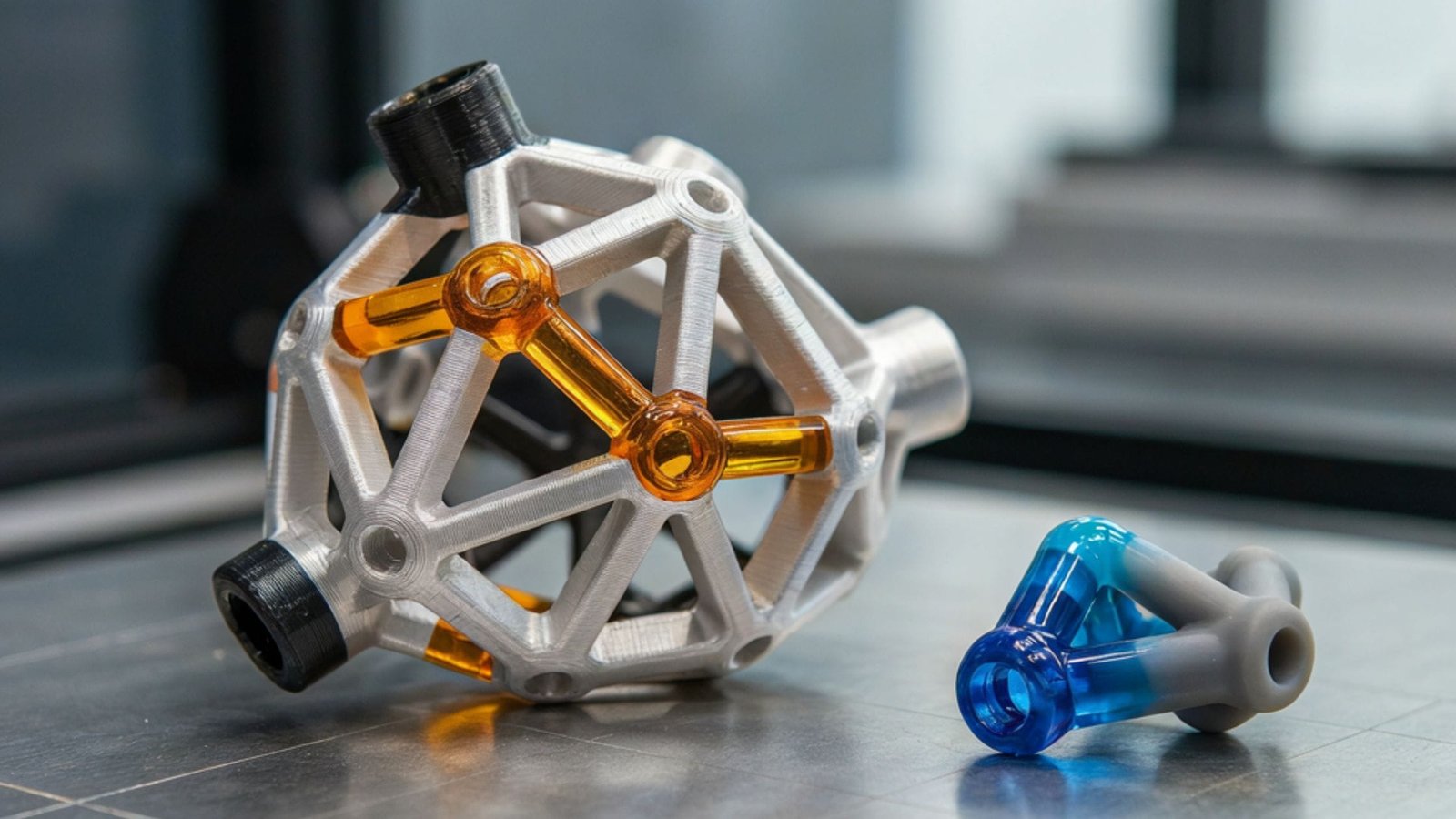
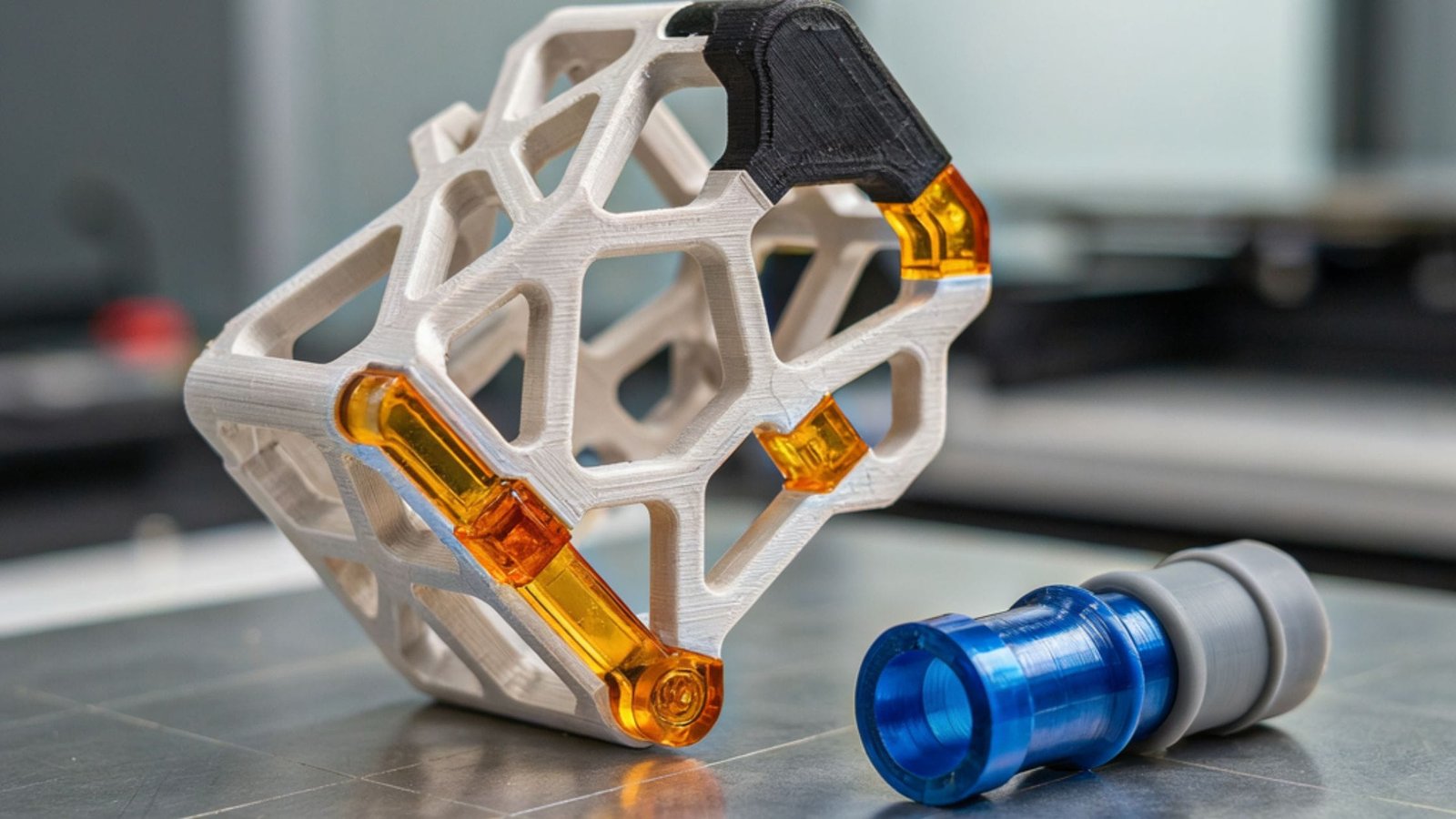
The real design advantage of multi-material 3D printing is consolidation. Parts that once needed separate rigid and flexible components, joined by adhesives, screws, or overmoulding, can now be printed as one piece. This has several practical effects on design and production:
Fewer assembly steps. A gripper with a rigid frame and a soft, compliant pad can be printed as a single unit rather than two parts bonded together.
Design freedom for internal structures. Soluble support materials let engineers design enclosed channels, living hinges, and interlocking assemblies that print pre-connected and only need the support dissolved away.
Realistic prototyping. Combining rigid and rubber-like materials in one print lets designers evaluate how a product will actually feel and function, not just how it looks, before committing to tooling.
Reduced material waste and lead time. One printed part replacing what used to be a multi-piece sub-assembly reduces both the number of manufacturing steps and the inventory of individual components to track.
Industries Putting Multi-Material Printing to Work
Multi-material 3D printing has practical applications across a wide span of industries. In robotics and automation, it supports custom grippers and lightweight components that combine structural rigidity with compliant contact surfaces. In medical technology, biocompatible multi-material options support surgical guides, anatomical models, and patient-specific devices. In automotive and aerospace, it enables functional prototypes that mimic final-part material behaviour before committing to production tooling. In jewellery and fashion, investment-casting wax patterns produced through MJP support precision metal casting workflows. In consumer electronics and product design, multi-material visual prototypes allow teams to test fit, finish, and ergonomics in a single printed sample.
Choosing the Right Multi-Material Process
PolyJet and MJP are not interchangeable for every job, and the right choice depends on what the part needs to do. PolyJet is generally the stronger fit when a project calls for combined colours, simulated rubber sections, or fully cured parts straight off the printer with minimal post-processing. MJP tends to be the better fit when the goal is ultra-fine Z-resolution, investment-casting wax patterns, or biocompatible plastics for medical-adjacent applications. In both cases, working with a manufacturing partner that operates both technologies in-house makes it easier to match the process to the part rather than forcing a design to fit whichever machine happens to be available.
Bringing Multi-Material Designs to Production
Multi-material 3D printing has moved well past novelty status. It is now a practical way to consolidate assemblies, simulate real product behaviour before tooling, and produce precision patterns for casting, all within a single print run. For teams designing parts that combine rigid and flexible zones, multiple colours, or biocompatible surfaces, it is worth evaluating early in the design process rather than treating it as a late-stage prototyping option.
Tesseract 3D operates both PolyJet and MultiJet Printing (MJP) technologies from its Mumbai facilities, supporting projects across robotics, medical, automotive, aerospace, and jewellery applications with a wide range of certified materials.
Frequently Asked Questions
What is multi-material 3D printing?
It is an additive manufacturing process that combines two or more materials, resins, or colours within a single print, allowing one part to have varying properties like rigidity, flexibility, or colour without separate assembly.
What is the difference between PolyJet and MultiJet Printing (MJP)?
PolyJet uses inkjet-style print heads with soluble gel supports and produces fully cured, multi-colour parts straight off the printer, while MJP uses piezo printheads for the highest Z-direction resolution and supports wax patterns for casting alongside rigid and elastomeric plastics.
Can multi-material printing replace assembled parts?
Yes, parts that combine rigid and soft sections, such as grippers or overmoulded housings, can often be printed as one piece instead of being assembled from separately manufactured components.
Which industries benefit most from multi-material 3D printing?
Robotics, medical technology, automotive, aerospace, and jewellery casting are among the industries that use multi-material printing most, for applications ranging from compliant grippers to biocompatible surgical guides and investment-casting patterns.
Is multi-material 3D printing suitable for production parts, not just prototypes?
Yes, depending on the material and application; MJP and PolyJet both support functional end-use parts and casting patterns in addition to visual and functional prototyping.