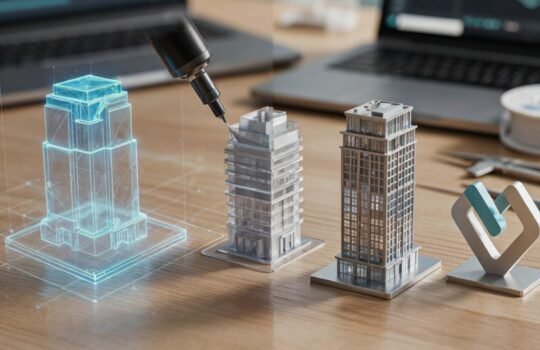
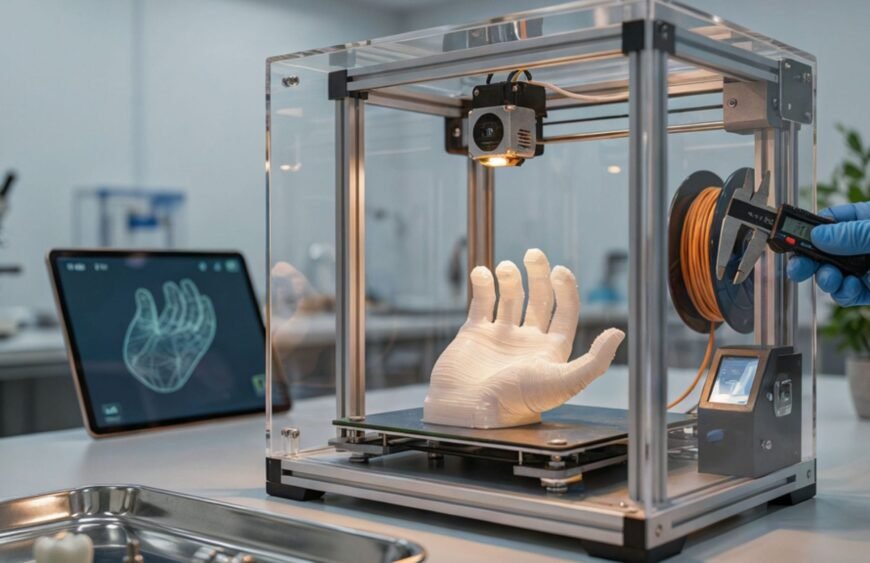
Yes, 3D printing is already used to manufacture medical devices, from surgical guides and dental aligners to orthopaedic implants and diagnostic equipment enclosures, using biocompatible materials that meet regulatory standards like ISO 10993.
Medical devices carry a demand that most other products do not: the design has to be accurate, and the material has to be safe for contact with the human body, sometimes for years at a time. Standard prototyping materials will not do. This is why medical 3D printing depends on a specific set of processes and certified materials rather than a single technology doing everything.
Which 3D Printing Processes Work for Medical Devices
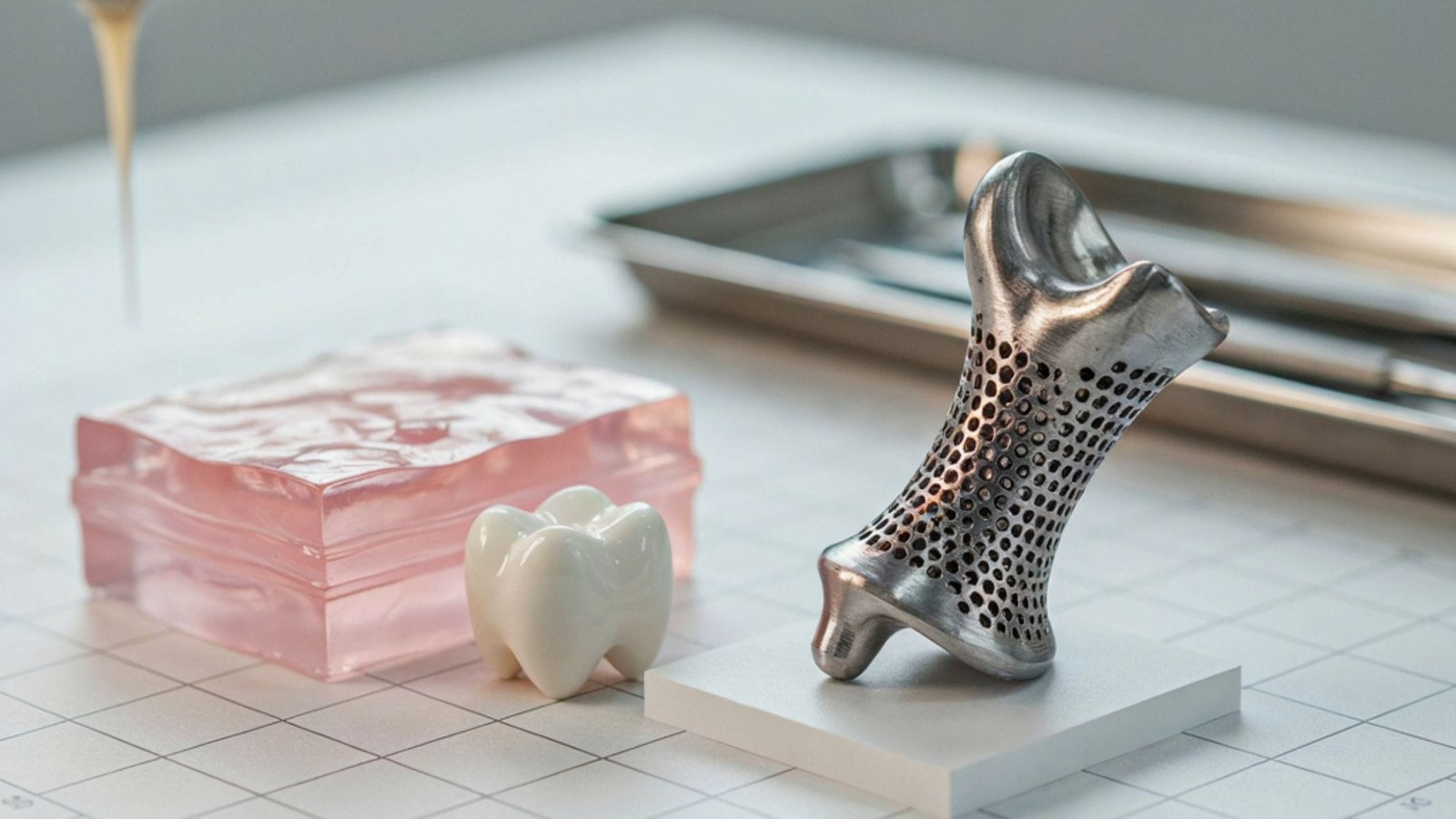
DMLS (Direct Metal Laser Sintering) is used for functional, end-use components such as surgical instruments and orthopaedic implants, most commonly in biocompatible metal alloys like Titanium Ti-6Al-4V and Stainless Steel 316L. Titanium is chosen for its combination of strength, low weight, and biocompatibility, which makes it suitable for implants and bone scaffolds where the part stays in the body long-term.
MJP (MultiJet Printing) is used where certified biocompatible plastics are needed at scale, with materials qualified to USP Class VI and ISO 10993 and compatible with ETO and gamma sterilisation, which matters for surgical guides and patient-specific models that need to be sterilised before use.
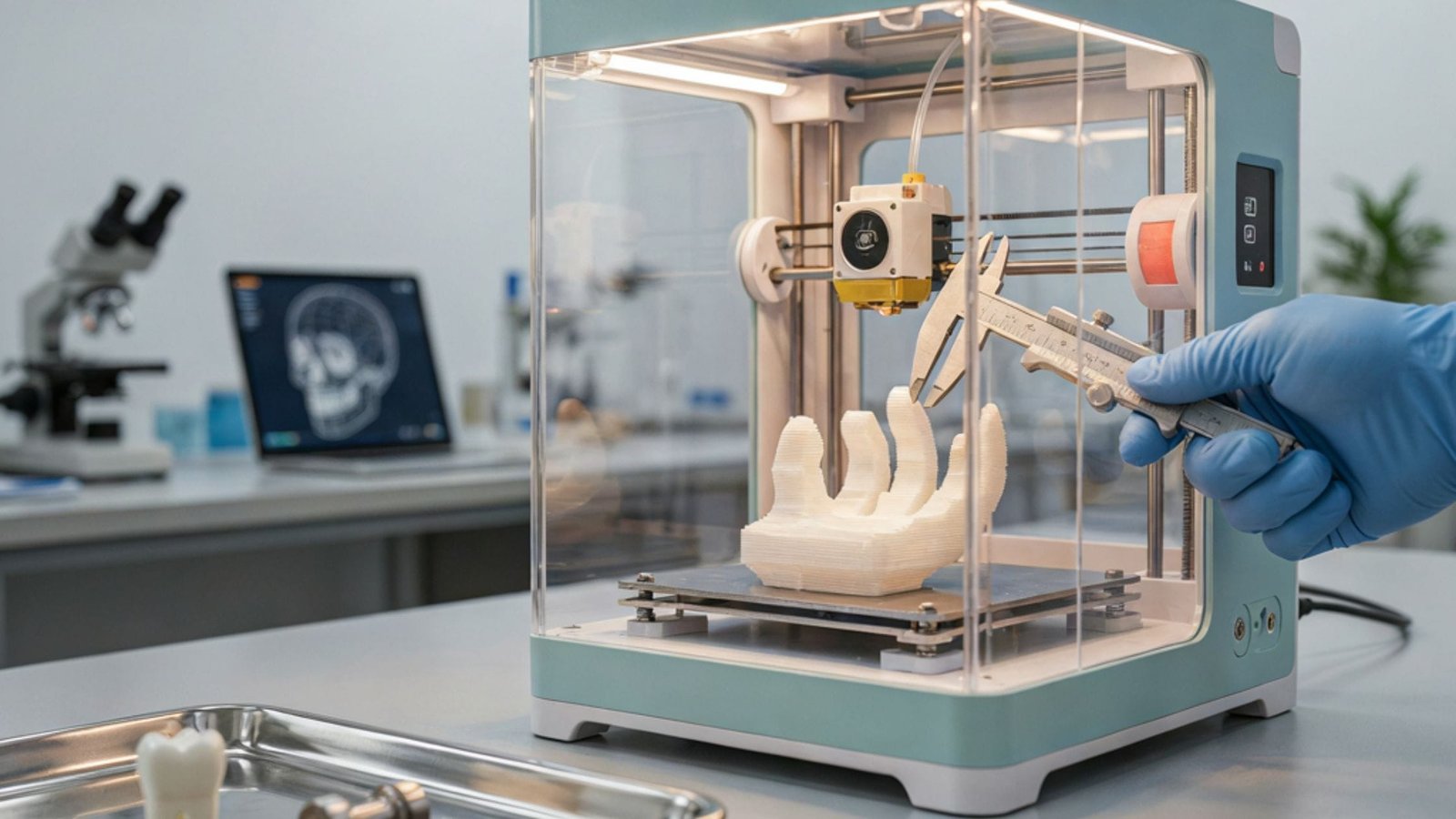
PolyJet covers a different need: MED610 is a rigid biocompatible material suited to parts that touch skin or mucosal membranes for short periods, while TissueMatrix simulates the feel of native organ tissue closely enough for surgical training and device rehearsal models.
Ceramic Stereolithography adds a category most people do not associate with 3D printing at all. HAP supports bone-related applications because of its osseointegration properties, and TCP is both biocompatible and bioresorbable, meaning the body can safely break it down over time, which suits temporary implants and scaffolds.
DLP rounds this out for smaller, high-precision parts such as surgical guides, dental aligners, hearing aids, and prosthetics, where fine detail and a smooth finish directly affect patient comfort.
Why It Matters Beyond the Part Itself
A medical device is rarely just the printed component. A circuit board is not a medical device on its own; the enclosure around it matters just as much, since it has to survive sterilisation, meet regulatory expectations, and function reliably in a clinical setting. This is why medical 3D printing projects often involve more than one process working together: a metal or ceramic implant, a biocompatible enclosure, and a sheet metal or machined housing finished to a sterile-grade standard, all built to work as one device. Vacuum casting also plays a role here, producing low-volume, injection-moulding-like prototypes for medical device enclosures and housings before a project commits to full tooling.
Conclusion
Tesseract3D supports medical device projects end-to-end, from 3D product design consultation through metal 3D printing, ceramic stereolithography, MultiJet and PolyJet printing, vacuum casting, and 3D scanning, with prototype turnarounds of 24 to 72 hours.
The same 3D scanning and design capability also supports pre-surgical planning, where a patient-specific anatomical model helps a surgical team rehearse a procedure before entering the operating room, a use case well documented in medical literature.
In India specifically, the CAD models, 3D scanning inspection reports, and vacuum casting validation records generated along the way can also feed into the technical documentation needed for CDSCO submissions under the Medical Device Rules, 2017.
Frequently Asked Questions
Is 3D printing safe for medical devices?
Yes, when the material is certified biocompatible and the process is validated, such as ISO 10993-compliant materials suitable for ETO or gamma sterilisation.
What materials are used for 3D printed implants?
Titanium Ti-6Al-4V and Stainless Steel 316L are the most common metals for orthopaedic implants and surgical instruments due to their strength and biocompatibility.
Can 3D printing make surgical guides?
Yes, surgical guides are one of the most common medical 3D printing applications, typically produced with DLP or MJP using biocompatible, sterilizable resins.
Are 3D printed medical devices FDA or regulatory compliant?
Compliance depends on how the device contacts the body (direct, indirect, or none) and on materials meeting standards like ISO 10993, with a quality system such as ISO 13485, FDA 21 CFR Part 820, or, in India, CDSCO’s Medical Device Rules, 2017, still required to bring a device to market.
Can 3D printing be used for temporary implants?
Yes, bioresorbable materials like TCP are designed to be gradually absorbed by the body, making them suitable for temporary implants and bone scaffolds.