Before requesting a 3D printing quote, share your design file (STL, STEP, or similar), preferred material, 3D printing technology if known, part size, quantity, finish requirements, and deadline. These details drive pricing, since cost depends on material, technology, size, and complexity. Sharing them upfront helps your provider quote accurately the first time.
Why Does the Information You Share Matter?
A quote is only as accurate as the brief behind it. Tesseract states that pricing varies based on material, technology, size, and complexity. If any of these are missing, the provider has to guess or come back with questions, which slows everything down.
A complete brief means:
- A faster, more accurate quote
- Fewer back-and-forth emails
- A better match between your part and the right process
What Design File Should You Upload?
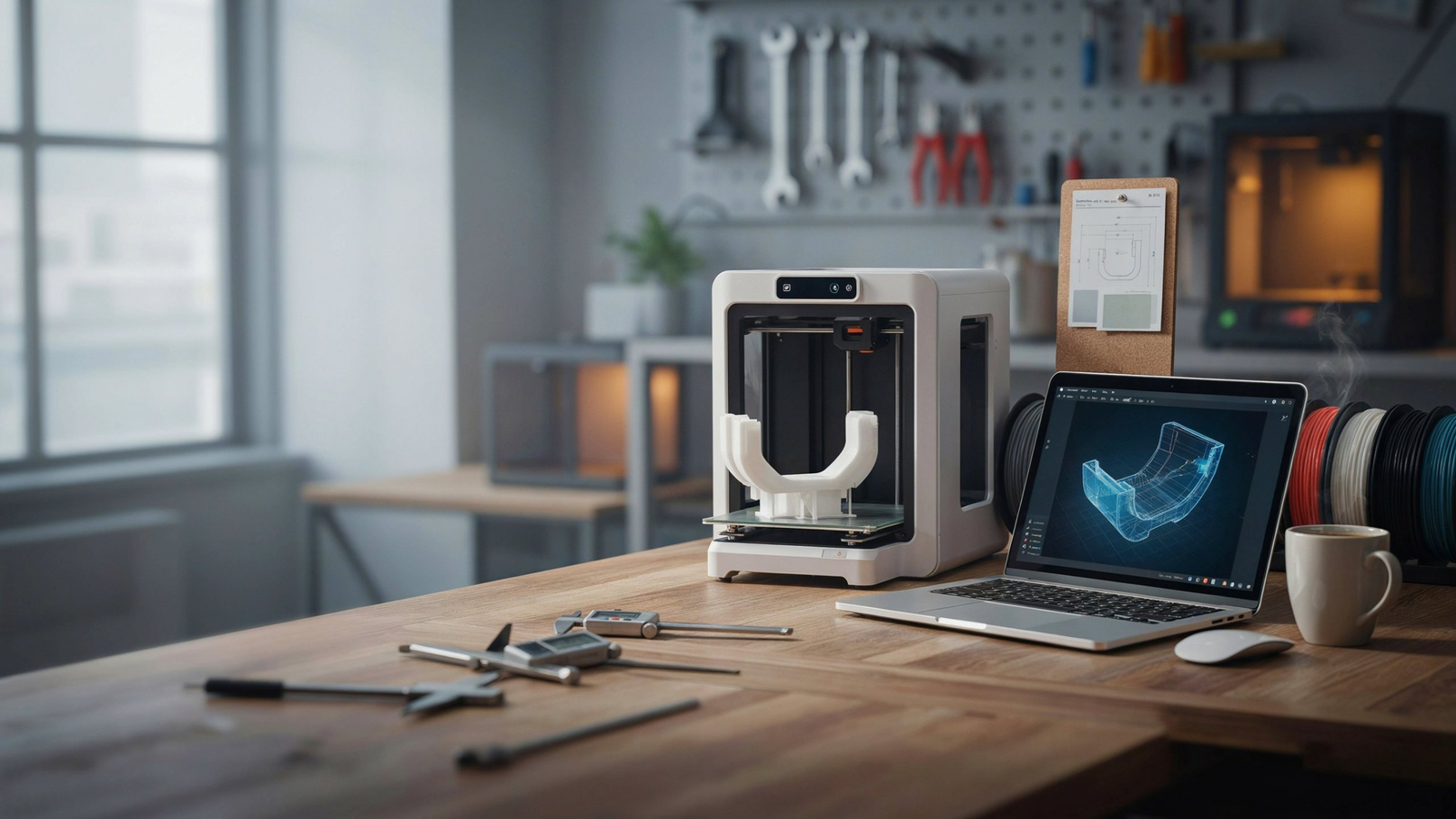
Your 3D file is the most important input. Tesseract’s quote form accepts .STL, .STEP, .STP, .IGES, .OBJ, .PNG, and .JPEG files, up to 25MB.
Which file format is best?
For most 3D printing quotes, an STL file works well. STEP and IGES files are common for engineering parts. If you only have an image or sketch, you can still share it, though a proper 3D model gives a more reliable quote.
What if you don’t have a 3D model yet?
Many people start with an idea, not a CAD file. Tesseract offers 3D CAD modelling, reverse engineering, and 2D to 3D conversion. If you need a model built first, tell your provider upfront. Their product designing service can turn sketches and concepts into production-ready 3D models.
Which Material Should You Mention?
Material affects strength, appearance, flexibility, and price. If you already know what you want, such as PLA, ABS, PETG, or TPU, mention it in your request.
If you’re unsure, don’t leave the field blank. Describe how the part will be used instead. For example, say whether it needs to be:
- A visual prototype or a functional part
- Flexible or rigid
- Used indoors or outdoors
- Exposed to heat, impact, or load
You can look through the materials we offer before submitting your request, so your choice is informed.
Do You Need to Specify the 3D Printing Technology?
Not necessarily, but it helps if you know. Tesseract’s quote form lists FDM, SLA, SLS, DMLS, DLP, and MJP, and the company also offers PolyJet printing.
If you aren’t sure which one suits your part, say so. Describe your goal, such as a quick concept model, a detailed small part or a metal component, and let the team recommend a process. Tesseract also lists DFM problem solving and consulting among its strengths.
What Size and Quantity Details Should You Include?
Size and quantity directly influence your price and timeline.
Share these basics:
- Part dimensions: overall length, width, and height
- Quantity: one prototype or a batch
- Variations: whether all parts are identical or differ in design or color
Be clear about whether you need a single prototype or repeat parts. A request for one part is a very different job from one for dozens.
What Finish and Post-Processing Requirements Should You Share?
Raw prints and finished parts are not the same thing. If you need sanding, painting, or a polished look, say so in your request.
Tesseract offers post processing as a separate service, so mentioning finish needs early prevents surprises later. This matters most for client-facing models, display pieces, and presentation prototypes.
How Should You Communicate Your Deadline?
Always give a date. Tesseract states that most projects are completed within 2-7 days, depending on complexity and technology requirements, with expedited services available for urgent deadlines.
If your timeline is tight, say so in the first message. That way, your provider can plan machine time and tell you upfront what is realistic.
What Else Helps Get a Better Quote?
A few extra details can make your brief stronger:
- Industry or application: Tesseract serves sectors such as automotive, aerospace, medical, robotics, architecture, and consumer products.
- Purpose of the part: prototype, display model, functional test, or end-use part.
- Contact details: name, email, and phone number, as the quote form asks for these.
- Delivery location: Tesseract delivers across India.
Quick Checklist Before You Submit
- Design file (STL, STEP, IGES, OBJ, or image)
- Material or intended use
- Preferred technology, if known
- Dimensions and quantity
- Finish or post-processing needs
- Deadline
- Contact details
For more practical guides, you can also read the Tesseract blog.
Conclusion
A good 3D printing quote starts with a good brief. Share your design file, material, technology, size, quantity, finish needs, and deadline, and you’ll get a quote that is faster and more accurate.
Ready to start? Upload your design and get in touch with the Tesseract team for a free instant quote.
Frequently Asked Questions
What do I need to get a 3D printing quote?
You need a 3D file such as STL or STEP, your preferred material, part size, quantity, finish requirements, and deadline. Contact details are also required. The more complete your brief, the faster and more accurate your quote will be.
Can I request a quote without a 3D model?
Yes. If you only have a sketch or concept, you can still reach out. Tesseract offers 3D CAD modelling, reverse engineering, and 2D to 3D conversion, so the team can help turn your idea into a printable design before quoting.
What file formats does Tesseract accept?
Tesseract’s quote form accepts .STL, .STEP, .STP, .IGES, .OBJ, .PNG, and .JPEG files, with a maximum file size of 25MB. For the most reliable quote, a 3D model file is better than an image.
What factors affect 3D printing cost?
Pricing varies based on material, technology, size, and complexity. Quantity and finishing needs can also change the final cost. Providing these details upfront helps your provider give a realistic estimate.
How long does a 3D printing project take?
Most Tesseract projects are completed within 2-7 days, depending on complexity and technology. Expedited services are available for urgent deadlines, and delivery is available across India. Always state your deadline when requesting a quote.