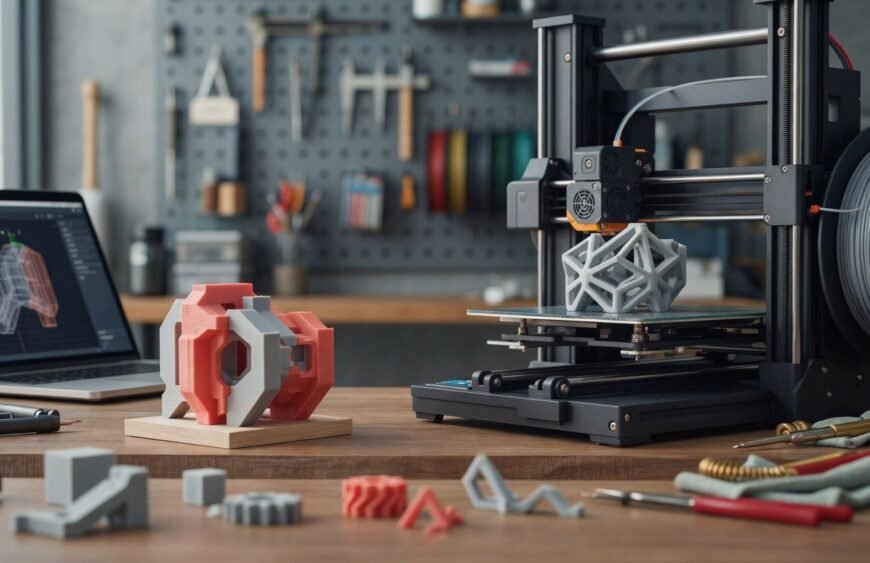
To design snap-fit joints for 3D printed products, choose a flexible material, keep the flexing arm gently tapered with rounded corners, and orient the part so layers don’t run across the bending zone. Allow clearance for printing tolerance, and test prototypes. Iterating on printed samples before final production is the fastest way to get a reliable fit.
What Is a Snap-Fit Joint and Why Use It in 3D Printing?
A snap-fit joint lets two parts lock together without screws, glue or fasteners. One part flexes slightly during assembly, then returns to its original shape and holds the mating part in place.
For 3D printed products, snap-fits cut hardware costs and speed up assembly. They suit enclosures, lids, clips and housings, all common in consumer products and electronics, two of the industries Tesseract serves.
Because 3D printing builds parts layer by layer, snap-fits need more care than they would in a moulded part. The sections below cover what to get right.
What Are the Main Types of Snap-Fit Joints?
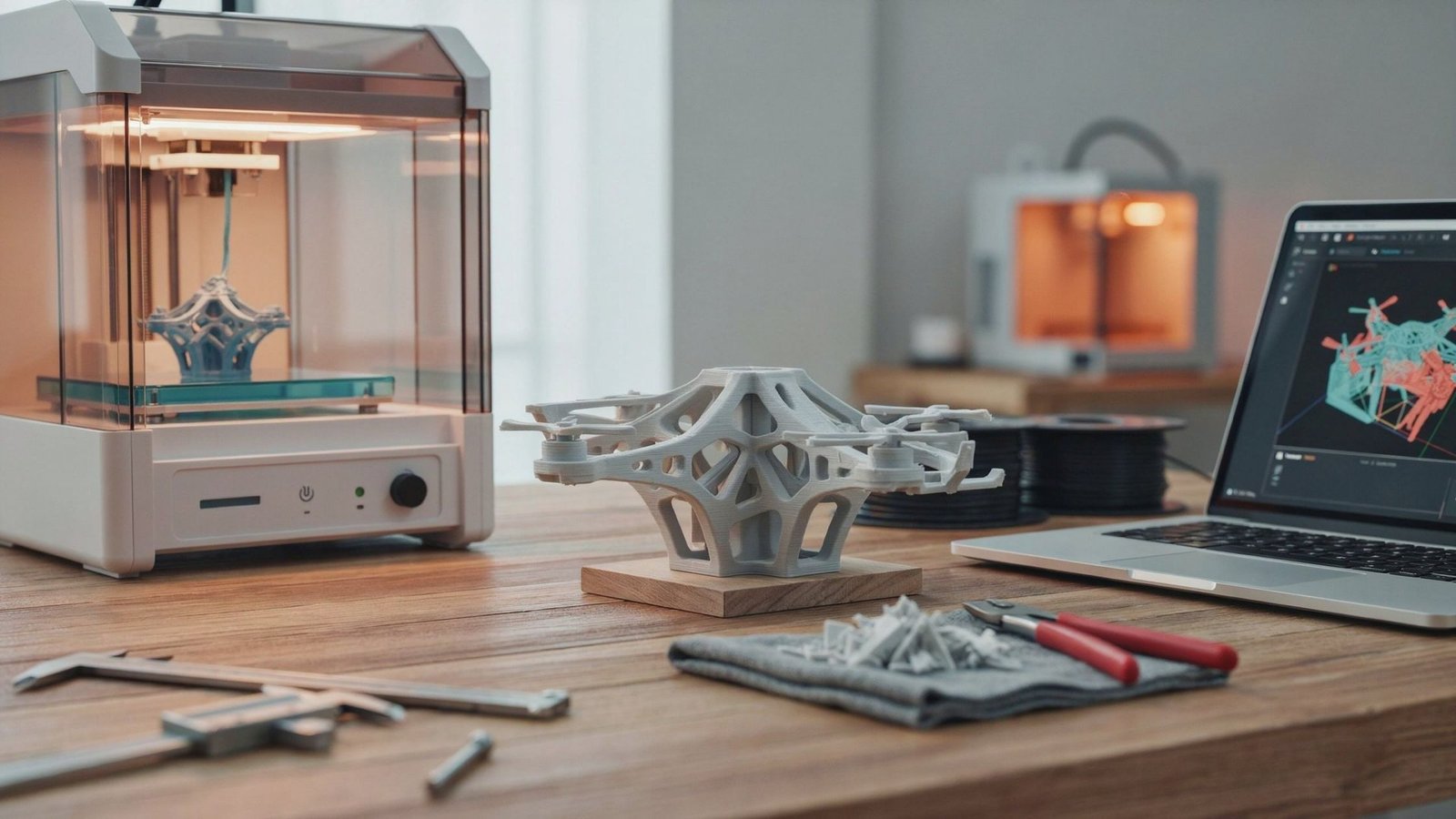
Most designs fall into three groups:
- Cantilever snap-fits: a flexible arm with a small hook that catches a ledge. This is the most popular type for 3D printed snap fit designs.
- Annular snap-fits: a ring or lip that presses into a groove, common in caps and round enclosures.
- Torsional snap-fits: a part that twists slightly to lock in place.
For a first design, start with a cantilever snap fit. It is simple to model, easy to print and easy to adjust.
How Do You Design a Snap-Fit That Won’t Break?
Most failures happen at the base of the flexing arm, where stress concentrates. A few habits help:
- Round the root. Sharp inside corners at the base of the arm invite cracks. Add a smooth fillet instead.
- Taper the arm. A beam that is thicker at the base and thinner at the tip spreads stress more evenly.
- Keep the hook small. A deeper catch means more bending, and more bending means more stress on the material.
- Add a lead-in angle. A gentle slope on the hook makes assembly easy, while a steeper return face makes the lock hold.
Short arms bend less easily and are more likely to snap, so give the arm enough length to flex comfortably.
How Does Print Orientation Affect Snap-Fit Strength?
Orientation matters more than most designers expect. In layered printing, bonds between layers are usually weaker than the material within each layer. If the arm bends across the layer lines, it can split along them.
Print the part so layers run along the arm’s length, not across it. If the geometry makes that hard, redesign the arm or print the clip on its own with a better orientation.
This is why snap-fit design and print setup should be planned together. FDM 3D printing is a good starting point for fast, functional prototypes, and its layered build makes orientation especially important to consider.
Which Materials Work Best for 3D Printed Snap Fits?
Material choice decides whether a clip flexes or cracks. Rigid, brittle materials tend to break under repeated bending, while tougher or more flexible ones forgive more.
Tesseract’s filament range includes PLA, ABS, PETG, ASA and carbon fibre composites, as well as flexible TPU. On the resin side it lists standard and ABS-like resins. Compare options on the Materials We Offer page, then match the material to how often the joint will be opened and closed.
If a snap will be used once, as in a sealed housing, a stiffer material may do. If it will open and close repeatedly, pick a tougher one and print test clips first.
How Much Clearance Should You Leave for 3D Printing Tolerances?
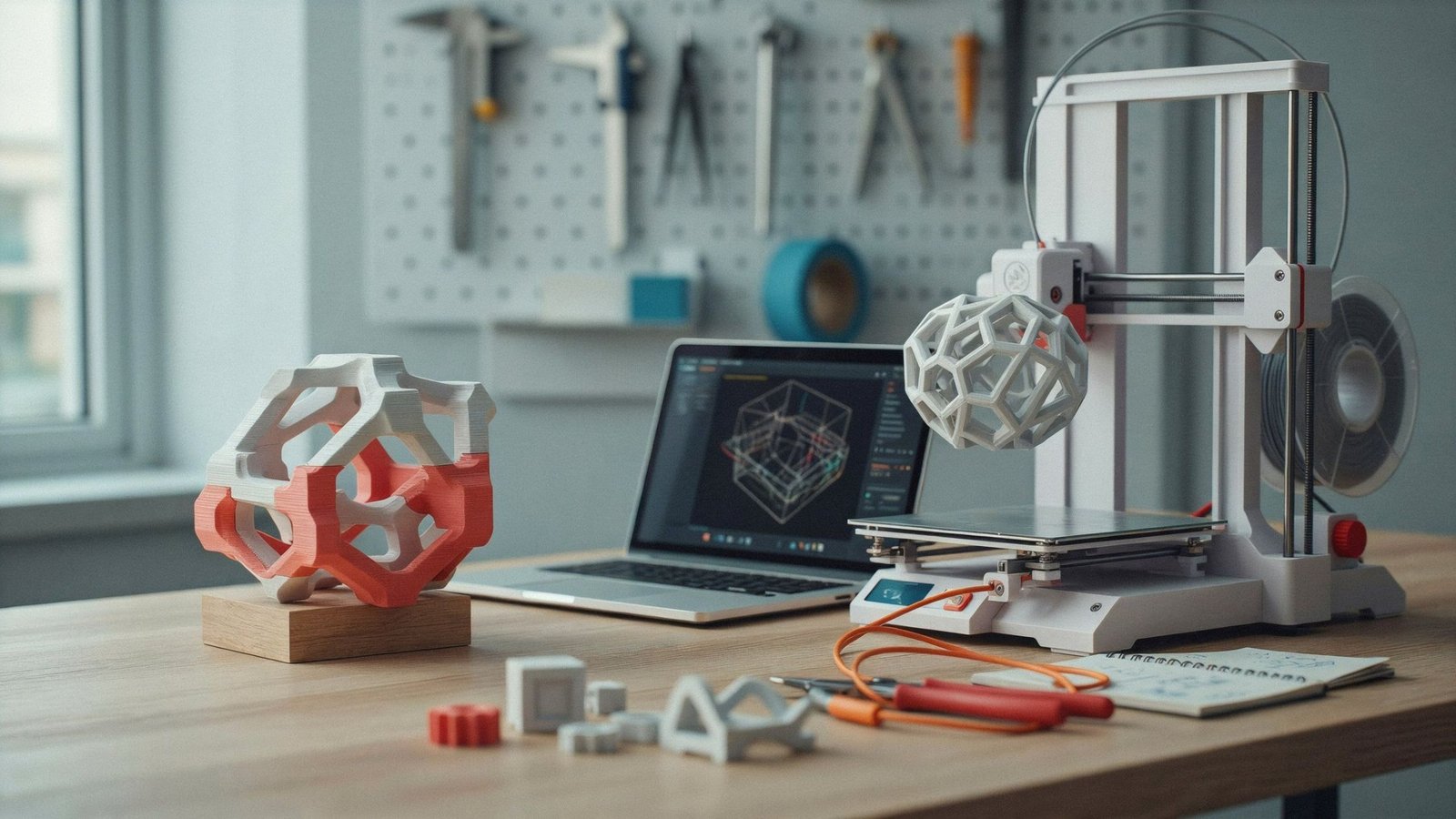
Printed parts rarely match the CAD model exactly. Machines, materials and technologies all produce slightly different results, so a joint drawn with zero gap may fit too tightly or not at all.
Build in a small clearance between mating surfaces, then adjust after a test print. The right amount depends on your printer and material, so treat any starting value as a guess to be tested. Printing a small test piece with several clearance variations is a quick way to find what works.
Why Prototype Snap-Fits Before Final Production?
Snap-fits are hard to judge on screen. How a clip feels, how much force it needs and whether it holds are things you learn by handling real parts.
Tesseract completes most projects within 2-7 days, depending on complexity and technology, so you can print, test and refine quickly. Its team also offers DFM problem solving and consulting, along with product designing support, which helps when a snap-fit has to move from prototype to production-ready design.
Conclusion
A reliable snap-fit comes down to a few things: a rounded, tapered arm, the right material, smart print orientation, sensible clearances and real prototype testing. Get these right and you can cut fasteners, simplify assembly and ship stronger products.
Ready to test your design? Upload your file to Tesseract for a free instant quote, or email contact@tesseract3d.com. For more practical guides, browse the Tesseract blog.
FAQs
What is the best snap-fit type for 3D printed products?
The cantilever snap-fit is the most practical choice for 3D printed products. It is simple to model, easy to print and easy to adjust. Start with this design, then consider annular or torsional snap-fits depending on your product’s shape and requirements.
Which 3D printing technology suits snap-fits?
FDM suits quick functional prototypes, while SLA and SLS are also options. Tesseract offers FDM, SLA, SLS, DMLS, PolyJet and DLP. The best choice depends on your material, detail and strength needs, so test a sample first.
Why do 3D printed snap-fits break?
Common causes are sharp corners at the arm’s base, an overly deep hook, brittle material, or layers running across the bending direction. Rounding the root, shortening the hook and changing print orientation usually fix it.
How do I make a snap-fit reusable?
Use a tougher or more flexible material, keep the hook shallow, and give the arm enough length. Orient layers along the arm and test repeated open-close cycles on a prototype before committing to production.
Can Tesseract help review my snap-fit design?
Yes. Tesseract offers DFM problem solving and consulting, product design and prototyping. You can upload your CAD file, in formats such as STL or STEP, for a free instant quote and expert input.