Open with a compelling hook. India’s medical device market is projected to reach $50 billion by 2030, and at the core of this growth is a quiet revolution in how devices are designed and prototyped. Introduce how 3D product design has collapsed the traditional development timeline from months to days. Preview the technologies covered in this blog: metal 3D printing, vacuum casting, 3D scanning, and 3D model printing and how each serves a specific role in medtech innovation.
The Role of 3D Product Design in Medical Devices
Why 3D Product Design Is a Game-Changer for Medical Device Development
Explain how traditional medical device development relied on expensive tooling, long iteration cycles, and high minimum order quantities, all barriers that killed early-stage innovation. 3D product design removes these constraints entirely. Engineers can now iterate on surgical instruments, prosthetic components, diagnostic housings, and implant geometries digitally before a single rupee is spent on tooling.
Highlight that design precision in medical devices isn’t optional; tolerances, biocompatibility, and sterilisation requirements demand accuracy that modern 3D design tools and printing technologies can now reliably deliver.
- Faster design-to-prototype cycles in days instead of months
- Digital validation before physical production reduces costly errors
- Complex anatomical geometries are achievable that traditional machining cannot replicate
- Supports regulatory documentation with accurate 3D models and dimensional reports
Metal 3D Printing Service for Medical Applications
Metal 3D Printing Service Building Functional Medical Components with Precision
Introduce metal 3D printing service as the technology behind functional, end-use medical components. Explain that technologies like DMLS (Direct Metal Laser Sintering) and SLM allow manufacturers to produce surgical instruments, orthopaedic implants, and sterilisable tool housings directly from biocompatible metal alloys, most commonly titanium (Ti-6Al-4V) and stainless steel 316L.
Highlight the core advantage for medtech: the ability to produce patient-specific implants and low-volume custom devices without tooling, while meeting the strict mechanical and surface finish standards medical applications demand.
Medical Use Cases:
- Custom orthopaedic implants and bone scaffolds
- Surgical guides and instrument handles
- Sterilisable enclosures for diagnostic equipment
- Dental prosthetics and crowns with tight-fit tolerances
- Lightweight structural frames for imaging device components
Vacuum Casting Service for Medical Prototyping
Vacuum Casting Service Producing Realistic Medical Device Prototypes at Low Volume
Explain that the vacuum casting service fills the critical gap between a raw 3D-printed prototype and a production-ready part. In the medical device workflow, it is used to produce small batches (typically 10–25 units) of polyurethane or silicone parts that closely mimic the look, feel, and mechanical behaviour of the final injection-moulded device.
For medtech designers and makers, this is invaluable, as it allows clinical user testing, ergonomic validation, and investor demonstrations without committing to expensive production tooling.
Where Vacuum Casting Adds Value:
- Ergonomic validation of handheld surgical instruments
- Transparent housings for diagnostic device mockups
- Soft-touch grips and over-moulded components in silicone
- Pre-clinical trial batches for regulatory submission support
- Colour-accurate, surface-finished parts for stakeholder presentations
3D Scanning Service in Reverse Engineering and Quality Control
3D Scanning Service, Precision Verification, and Reverse Engineering for Medical Devices
Position 3D scanning service as the quality backbone of medical device manufacturing. Explain two primary applications: reverse engineering legacy medical components (digitising existing instruments to recreate or improve them) and dimensional inspection, verifying that printed or cast parts meet the precise tolerances required by medical standards such as ISO 13485.
Emphasise that in the Indian medtech context, many manufacturers are digitising existing imported devices for localisation and cost reduction, a process entirely dependent on high-accuracy 3D scanning.
Key Applications:
- Reverse engineering of imported surgical instruments for local production
- Dimensional inspection reports for regulatory compliance
- Capturing patient anatomy for custom implant design
- Digitising legacy tooling to enable design updates
- Creating accurate 3D models from physical samples
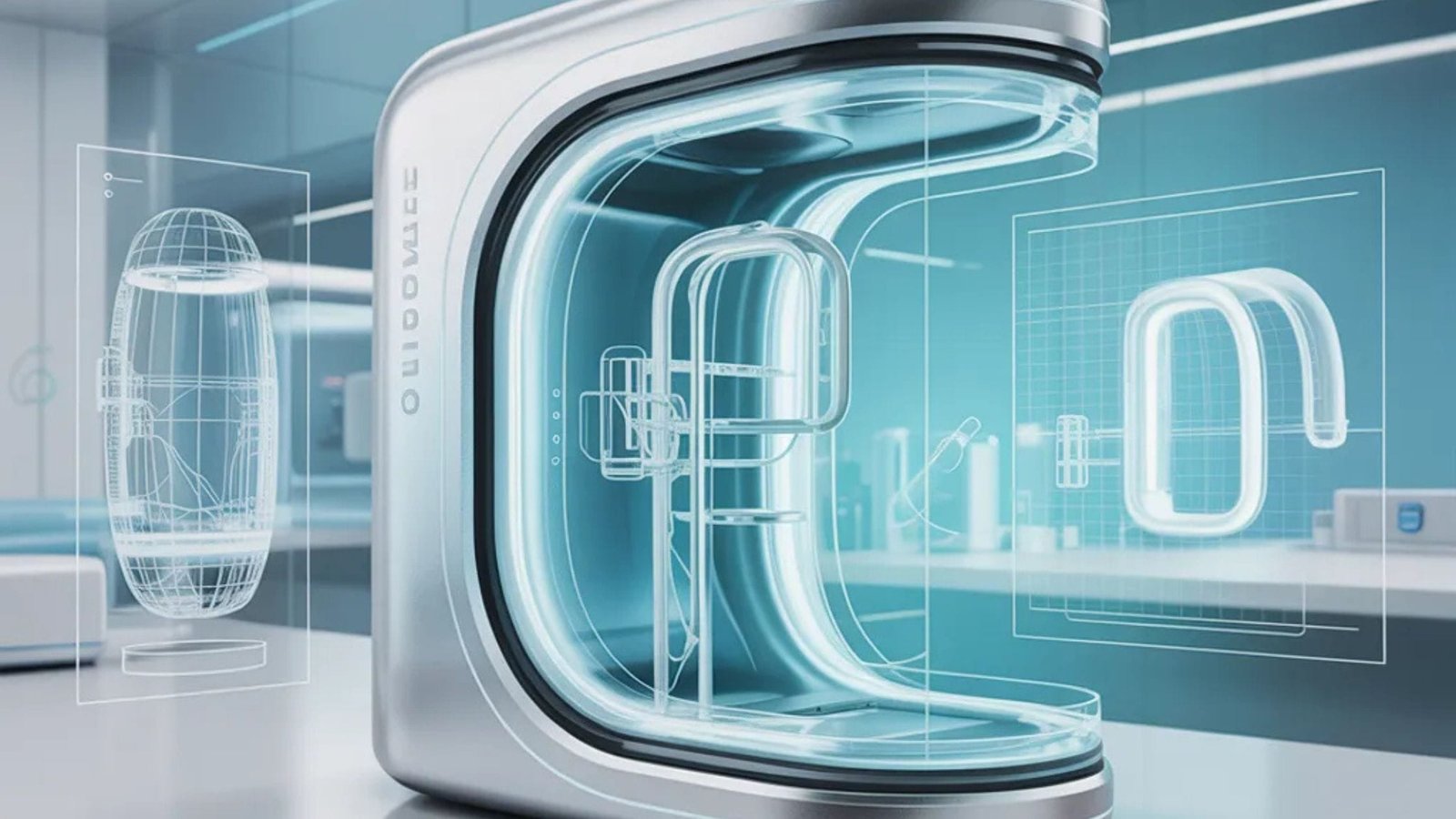
3D Model Printing for Surgical Planning and Education
3D Model Printing From Surgical Planning to Medical Training Tools
Explain that 3D model printing in the medical field extends beyond prototyping; it is actively used in pre-surgical planning, anatomical education, and patient communication. Surgeons in India’s leading hospitals are using patient-specific 3D-printed bone and organ models derived from CT/MRI scans to rehearse complex procedures before entering the operating room.
For makers and medtech builders, this represents a significant commercial opportunity, as producing highly accurate anatomical models is now accessible through advanced multi-material 3D printing platforms.
Applications in Medical Settings:
- Pre-surgical rehearsal models from CT/MRI data
- Anatomical training aids for medical colleges
- Patient-specific implant fitting guides
- Cardiovascular and neurological procedure planning models
The End-to-End Medtech Development Workflow
Bringing It All Together: The Complete 3D-Driven Medical Device Workflow
Synthesise all four technologies into a clear, sequential workflow that a medtech maker or startup would follow from concept to clinical prototype:
| Stage | Technology Used | Output |
| Concept & Design | 3D Product Design | CAD files, design validation |
| Reverse Engineering | 3D Scanning Service | Accurate digital models |
| Functional Prototyping | Metal 3D Printing Service | End-use metal components |
| Low-Volume Batches | Vacuum Casting Service | Test-ready prototype sets |
| Surgical/Training Models | 3D Model Printing | Anatomical and planning models |
Why Tesseract3D for Medical Device Projects in India
Your End-to-End 3D Manufacturing Partner for Medical Innovation in India
Position Tesseract3D as the single partner covering the entire medtech development chain: 3D product design consultation, metal 3D printing service, vacuum casting service, 3D scanning service, and 3D model printing all under one roof. Highlight fast turnaround (24–72 hours for prototypes), engineering support, and experience with biocompatible materials. Call to action: invite medtech founders and makers to submit their project brief for a free consultation.
Frequently Asked Questions
Which 3D printing technology is best for medical device prototypes in India?
It depends on the application. For functional metal components like surgical instruments or implants, a metal 3D printing service using DMLS with Ti-6Al-4V or SS316L is recommended. For ergonomic and appearance prototypes, vacuum casting service in polyurethane or silicone is the most cost-effective choice.
Is 3D-printed metal safe for medical use?
Yes, when the correct biocompatible alloys are used. Titanium (Ti-6Al-4V ELI) and Stainless Steel 316L are widely accepted in medical device manufacturing and meet ISO 10993 biocompatibility standards. Post-processing, such as electropolishing, further enhances surface safety.
How does a 3D scanning service help in medical device development?
A 3D scanning service captures precise dimensional data from physical objects or anatomy, enabling reverse engineering of existing devices, quality inspection of manufactured parts, and creation of patient-specific digital models for custom implant design.
What is the typical turnaround for medical device prototypes at Tesseract?
Standard prototypes via 3D model printing or FDM are delivered in 24 – 48 hours. Metal 3D printing service parts typically take 3–5 business days, depending on complexity. Vacuum casting service batches of 10–25 units are usually completed within 5–7 business days.
Can 3D product design support regulatory submissions for medical devices in India?
Yes. Accurate 3D CAD models, dimensional inspection reports from 3D scanning, and prototype validation records from vacuum casting can all support technical documentation required under India’s Medical Device Rules 2017 and CDSCO submissions.