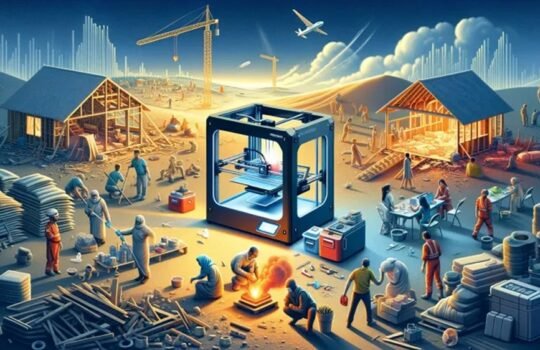
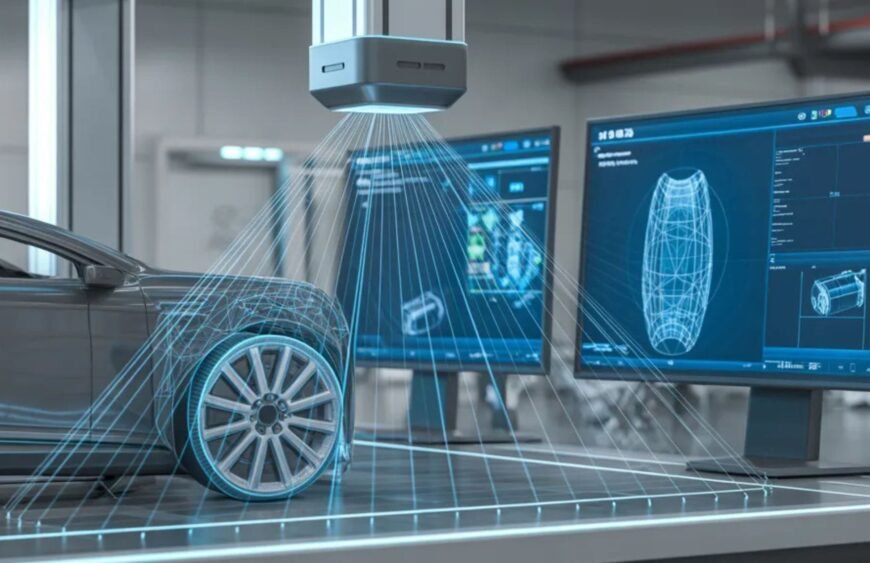
At Tesseract, we have seen firsthand how a single missed tolerance can turn a production run into scrap. After a decade working with makers, engineers, and product teams across Mumbai and beyond, one shift stands out above all others: businesses are moving away from manual measurement toward professional 3D scanning services and not looking back.
Quick stats:
- Global 3D scanning market valued at $6.36 billion in 2025
- Over 42% of manufacturers now use scanning for inspection and reverse engineering
- 36% of smart factories have deployed 3D scanning in automated QC systems
- Metrology-grade accuracy now achievable down to 0.025mm
What Is a 3D Scanning Service and Why Does It Matter Now?
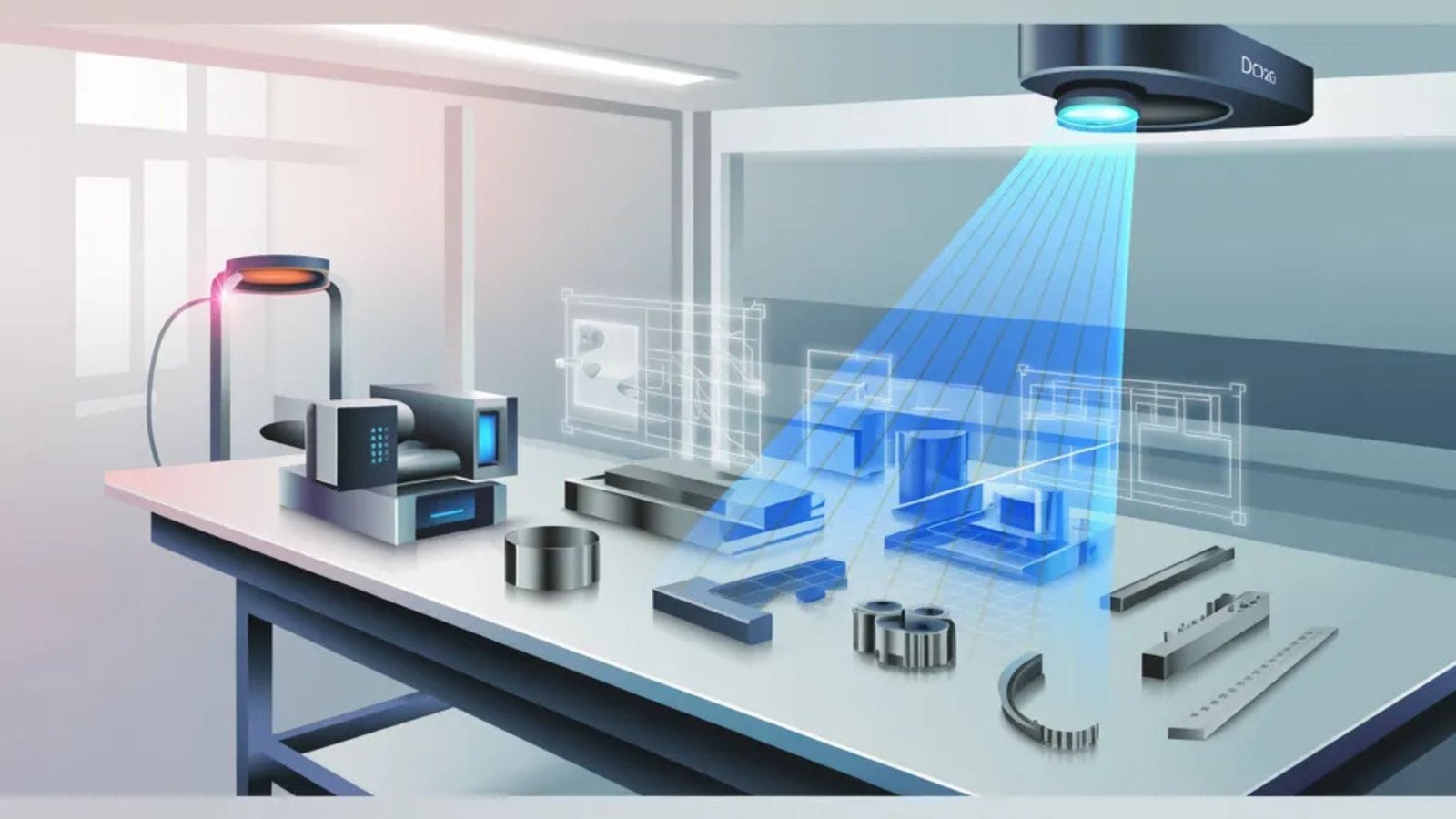
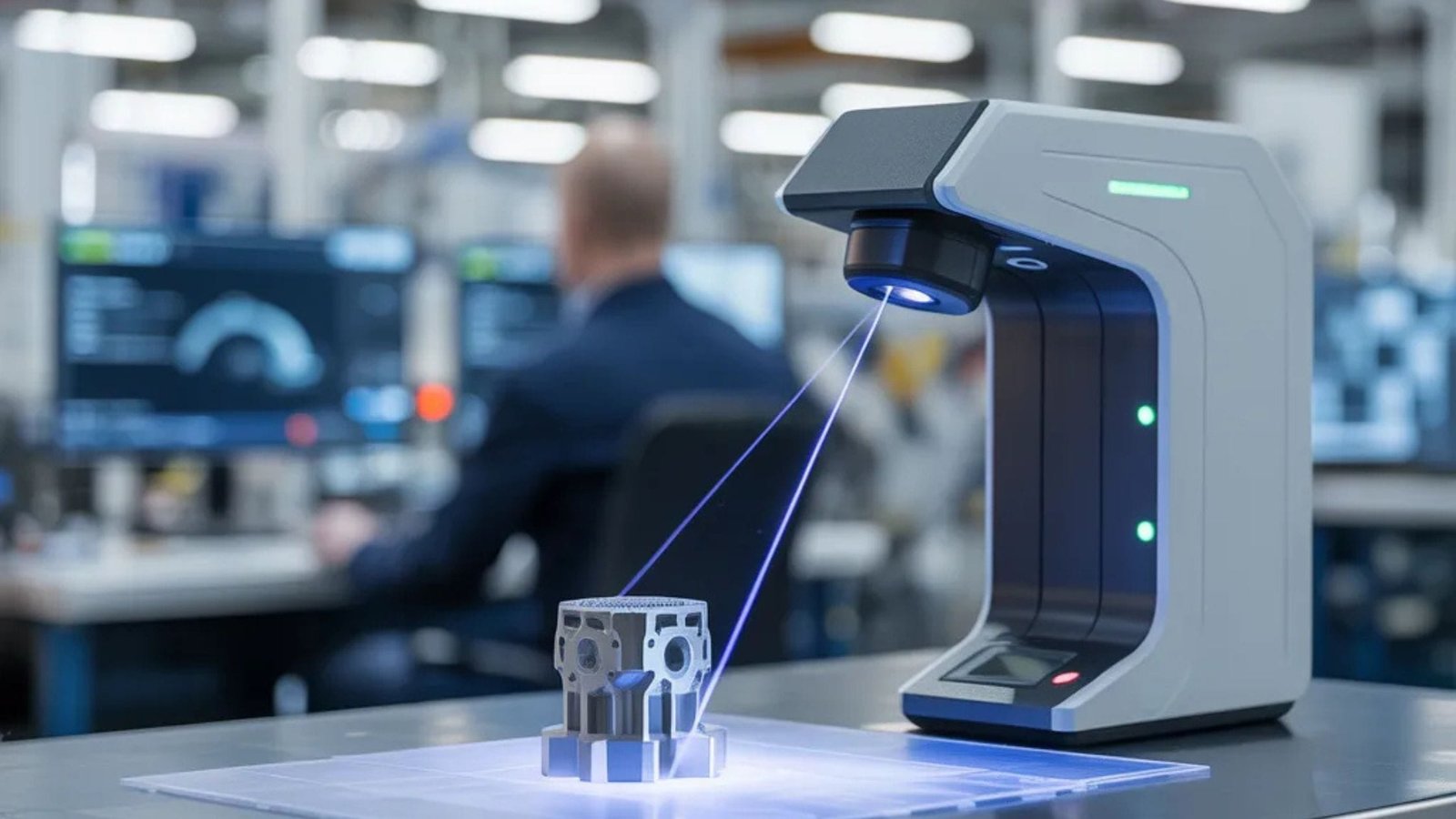
A 3D scanning service uses structured light, laser triangulation, or photogrammetry to capture millions of data points from a physical object and convert them into a precise digital twin. Unlike callipers or CMMs that sample 10–20 measurement points, a 3D scan captures the entire surface geometry in minutes.
In 2025, with Industry 4.0 pushing closed-loop manufacturing, this complete digital capture is what separates reactive quality checks from proactive quality assurance. It directly feeds into workflows like 3D product design, reverse engineering, and first-article inspection, all from a single scan.
From spot checks to full-surface verification
Traditional inspection compares a handful of dimensions. 3D scanning compares every square millimetre of your part against the original CAD file, generating instant colour-deviation maps red for out-of-tolerance, green for pass. The shift from “sample a few points” to “verify everything” is precisely why over a third of smart factories now embed scanning into their automation lines.
The Real Problems 3D Scanning Solves for Makers and Builders
Whether you are running FDM 3D printing prototypes or producing metal enclosures through metal 3D printing in India, quality failures share a common thread: deviation caught too late. Here is where 3D scanning intervenes:
- First Article Inspection (FAI): Validate that a new mould or printed part matches design intent before committing to a full production run.
- Reverse engineering legacy parts: Scan worn components with no surviving CAD data and rebuild accurate STEP/IGES models for re-manufacturing.
- Tool and fixture validation: Detect jig wear or machine drift before it propagates defects across thousands of parts.
- GD&T compliance on complex surfaces: Verify profile tolerances and true-position callouts that are practically impossible with hand tools.
- Assembly fit checks: Overlay mating parts in digital space and resolve interference issues before physical assembly.
How 3D Scanning Integrates with Modern 3D Printing Workflows
Scanning and printing are two sides of the same coin for product teams using a 3D printing service in Mumbai or anywhere in India. The closed-loop looks like this:
Design → Print → Scan → Compare → Certify
- Design: CAD model or 3D product design brief created
- Print: FDM or metal 3D printing produces the part
- Scan: 3D scanning service captures full geometry
- Compare: Scan overlaid on CAD deviations highlighted instantly
- Certify: Pass/fail report generated; design refined if needed
This loop eliminates the costly “print-and-hope” approach. Scan data fed back into the slicer or design file enables continuous improvement with every iteration.
Industry Applications Where 3D Scanning Service Delivers the Most Value
- Automotive: Body panel alignment, jig validation, and prototype comparison against master CAD
- Aerospace: Sub-millimetre tolerance checks on turbine blades, brackets, and structural assemblies
- Medical Devices: Patient-specific implant validation and prosthetics fit-verification before delivery
- Consumer Goods: Mould cavity inspection, packaging die verification, and cosmetic surface analysis
- Industrial Machinery: Wear monitoring on rotary components and MRO part replication without drawings
- Electronics: PCB enclosure fit validation and connector clearance checks on complex assemblies
For businesses using a 3D printing service in India, especially those working with metal components, integrating scanning at the post-production stage is increasingly a compliance requirement, not just a best practice.
3D Scanning vs. Traditional CMM Inspection: An Honest Comparison
Coordinate Measuring Machines are precise but slow, expensive, and limited to discrete measurement points. A 3D scanning service offers a fundamentally different value proposition:
- Speed: A complex part scanned in 10–20 minutes vs. hours on a CMM
- Coverage: Millions of data points vs. a pre-programmed set of 20–50 touch probes
- Flexibility: Handheld scanners work on the shop floor, on curved surfaces, and on large assemblies that do not fit inside a CMM envelope
- Cost per inspection: Outsourcing to a 3D scanning service is significantly cheaper than purchasing and maintaining a CMM for low-to-mid volume manufacturers
That said, CMMs remain the gold standard for certain high-stakes single-point measurements. The modern approach combines both scanning for surface analysis and CMM for critical datums.
What to Look for in a 3D Scanning Service Provider
Not every bureau delivers the same quality. When evaluating a provider, particularly if you are sourcing alongside metal 3D printing in India or an FDM 3D printing run, look for:
- Metrology-grade equipment capable of ±0.05mm or better
- Certified engineers who understand GD&T, not just scanner operators
- Deliverables in your format: colour deviation maps, STEP/IGES files, inspection reports, or digital twin data
- Experience across materials: plastics for FDM parts, reflective metals, and composite surfaces all behave differently under a scanner
- Turnaround is aligned with your production cadence, which also offers scanning under one roof and eliminates handoff delays.
Frequently Asked Questions
What is a 3D scanning service, and how does it work?
A 3D scanning service uses laser or structured light technology to capture millions of surface points on a physical object, converting them into a precise digital model. This model is then compared against the original CAD file to detect dimensional deviations, verify tolerances, or enable reverse engineering.
How does 3D scanning improve quality control over traditional methods?
Traditional methods measure a handful of discrete points. 3D scanning captures the entire surface geometry, generating full colour deviation maps in minutes, making it far more comprehensive, faster, and reliable for catching defects that spot-checks miss.
Can 3D scanning work alongside FDM 3D printing and metal 3D printing?
Absolutely. It is most powerful when integrated directly into the print-then-scan workflow. After an FDM or metal 3D printing job, scanning validates whether the produced part matches design intent, enabling rapid iteration before committing to larger production volumes.
Is 3D scanning suitable for small businesses or only large manufacturers?
Outsourcing to a 3D scanning service makes precision metrology accessible to everyone. You pay per scan or per project rather than investing in six-figure equipment, making it viable even for startups and indie makers.
Does Tesseract offer 3D scanning alongside its 3D printing service in Mumbai?
Yes. Tesseract provides an integrated offering of 3D product design, FDM 3D printing, metal 3D printing, and 3D scanning services under one roof in Mumbai, so your parts go from design to verified deliverable without multiple vendor handoffs.