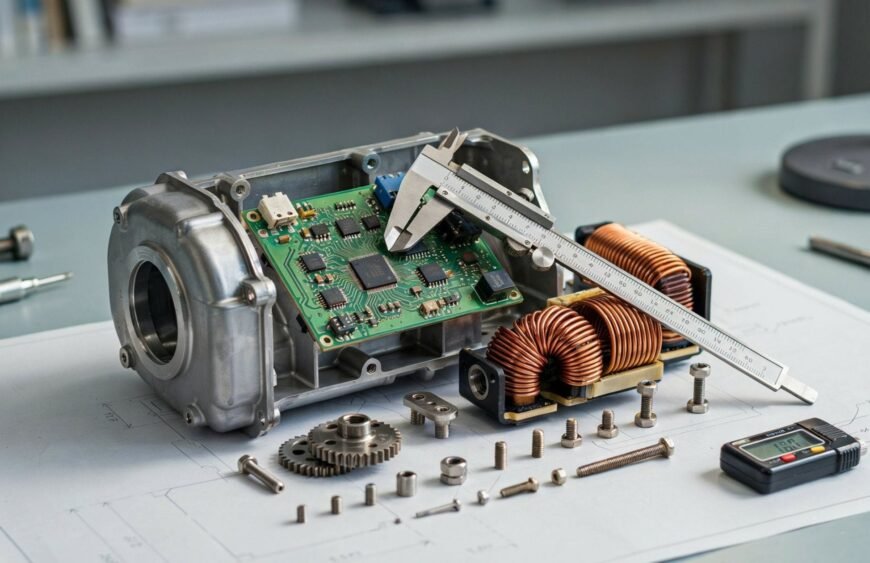
Whether you’re trying to replicate a discontinued component, improve an existing product, or integrate new parts into an older assembly, reverse engineering gives you the ability to work backwards from a physical object and rebuild its design with precision. It’s a critical capability in modern product development, and when paired with advanced 3D scanning, it becomes faster and more accurate than ever before.
What Is Reverse Engineering?
Reverse engineering is the process of analysing an existing physical object to reconstruct its design and intent digitally. Rather than building from scratch, it extracts dimensional data, geometry, and structural details from a real-world part and converts them into a usable 3D model.
This digital model can then be used for replication, modification, simulation, or manufacturing making reverse engineering a valuable tool for both product designers and manufacturers.
How 3D Scanning Powers Reverse Engineering
Modern reverse engineering begins with 3D scanning. A physical object is scanned using advanced equipment that captures millions of measured data points across its surface, producing a highly accurate digital representation.
Why 3D Scanning Replaced Manual Measurements
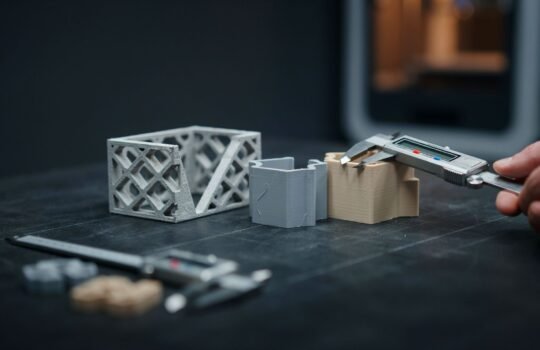
Traditional reverse engineering relied on manual measurements, time-consuming and prone to error, especially with complex geometries. 3D scanning changed this entirely. It offers:
- Precise data capture across intricate surfaces
- Handling of complex parts with millions of measured points
- Faster data capture compared to manual methods
- Comprehensive depiction of wear, deviations, and surface detail
- Portability objects can be scanned on-site or in various locations
The result is a detailed, accurate digital model ready for CAD refinement and further development.
Key Applications of Reverse Engineering Services
Reverse engineering isn’t limited to replication. Its applications span the entire product development and manufacturing cycle:
Replacement and Upgradation: Recreating damaged components or updating obsolete parts for improved efficiency
Integration and Analysis: Fitting new parts into existing assemblies; analysing competitor product features
Inspection and Simulation: Inspecting manufactured parts and running software-based simulations for various parameters
Design Optimisation: Refining designs for superior aftermarket products and new manufacturing plans
Industries That Benefit from Reverse Engineering
Reverse engineering and 3D scanning services are widely used across sectors where precision, part compatibility, and design accuracy are non-negotiable:
- Aerospace component reconstruction and quality inspection
- Automotive: spare parts, body components, and design iteration
- Healthcare: medical device development and component analysis
- Consumer Products product improvement and competitor benchmarking
- Electronics, Defence, Robotics and Automation custom part development and integration
Reverse Engineering and 3D Product Design: How They Work Together
Reverse engineering is often the starting point for a broader product development workflow. Once a scanned model is reconstructed as a clean CAD file, the 3D product design process takes over, refining geometries, optimising for manufacturing, and preparing the part for production.
From that CAD model, teams can move into rapid prototyping via 3D printing services in India, CNC machining, injection moulding, or even metal 3D printing in India (DMLS), depending on the functional requirements of the final part. This end-to-end capability is what makes reverse engineering so powerful in real-world product development.
Why Choose Tesseract for Reverse Engineering in India?
Tesseract scanning and reverse engineering services are built on three core strengths:
High-Level Accuracy: Advanced scanning equipment captures every surface detail precisely, ensuring exact replicas and reliable reconstruction of even the most intricate components
Versatility: Solutions are adaptable across industries and part complexities, from simple components to detailed assemblies
Vast Experience: Years of hands-on project experience across aerospace, automotive, healthcare, consumer, and industrial sectors
Beyond scanning, Tesseract offers a complete product development ecosystem from reverse engineering and 3D product design to 3D printing, CNC machining, vacuum casting, injection moulding, and more all under one roof in Mumbai.
Ready to get started? Upload your design or part details for an instant quote.
Frequently Asked Questions
What is reverse engineering and how does it work?
Reverse engineering reconstructs the design and intent of an existing physical part by capturing its precise geometry through 3D scanning and converting it into a digital CAD model for replication, modification, or analysis.
What is 3D scanning and how does it support reverse engineering?
3D scanning captures millions of measured data points across a physical object’s surface to create an accurate digital model. It replaces manual measurement methods with faster, more precise data capture, especially for complex geometries.
What are the main applications of reverse engineering services?
Key applications include replacing damaged or obsolete parts, fitting new components into existing assemblies, inspecting manufactured parts, competitor product analysis, and design optimisation for improved manufacturing.
Which industries use reverse engineering services?
Aerospace, automotive, healthcare, consumer products, electronics, defence, and robotics industries commonly use reverse engineering for component replacement, quality inspection, and product development.
How long does reverse engineering take at Tesseract?
Turnaround depends on part complexity and size, but Tesseract’s efficient process typically delivers results from scanning to final digital model within a few days to one week.