The manufacturing world is changing fast. For makers and builders who want to stay ahead, understanding modern tools like 3D scanning services is no longer optional, it’s essential.
From capturing complex geometries to reducing production errors, 3D scanning has become the backbone of smart manufacturing across India and globally. Companies that have adopted scanning technology report shorter production cycles, fewer errors, and significantly lower rework costs.
What Is 3D Scanning and How Does It Work?
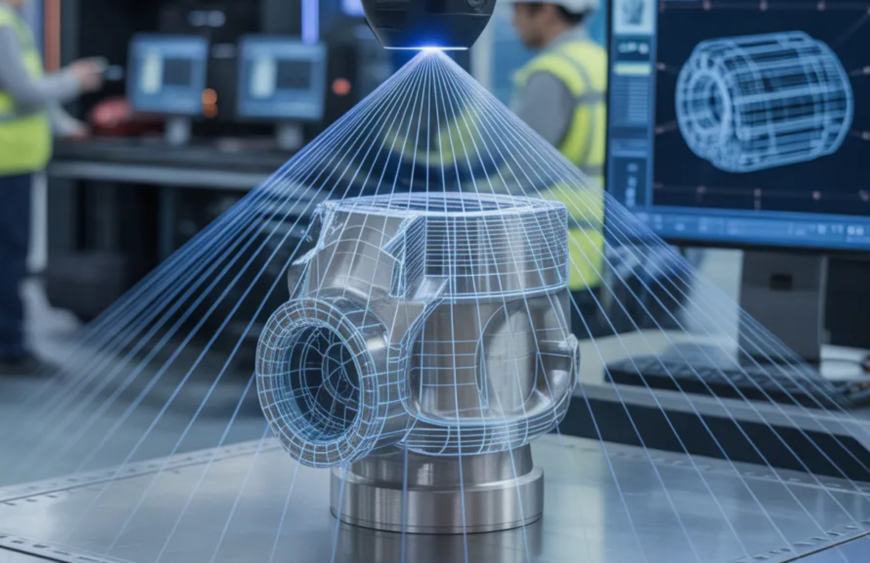
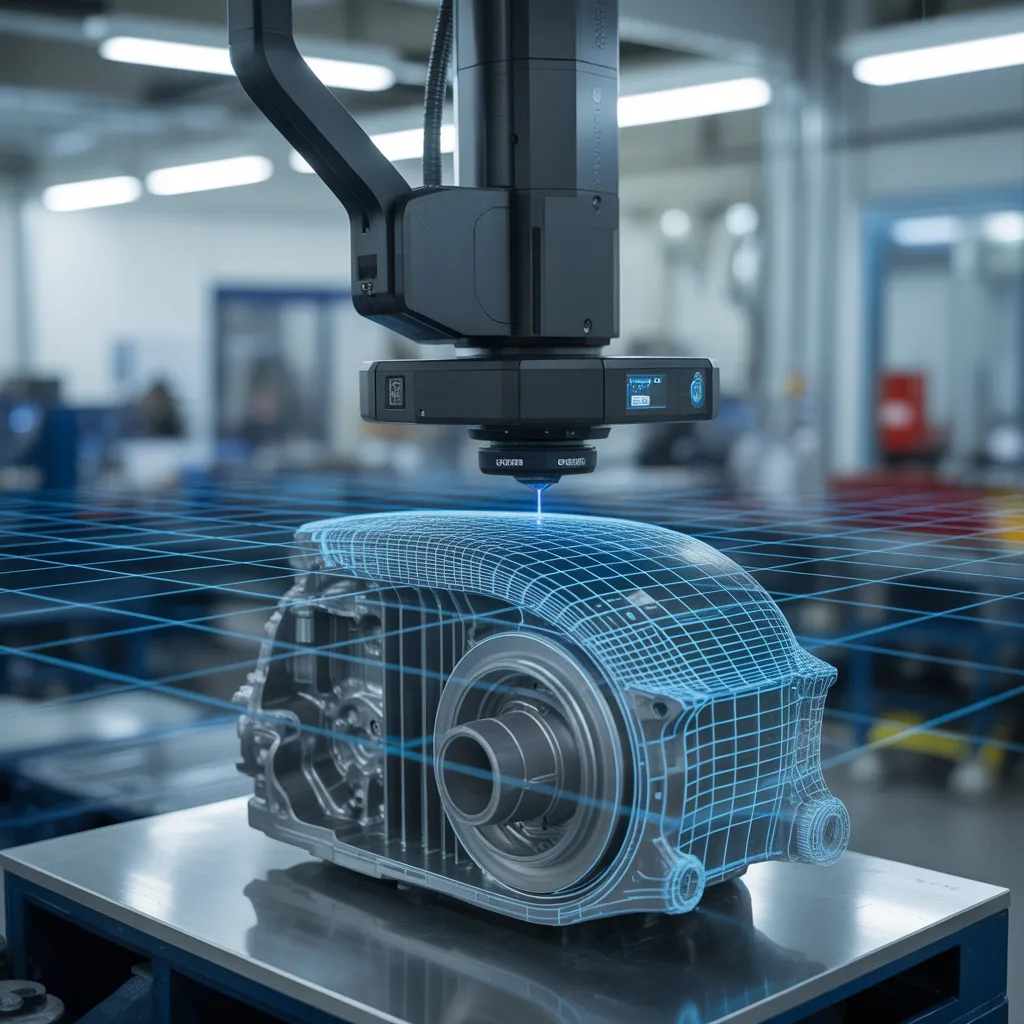
3D scanning is the process of capturing the exact shape, size, and surface of a physical object using laser or structured light technology converting it into a precise digital model ready for engineering use.
Key steps in the process:
- Object is placed under a structured light or laser scanner
- Millions of data points are captured within seconds
- A detailed point cloud is generated from the captured data
- The cloud is converted into a usable 3D mesh or CAD file
This digital model can then feed directly into 3D product design workflows, cutting concept-to-prototype time dramatically and giving engineers a reliable foundation to build from.
Top Ways 3D Scanning Is Transforming Manufacturing
Reverse Engineering Made Simple
Manufacturers no longer need original blueprints. 3D scanning recreates legacy parts with pinpoint precision critical for industries like automotive and aerospace where obsolete components need accurate reproduction without original documentation.
Quality Control & Inspection
Scanning finished parts against original CAD models instantly flags deviations eliminating guesswork, reducing wastage, and maintaining consistent quality standards across every production run on the floor.
Faster Prototyping Cycles
Combined with aluminium 3D printing, scanned data can go from a physical object to a functional metal prototype within days dramatically compressing timelines that once took weeks or even months to complete.
Real-World Applications for Makers & Builders
Whether you’re an independent maker or running a full production unit, 3D scanning unlocks possibilities that traditional measuring tools simply cannot match in speed or accuracy:
- Custom part replication — scan a worn-out component and reproduce it exactly without guesswork
- Fit & assembly testing — verify how parts interact before committing to expensive full production runs
- Architectural & artistic models — capture real-world structures or objects for detailed scale modelling projects
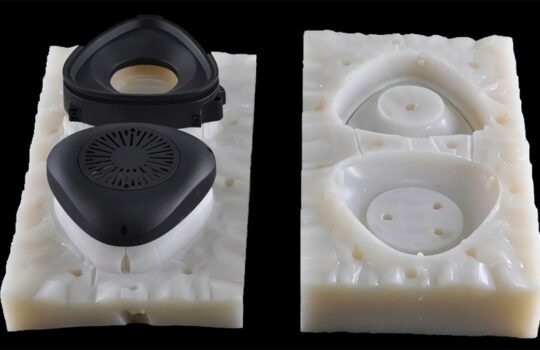
- Tooling & mould creation — feed precise scan data directly into vacuum casting services for rapid, accurate mould development
These applications save time, cut costs, and give makers a level of confidence in their output that manual processes simply cannot deliver consistently.
3D Scanning + Advanced Manufacturing — A Powerful Combination
3D scanning doesn’t work alone it’s most powerful when integrated into a complete manufacturing pipeline from start to finish.
At Tesseract3D, scan data flows seamlessly into downstream services like CNC machining, injection moulding, and sheet metal fabrication giving clients a true end-to-end solution from initial scan to finished, production-ready part.
This integrated approach eliminates data loss between teams, reduces miscommunication, and ensures the final manufactured component matches the original design intent with high fidelity. It is precisely what separates modern manufacturing partners from conventional job shops still relying on manual handoffs.
Why Indian Makers & Builders Should Adopt 3D Scanning Now
India’s manufacturing sector is growing at an unprecedented pace. With initiatives like Make in India pushing local production capabilities, the demand for precise, fast, and cost-effective manufacturing tools has never been more urgent or more relevant.
3D scanning gives Indian makers a powerful competitive edge by reducing dependency on imported components, enabling accurate local reverse engineering of foreign parts, and accelerating indigenous product development cycles from idea to production-ready output.
For small and mid-sized manufacturers especially, on-demand scanning services remove the barrier of heavy capital investment making industrial-grade precision accessible to everyone building in India today.
Choosing the Right 3D Scanning Partner
Not all scanning services deliver the same results. Here’s what makers and builders should evaluate before committing:
- Equipment quality — industrial-grade scanners deliver far superior results compared to consumer-level devices
- Accuracy tolerance — ensure the scanner meets your specific engineering and production requirements
- Post-processing capability — can they convert raw scan data into clean, usable CAD files ready for manufacturing?
- Integrated services — can they take you from scan all the way through to final production without disruptive handoffs?
Choosing a partner with end-to-end capabilities means fewer delays, better accuracy, and a smoother path from concept to finished product.
FAQs
Q1. What industries benefit most from 3D scanning services?
Automotive, aerospace, medical devices, architecture, jewellery, and consumer product manufacturing are among the top beneficiaries of industrial 3D scanning.
Q2. How accurate is 3D scanning compared to traditional measurement?
Industrial 3D scanners can achieve accuracy up to ±0.02mm significantly superior to manual measurement methods used in conventional manufacturing.
Q3. Can 3D scanning data be used directly for 3D printing?
Yes. Scan data converted to STL or STEP formats can directly feed FDM, SLA, or SLS printing workflows without additional remodelling.
Q4. How does 3D scanning support vacuum casting?
Scanned geometry is used to create highly accurate master patterns for silicone moulds, making the entire vacuum casting process faster and more dimensionally precise.
Q5. Is 3D scanning affordable for independent makers and small manufacturers?
Absolutely. With on-demand service providers, even small businesses can access industrial-grade scanning without heavy upfront capital investment.