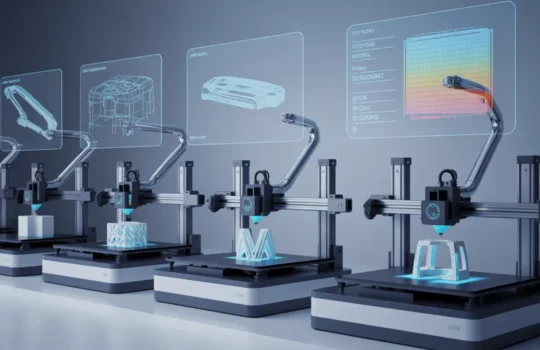
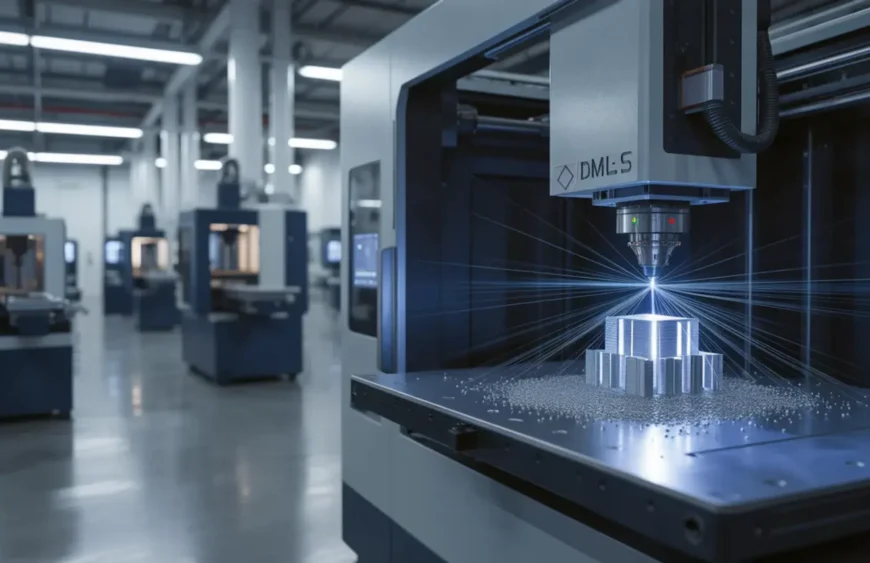
Is DMLS 3D printing the future of metal manufacturing, or just another industry buzzword? This question keeps engineers and manufacturers across India awake at night in 2026.
The metal manufacturing landscape is evolving rapidly. Direct Metal Laser Sintering (DMLS) is disrupting how we create metal parts. But can this additive manufacturing technology truly replace centuries-old methods like casting, forging, and CNC machining?
Let’s compare DMLS 3D printing with traditional metal manufacturing and discover when to use each method.
What is DMLS 3D Printing?
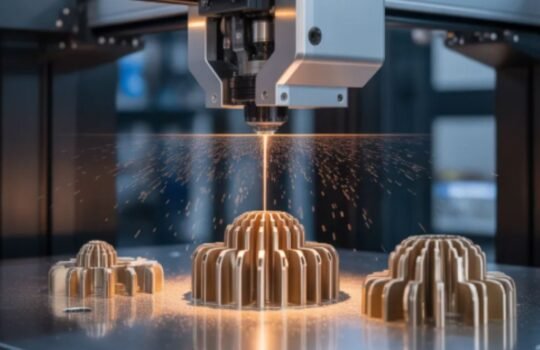
DMLS 3D printing is an additive manufacturing process that creates metal parts directly from digital designs. A high-powered laser selectively melts metal powder particles, fusing them layer by layer until your part is complete.
Each layer is only 20-100 microns thick, thinner than a human hair.
The process uses various metal powders including stainless steel (316L, 17-4 PH), titanium (Ti6Al4V), aluminum (AlSi10Mg), Inconel (625, 718), and cobalt-chrome alloys.
Industries leading DMLS adoption include aerospace, medical devices, automotive, and precision tooling. Companies use metal 3D printing to create parts that were previously impossible or too expensive to manufacture.
DMLS vs Traditional Manufacturing: Direct Comparison
| Factor | DMLS 3D Printing | Traditional Manufacturing |
| Setup Cost | Low (no tooling) | High (₹8 lakh – ₹4 crore for molds) |
| Lead Time | 2-7 days | 4-16 weeks |
| Design Freedom | Highly complex geometries | Limited by tool access |
| Best Volume | 1-1,000 parts | 10,000+ units |
| Material Waste | 5-10% (powder recycled) | 40-60% (chips and scrap) |
| Part Cost (low volume) | ₹4,000-₹42,000 per part | ₹16,000-₹1.6 lakh per part |
| Part Cost (high volume) | Higher per unit | Significantly lower |
- Production speed: DMLS eliminates tooling time. Traditional methods need weeks to create molds and dies before production starts.
- Cost dynamics: DMLS wins for prototypes and small batches. Traditional manufacturing dominates in mass production due to economies of scale.
- Design capabilities: Metal additive manufacturing enables internal cooling channels, organic shapes, and topology-optimized structures impossible with conventional methods.
- Material efficiency: DMLS 3D printing wastes minimal material. Up to 98% of unused powder can be recycled. Traditional subtractive methods like CNC machining waste over half the raw material.
When DMLS 3D Printing Wins
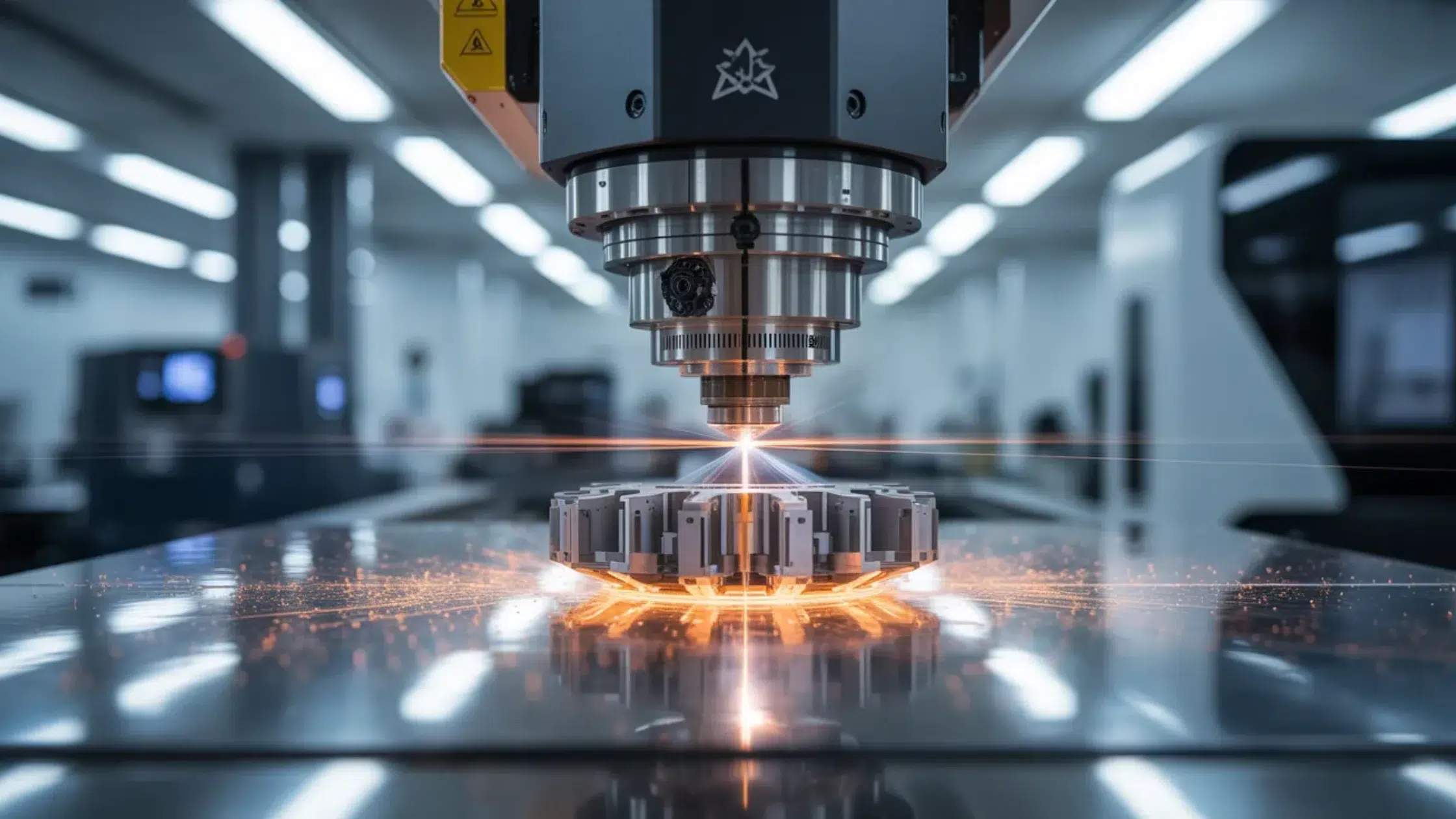
Direct Metal Laser Sintering excels in specific scenarios:
- Low-Volume Production: Making 1 to 1,000 parts? DMLS is cost-effective. You skip expensive tooling and start production immediately.
- Complex Geometries: DMLS technology creates internal channels, lattice structures, and conformal cooling impossible for traditional methods. Aerospace companies use DMLS for lightweight brackets reducing aircraft weight by 40%.
- Rapid Prototyping: Cut development time from months to days. Engineers iterate faster with metal 3D printing.
- Mass Customization: Medical implants, dental crowns, and custom tooling benefit from DMLS. Each part can be unique without retooling costs.
- Part Consolidation: Combine 20 parts into one DMLS component. GE Aviation reduced a jet engine fuel nozzle from 20 parts to one using additive manufacturing.
When Traditional Methods Still Lead
Traditional manufacturing isn’t disappearing. Here’s when conventional methods outperform DMLS 3D printing:
- Mass Production: Producing 10,000+ identical units? Traditional methods like die casting offer unbeatable per-part costs. Indian automotive manufacturers still use casting for engine blocks because they produce millions annually.
- Simple Geometries: Basic cylindrical or rectangular parts are faster and cheaper with CNC machining. Don’t overcomplicate simple designs.
- Lowest Cost at Scale: High-volume injection molding or casting drops unit costs dramatically. DMLS can’t match this economics for large runs.
- Superior Surface Finish: CNC machining delivers mirror-like finishes out of the box. DMLS parts often need post-processing.
- Larger Part Sizes: Most DMLS machines have build volumes under 500mm. Traditional methods handle massive castings.
The 2026 Reality: Hybrid Manufacturing is King
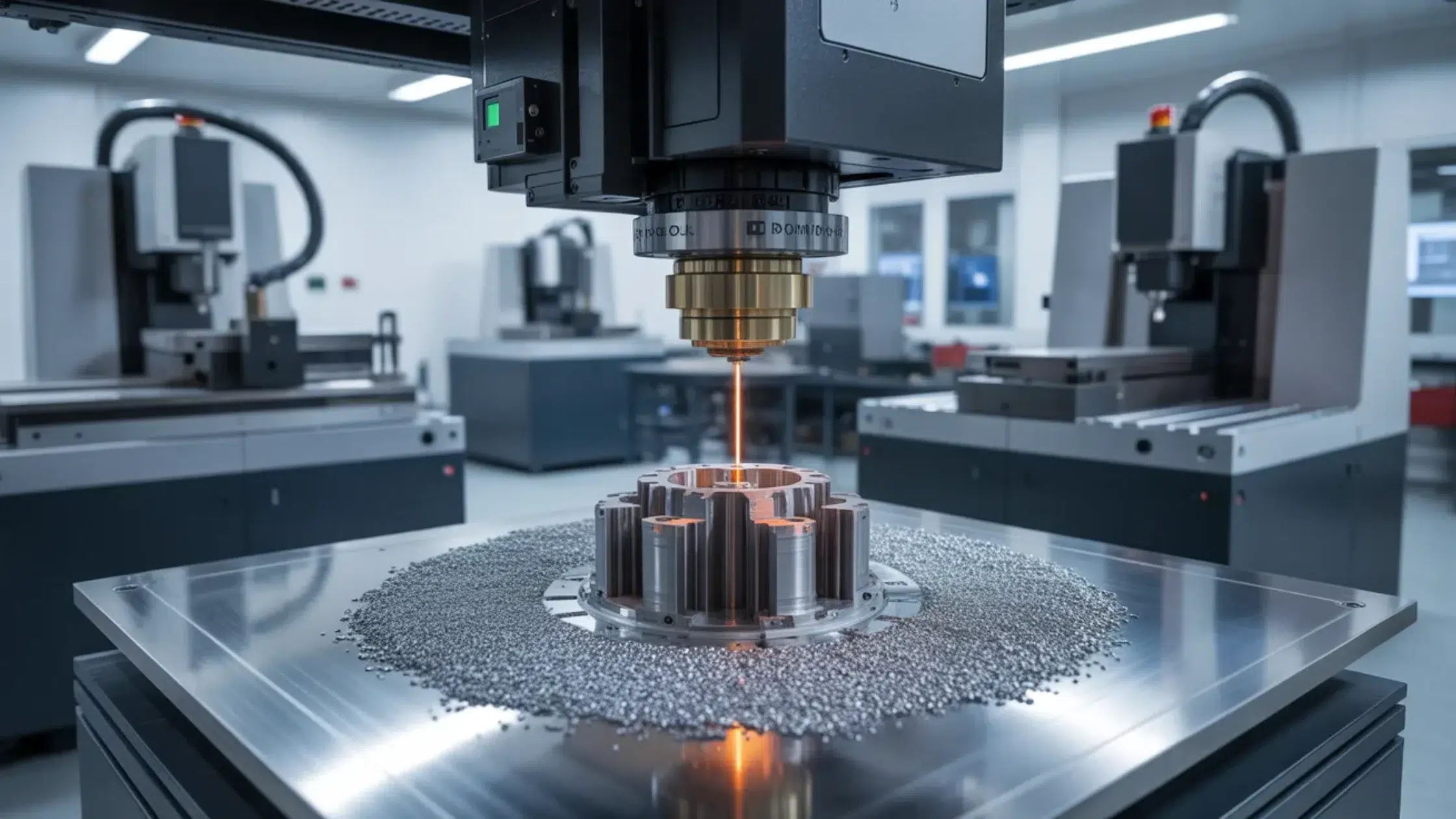
DMLS 3D printing isn’t replacing traditional manufacturing, it’s complementing it.
Smart manufacturers use both technologies strategically. They leverage DMLS for prototypes, complex tooling, and low-volume specialty parts. Then they use traditional methods for high-volume production.
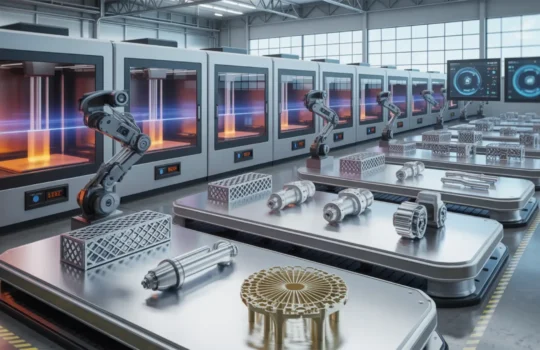
Hybrid manufacturing machines are booming in 2026. These systems combine additive and subtractive processes in one platform.
The economics are shifting too. DMLS machine costs dropped 30% since 2020 (now ₹2-8 crore). Metal powder prices in India decreased 20%. This makes metal additive manufacturing accessible to mid-sized Indian manufacturers.
Industry experts predict by 2030, over 50% of metal parts under 1kg will incorporate additive manufacturing.
Frequently Asked Questions
Is DMLS 3D printing expensive in India?
DMLS machines cost ₹2-8 crore initially. However, per-part costs for low volumes (under 1,000 units) compete favorably with traditional methods because you eliminate expensive tooling (₹8 lakh – ₹4 crore).
Can DMLS parts match traditional metal strength?
Yes. DMLS parts often exceed traditional strength due to optimized internal structures, near-full density (99.5%+), and minimal weak points.
How fast is metal 3D printing?
Small parts (under 100g) take 4-12 hours. Medium components need 1-3 days. Traditional methods require weeks for tooling but faster per-part production once setup is complete.
The Verdict: Choose the Right Tool
DMLS 3D printing doesn’t replace traditional metal manufacturing, it transforms your manufacturing strategy.
Use Direct Metal Laser Sintering for low volumes, complex designs, rapid prototypes, and customized parts. Choose traditional methods for mass production, simple geometries, and lowest per-unit costs.
The winning approach in 2026? Hybrid thinking. Leverage both technologies strategically.
Ready to explore DMLS for your next project? Contact Tesseract’s expert team for a free consultation. We’ll analyze your parts and recommend the optimal manufacturing approach, whether that’s DMLS, traditional, or hybrid manufacturing.
The future of metal manufacturing isn’t either/or. It’s both/and.