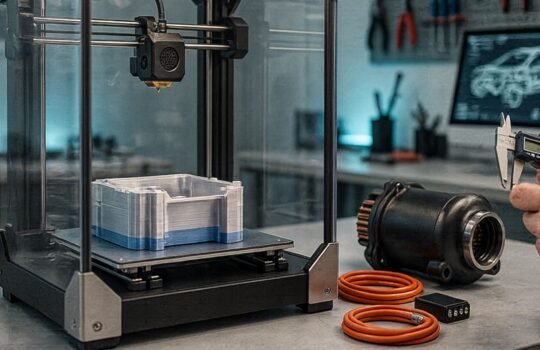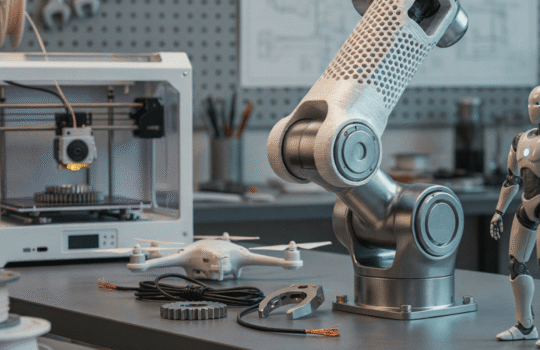
Aluminium 3D printing is reshaping how industry-grade components are designed and produced, from aerospace brackets to automotive heat exchangers. If you are a maker or builder working on functional metal parts, this is the technology stack you need to understand.
What Is Aluminium 3D Printing and Why Does It Matter?
Understanding DMLS for Aluminium
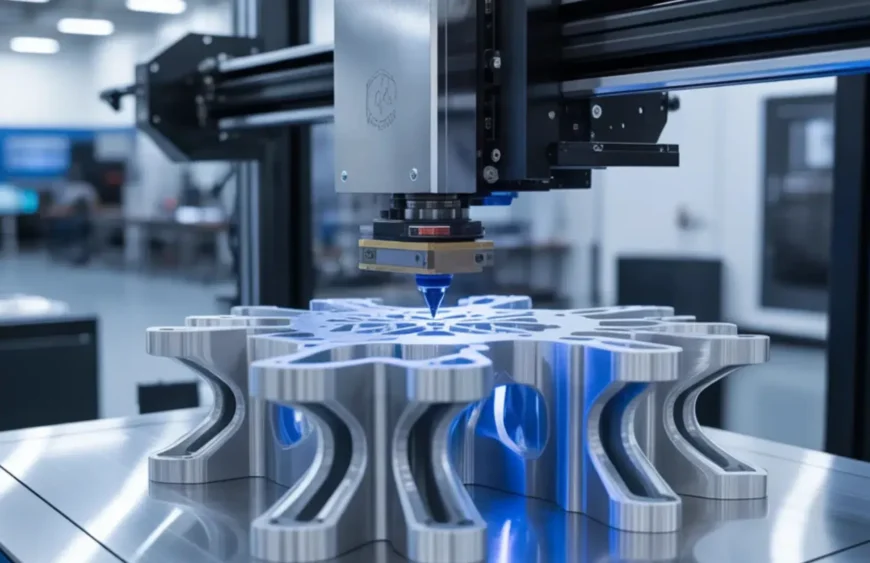
Aluminium 3D printing predominantly uses Direct Metal Laser Sintering (DMLS), a process that uses high-wattage lasers to micro-weld aluminium powder, layer by layer, into fully dense, functional metal parts. The most commonly used alloy is AlSi10Mg, valued for its excellent strength-to-weight ratio, good thermal properties, and hardness.
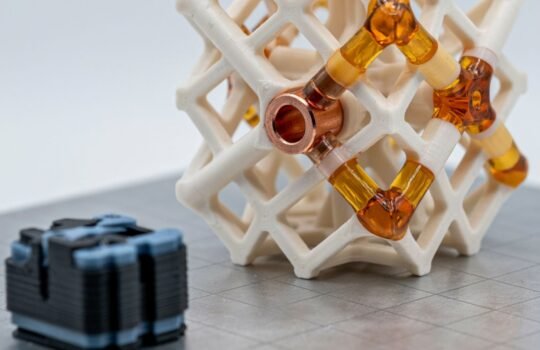
Unlike conventional machining or casting, DMLS requires no tooling, enabling complex internal channels, lattice structures, and organic geometries that are simply not achievable by traditional means.
Key Properties of 3D Printed Aluminium (AlSi10Mg)
- High strength and hardness with low weight
- Excellent thermal conductivity is ideal for heat management components
- Good dynamic and fatigue properties under load cycling
- Compatible with post-processing: anodising, powder coating, sandblasting
Aerospace: Lightweight Structural Components
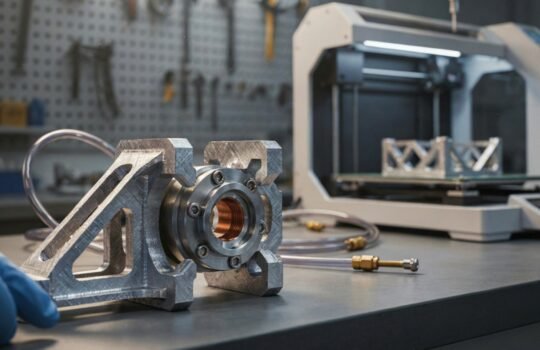
Weight reduction is the primary driver in aerospace engineering. Aluminium 3D printing enables engineers to produce topology-optimised brackets, housings, and structural nodes that are significantly lighter than their CNC-machined equivalents with no compromise on strength.
DMLS also supports the production of compact components with complex internal channels, essential for fluid or thermal management systems in aircraft. The elimination of tooling further allows rapid iteration during prototype phases, compressing development timelines.
- Topology-optimised mounting brackets and support structures
- Fuel system components with integrated internal channels
- Rapid prototyping of engine housings and ducting
Automotive: From Prototypes to Functional End-Use Parts
Accelerating 3D Product Design in Automotive
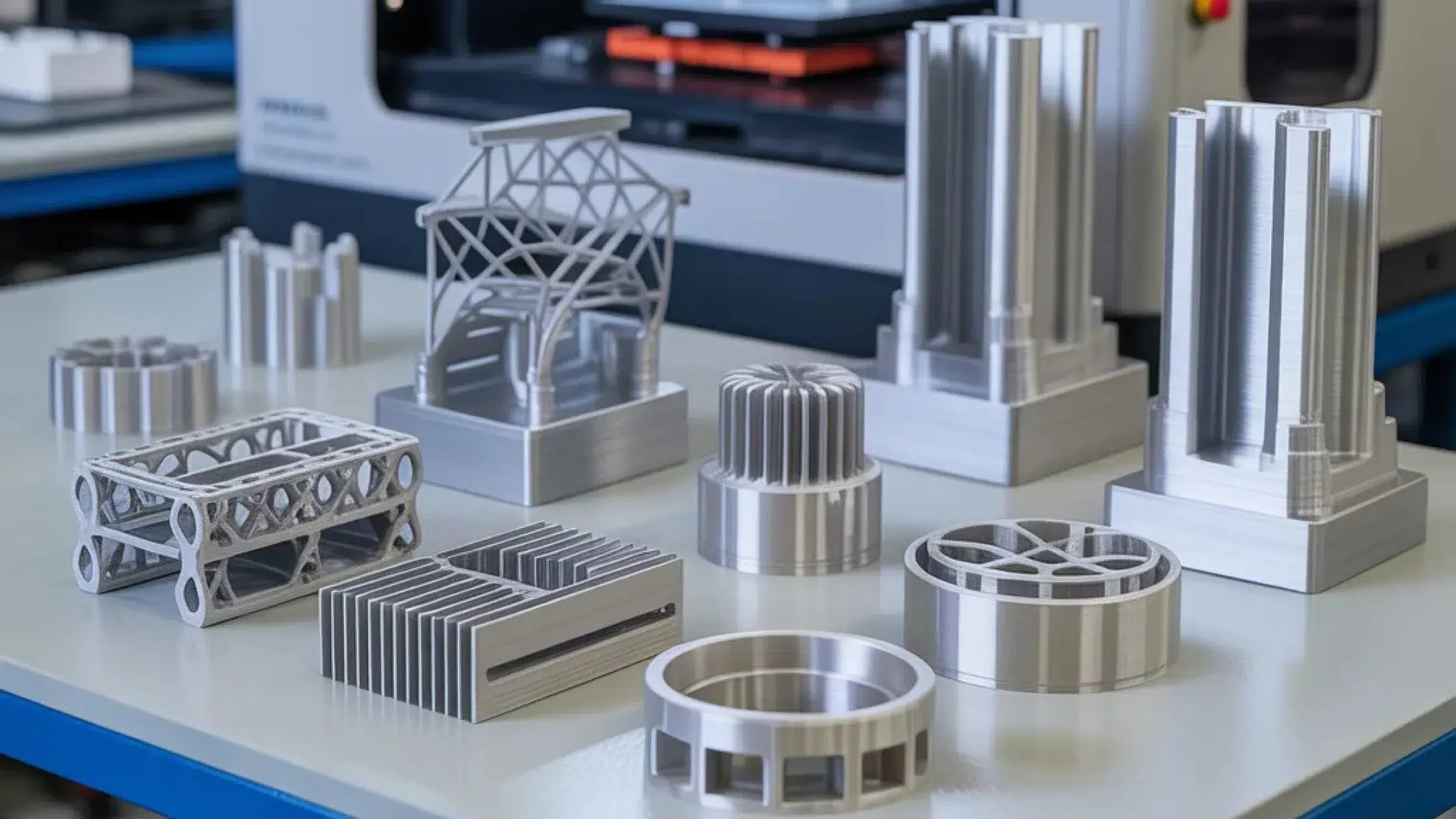
The automotive sector uses aluminium 3D printing at both the prototyping and production stages. Heat exchangers, intake manifolds, and custom brackets are now routinely produced using DMLS, especially for motorsport and EV platforms where performance-per-gram matters.
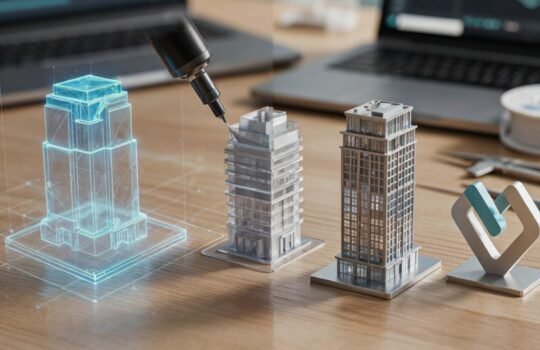
Pairing DMLS with a professional 3D product design workflow allows engineers to move from CAD concept to functional metal part within days, bypassing expensive tooling and long lead times associated with die casting.
- Custom heat exchangers and cooling channel geometries
- Intake manifolds with complex curved passages
- Lightweight suspension and chassis prototypes
- Motorsport and EV-specific hardware
At Tesseract, our DMLS 3D printing service in India handles aluminium parts for automotive clients from single prototypes to small production runs with typical turnaround times ranging from a few days to 2–3 weeks, depending on complexity.
Defence: Complex Geometries Under Operational Demands
Defence applications demand components that hold tight tolerances, resist heat, and survive mechanical stress while remaining as light as possible. Aluminium 3D printing delivers compact parts with highly complex anatomical shapes and surface textures that conventional manufacturing cannot replicate cost-effectively.
DMLS is particularly valuable for low-volume, mission-specific hardware where tooling investment is not justified. Custom enclosures, communication equipment housings, and UAV structural components are active use cases in this sector.
- UAV and drone structural frames
- Custom equipment housings with complex external textures
- Mission-specific low-volume hardware without tooling
Robotics & Electronics: Functional Aluminium at Scale
Where 3D Printing Service Meets Engineering Precision
Robotics teams and electronics manufacturers rely on aluminium 3D printing to produce end-effectors, motor mounts, and custom enclosures that need structural rigidity with minimal mass. The combination of good thermal properties and hardness makes AlSi10Mg suitable for components that must manage heat loads, such as custom heatsinks or motor housings with integrated cooling fins.
Accessing a professional printing service like Tesseract means you can produce a validated aluminium part, complete with post-processing such as anodising or powder coating, without owning any 3d metal printing infrastructure.
- End-effectors and grippers for robotic arms
- Custom heatsinks with optimised fin geometries
- Motor mounts and sensor housings
Oil & Gas and Industrial Equipment
Industries operating in high-pressure and high-temperature environments use aluminium DMLS parts for valve bodies, manifolds, and custom tooling inserts. The ability to integrate internal channels directly into the part geometry allows for conformal cooling and fluid routing that would require multiple conventional components, reducing assembly complexity and potential failure points.
DMLS eliminates costly tooling and allows low-volume spare parts to be produced on demand, directly from digital files, a significant operational advantage for industrial maintenance scenarios.
Post-Processing: Getting the Most from Aluminium Parts
Raw DMLS aluminium parts can be refined further to meet specific finish or performance requirements. Tesseract offers a range of post-processing options, including:
- Anodising improves corrosion resistance and surface hardness
- Powder Coating adds colour and surface protection
- Sandblasting creates a uniform matte finish
- Heat Treatment enhances mechanical properties
- Buffing / Polishing for aesthetic or functional surface requirements
Conclusion: Why Aluminium 3D Printing Belongs in Your Build Stack
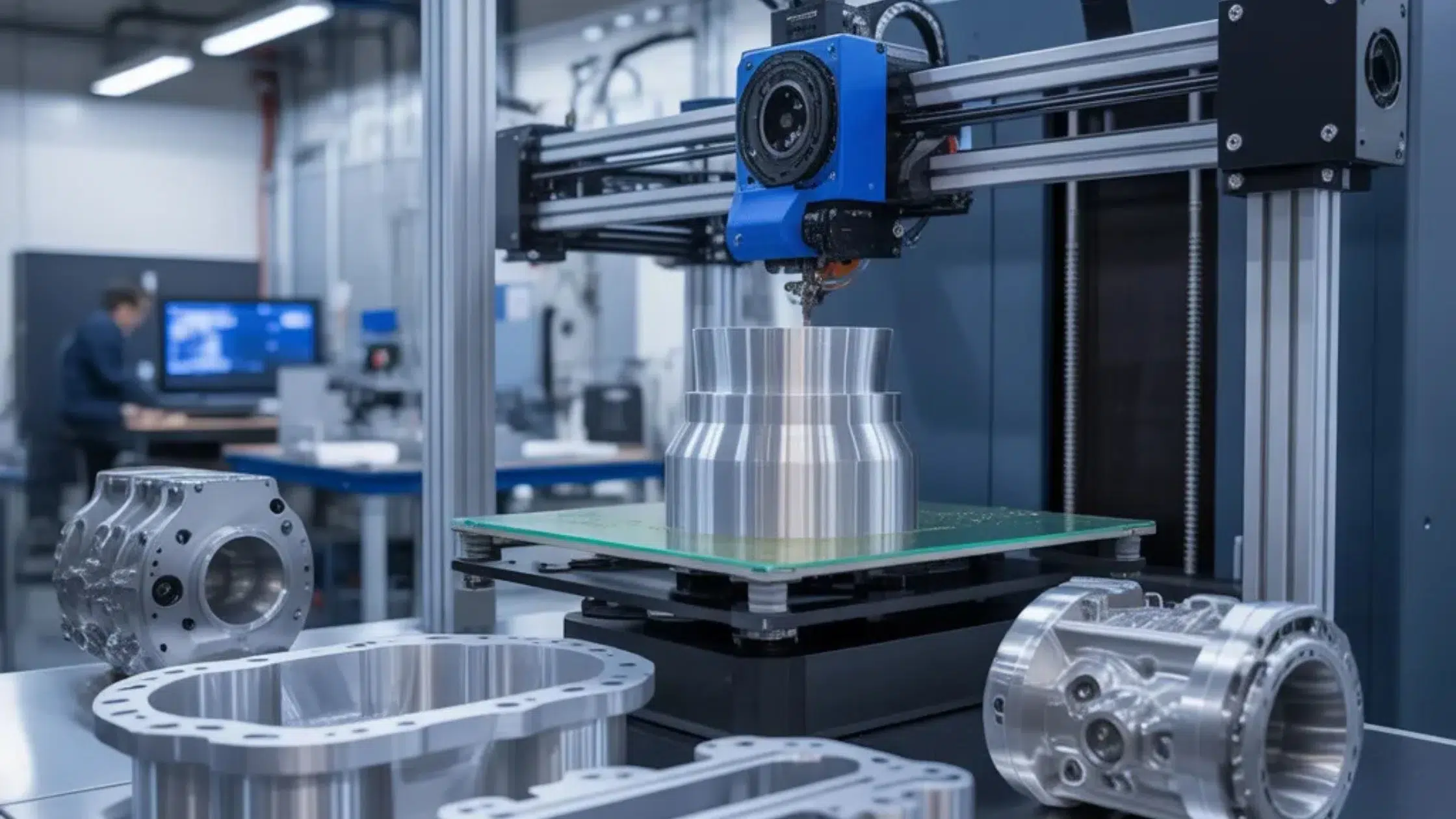
Aluminium 3D printing via DMLS is a proven, production-ready technology no longer experimental. For makers and builders, if your project needs a part that is lightweight, strong, and geometrically complex, this is the most efficient path from design to finished component.
No tooling. No minimum orders. No compromise on design freedom.
At Tesseract, we turn aluminium 3D printing concepts into ready-to-use parts backed by in-house DMLS capability, full post-processing, and teams in Mumbai and Boisar. Have a design ready? We are here to help you build it.
Frequently Asked Questions
What alloy is used in aluminium 3D printing?
The most widely used alloy in DMLS aluminium 3D printing is AlSi10Mg. It offers good strength, hardness, dynamic properties, and excellent thermal performance at low weight, making it suitable for structural and thermal management applications across aerospace, automotive, and robotics.
What is the difference between DMLS and SLS for metal parts?
SLS (Selective Laser Sintering) is typically used for polymer powders. DMLS (Direct Metal Laser Sintering) is a specialised form that micro-welds metal and alloy powders using high-wattage lasers, producing denser and structurally superior parts suitable for industrial and functional end-use applications.
How does aluminium 3D printing support 3D product design workflows?
Aluminium 3D printing works seamlessly with digital 3D product design. Designers can create topology-optimised, complex geometries in CAD that would be impossible to manufacture by traditional methods. DMLS then produces these directly from digital files, no tooling, no mould, no compromise on geometry.
Can I use a 3D printing service for small-batch aluminium production?
Yes. A professional 3D printing service like Tesseract accommodates single-piece prototypes through to small production runs in aluminium using DMLS. This makes it economical even for low volumes where traditional tooling costs are prohibitive.
Which industries benefit most from aluminium 3D printing?
Aerospace, automotive, defence, oil and gas, electronics, and robotics & automation are the primary industrial sectors. These industries share a need for lightweight, high-strength parts with complex geometries and short lead times, all strengths of DMLS aluminium printing.
What post-processing is available for aluminium DMLS parts?
Post-processing options include anodising, powder coating, sandblasting, heat treatment, electropolishing, and buffing/polishing. The right treatment depends on the functional requirement; for example, anodising improves corrosion resistance, while heat treatment can enhance mechanical strength.