India’s advanced manufacturing landscape is transforming. Metal 3D printing, once confined to aerospace labs in the West, is now actively powering sectors from automotive to healthcare across Indian cities. If you’re evaluating metal additive manufacturing for your business, this guide breaks down exactly what’s driving adoption and why 2026 is the pivotal year to act.
The Rise of Metal 3D Printing in India
India’s manufacturing sector, contributing nearly 17% to GDP, is under growing pressure to reduce time-to-market and cut tooling costs. Metal 3D printing addresses both. With government initiatives like Make in India and PLI schemes backing advanced manufacturing, demand for metal additive manufacturing services has surged significantly in 2025–26.
Key drivers accelerating adoption include:
- Shorter product development cycles in automotive and aerospace OEMs
- Rising need for patient-specific implants in healthcare
- Growing defence indigenisation is pushing complex part production
- Reduction in import dependency for precision components
Industries Being Transformed by Metal Additive Manufacturing
Aerospace & Defence
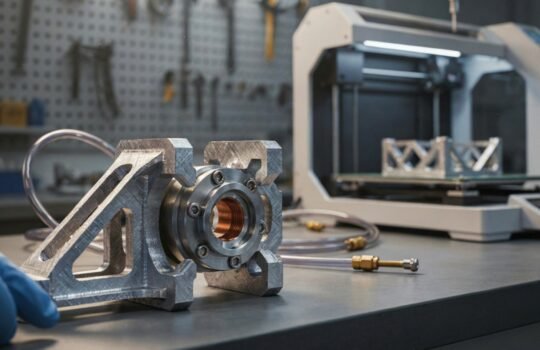
Organisations like ISRO and HAL are actively integrating metal 3D printing for rocket components, brackets, and heat exchangers. The ability to produce topology-optimised, lightweight parts in titanium and Inconel, impossible with conventional machining, gives India’s aerospace sector a genuine competitive edge.
Automotive
Tier-1 suppliers in Pune, Chennai, and Gurugram are using direct metal laser sintering (DMLS) and selective laser melting (SLM) to prototype jigs, fixtures, and functional engine parts. This cuts tooling lead times from weeks to days.
Healthcare & Medical Devices
Custom orthopaedic implants, dental prosthetics, and surgical tools are being manufactured with titanium alloys at sub-100-micron accuracy. Metal 3D printing service providers in India are now certified to ISO 13485, making medical-grade production feasible locally.
Industrial & Energy
From turbine blades to hydraulic manifolds, the energy sector benefits from printing complex geometries in stainless steel and nickel superalloys, reducing assembly count and improving performance.
Metal 3D Printing Technologies Available in India
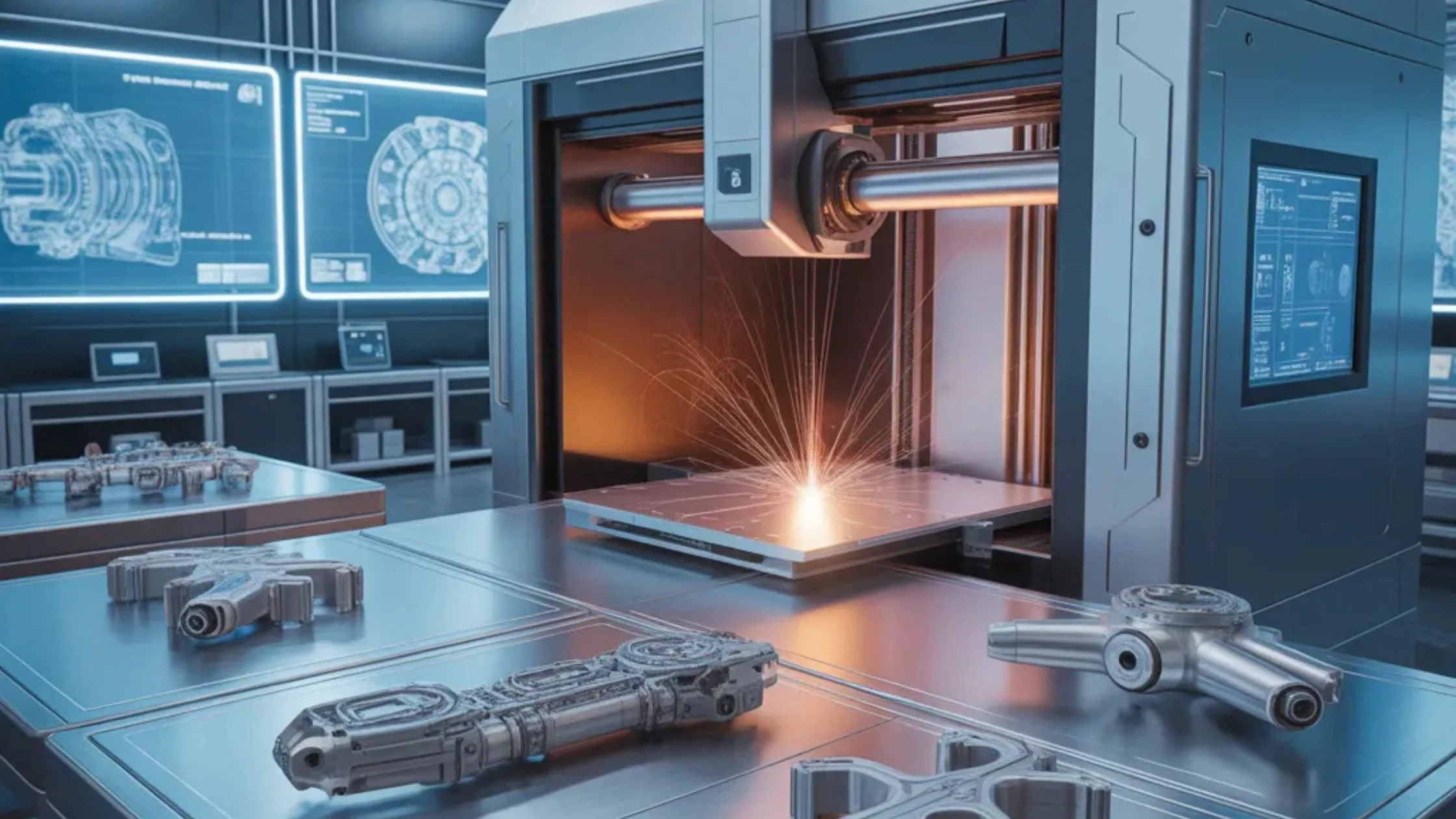
Leading metal 3D printing service providers in India now offer multiple process technologies:
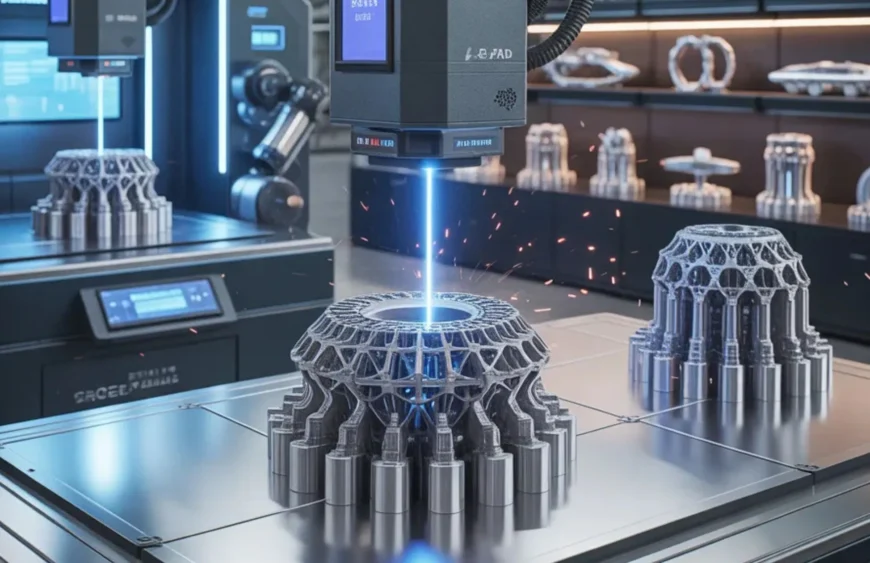
- DMLS / SLM: High-density, near-net-shape parts in steel, titanium, aluminium
- Binder Jetting is cost-effective for medium-volume runs
- DED (Directed Energy Deposition) Ideal for large-scale part repair and cladding
- Metal FDM: Entry-level metal printing for design validation
Vacuum Casting Service: A Complementary Solution
For product teams requiring functional polymer prototypes or low-volume production runs alongside metal parts, vacuum casting service is the go-to method. Using silicone moulds made from a 3D-printed master pattern, vacuum casting replicates production-grade finishes and material properties at a fraction of injection moulding costs.
At Tesseract, our vacuum casting service supports:
- Batch sizes of 5–50 units with fast turnaround
- Over-moulding, inserts, and multi-material casting
- Shore hardness customisation for rubber-like components
- Surface finishes match production intent
Combining metal 3D printing with vacuum casting gives engineering teams a full-spectrum prototyping-to-production bridge.
How to Choose the Right 3D Printing Service in India
Not all providers offer the same process capabilities, material range, or quality certifications. When evaluating a 3D printing service in India, consider:
- Does the material portfolio include titanium, Inconel, stainless steel, and aluminium alloys?
- Post-processing capabilities: HIP, heat treatment, CNC finishing, surface coating
- Quality certifications: ISO 9001, AS9100 for aerospace, ISO 13485 for medical
- In-house DFM (Design for Manufacturability) support
- Turnaround time and scalability from prototype to production
Why Tesseract Is India’s Trusted Metal 3D Printing Partner
Tesseract brings over a decade of hands-on metal additive manufacturing expertise to the Indian industry. From rapid prototyping of aerospace brackets to serial production of medical implants, we operate with a clear mandate to deliver precision, speed, and reliability.
Our integrated capabilities include metal 3D printing, vacuum casting service, CNC machining, and surface finishing, all under one roof. This means fewer vendor handoffs, tighter tolerances, and faster delivery for your programme.
Frequently Asked Questions
What metals can be used in metal 3D printing in India?
Common materials include stainless steel (316L, 17-4PH), titanium (Ti-6Al-4V), aluminium (AlSi10Mg), Inconel 625/718, and cobalt chrome. Provider availability varies. Tesseract offers most of these in-house.
How does metal 3D printing compare to traditional CNC machining?
Metal 3D printing excels at complex geometries, internal channels, and topology-optimised designs that CNC cannot produce. CNC is better for tight-tolerance prismatic parts. Many projects benefit from a hybrid approach.
What is vacuum casting, and when should I use it?
Vacuum casting uses silicone moulds to produce 5–50 high-quality polymer parts quickly. It’s ideal for functional prototypes, pre-production samples, and low-volume runs before committing to hard tooling.
How much does metal 3D printing cost in India?
Costs depend on material, part volume, complexity, and post-processing. Indicatively, DMLS parts in stainless steel can range from ₹5,000 to ₹80,000+ per part. A detailed quote requires CAD files and material specifications.
Is metal 3D printing suitable for end-use production parts?
Yes. With processes like DMLS and SLM, printed parts achieve 99.5%+ density, meeting or exceeding wrought material properties in many alloys. Industries, including aerospace and medical, routinely use metal 3D-printed end-use parts.