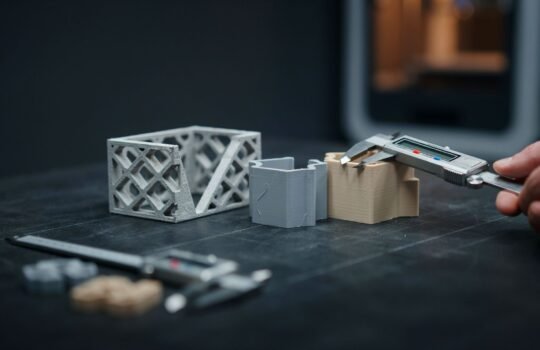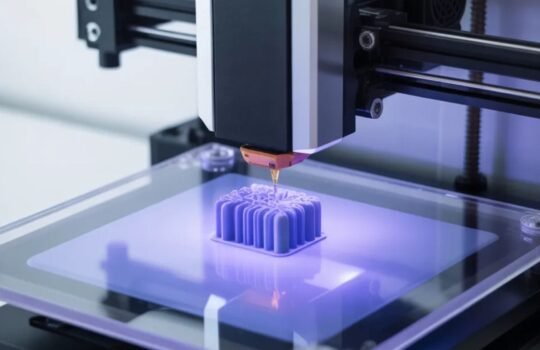
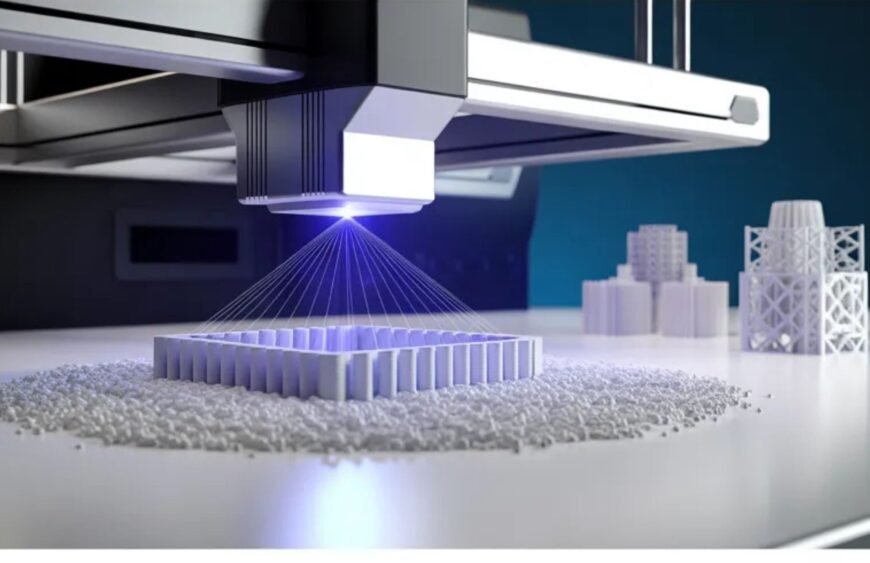
Selective Laser Sintering (SLS) is an additive manufacturing technique that uses a high-powered laser to sinter powdered material, typically nylon or polyamide, binding it layer by layer into a solid, functional structure defined by a 3D model.
For makers, engineers, and product designers, SLS represents one of the most powerful bridges between concept and end-use part, eliminating tooling costs, support structures, and long lead times.
How the SLS 3D Printing Process Works
Understanding the workflow helps you design better parts. Here’s the step-by-step:
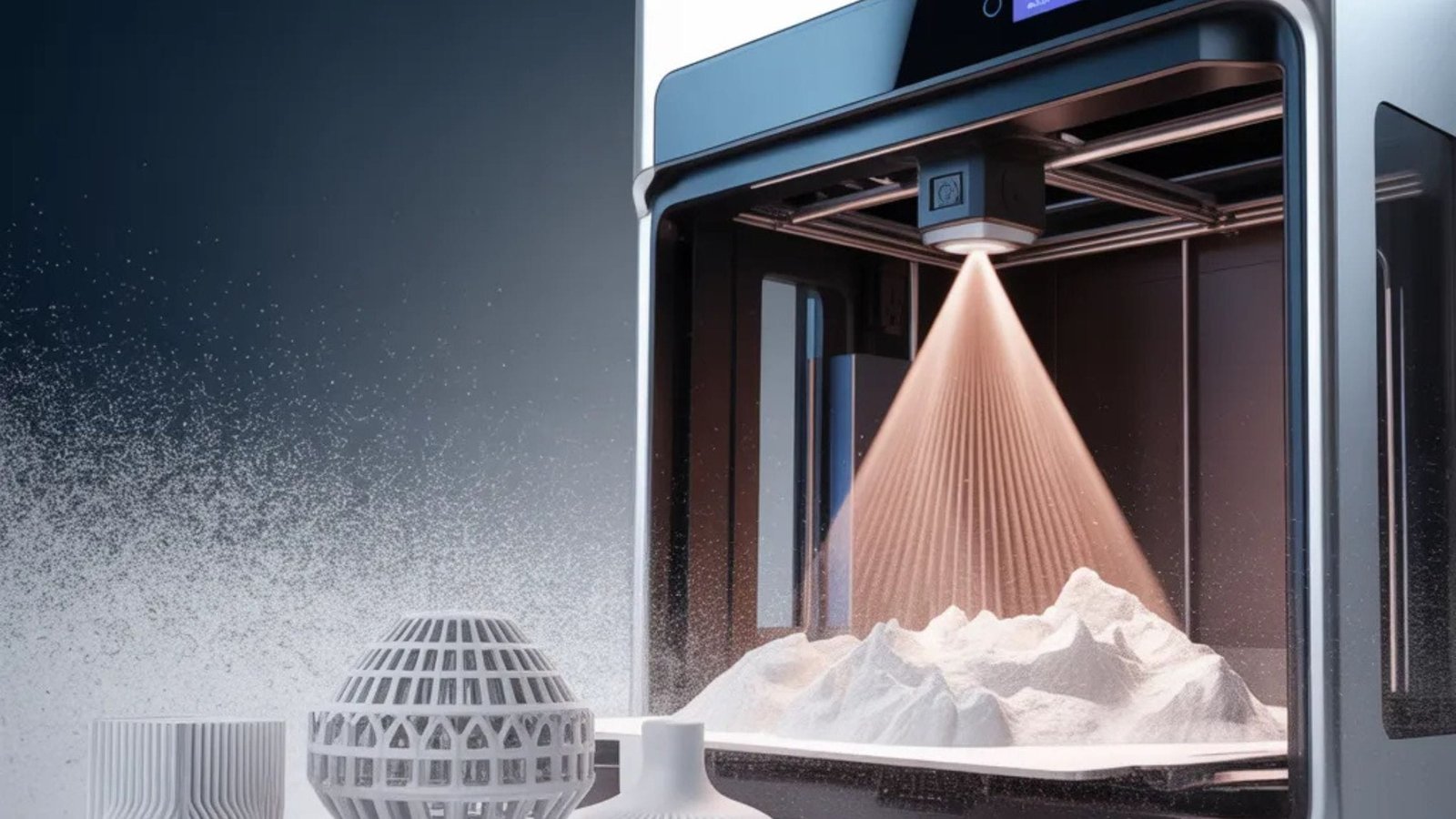
- Powder Bed Setup: The build chamber is loaded with fine thermoplastic powder (typically Nylon PA12 or PA11) and preheated to just below the material’s melting point.
- Laser Sintering: A high-powered CO₂ laser scans each cross-section from your CAD file, selectively fusing powder particles layer by layer.
- Layer Progression: After each layer, the platform lowers, fresh powder is spread, and the process repeats.
- Cooling Phase: Once printing is complete, the build chamber cools down before parts can be removed. This step may take up to 12 hours.
- Post-Processing: Parts are extracted from the unfused powder bed and finished via sandblasting, dyeing, or vapor smoothing.
A key advantage: with selective laser sintering, it is possible to produce parts with integrated functions that are lightweight, cost-efficient, and highly customised, making them ideal for prototyping, robotic assemblies, and gripping systems.
SLS vs. Direct Metal Laser Sintering (DMLS): Know the Difference
Both fall under the powder bed fusion family, but they serve different needs.
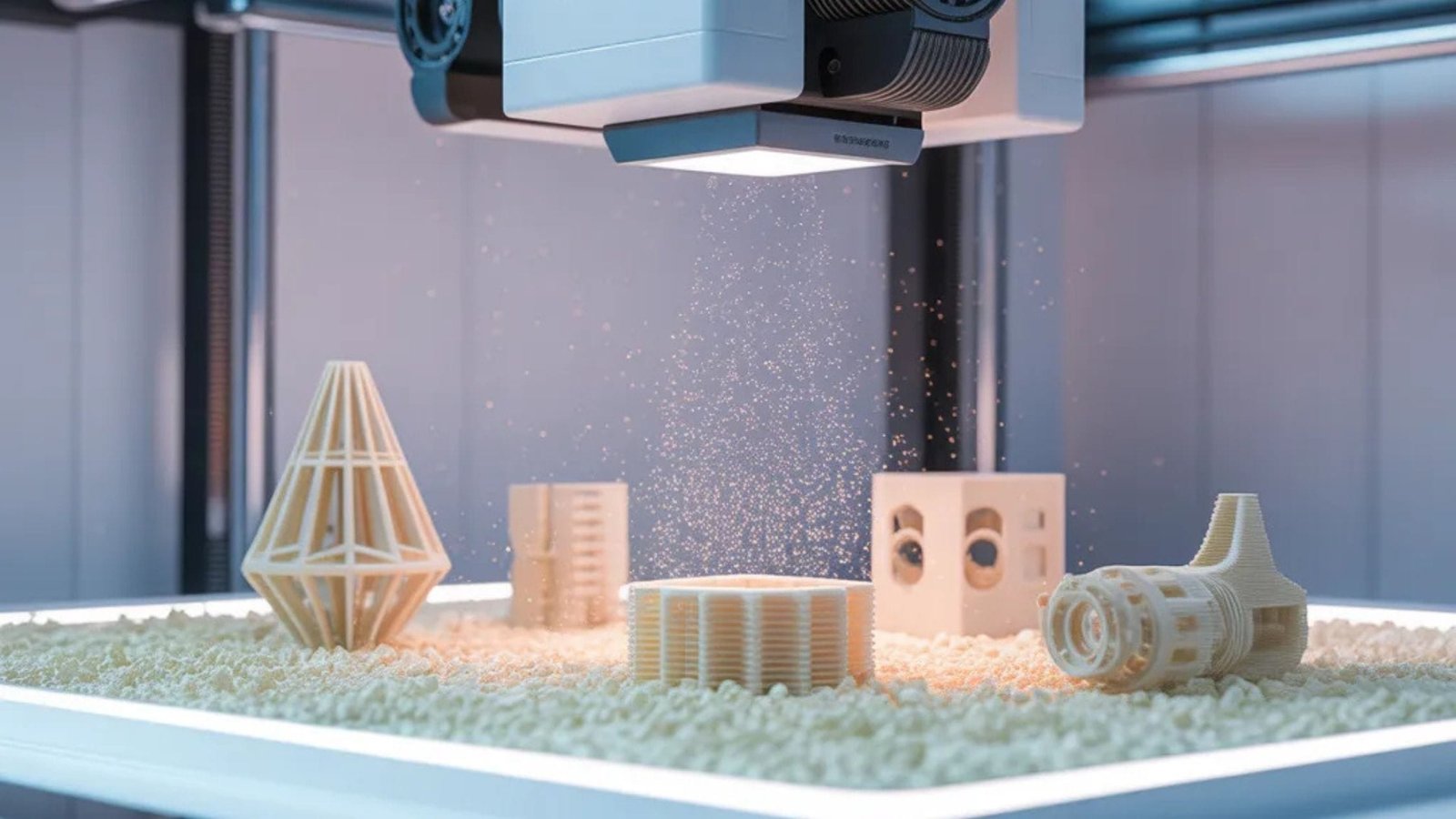
SLS primarily works with polymer powders, nylon, TPU, and composites, producing functional, lightweight parts without support structures.
Direct Metal Laser Sintering (DMLS), on the other hand, is the metal-grade evolution of the same principle. DMLS leverages high-wattage lasers to micro-weld powdered metals and alloys into fully functional metal structures, excelling in shaping materials like Aluminium, Stainless Steel, Titanium, and Inconel, providing denser, superior parts with limitless design potential. It is a game-changer for industries such as Oil & Gas, Aerospace, Automotive, Defence, and Medical.
At Tesseract, both SLS and DMLS services are available under one roof, making us your complete additive manufacturing partner for metal 3D printing in India.
SLS Materials: What Can You Print?
The right material depends on your application. Here are the most common SLS-compatible materials:
- Nylon PA12: The industry standard. High strength, dimensional accuracy, and chemical resistance.
- Nylon PA11: More flexible and impact-resistant; ideal for living hinges and snap fits.
- TPU (Thermoplastic Polyurethane): For flexible, rubber-like end-use parts.
- Glass-Filled Nylon: Enhanced stiffness for structural applications.
- Carbon-Filled Nylon: Electrically dissipative, used in electronics enclosures.
For metal applications via DMLS, common materials include Titanium (Ti6Al4V), AlSi10Mg Aluminium, 316L Stainless Steel, Inconel 625, and Cobalt Chrome.
Key Applications of SLS in 3D Product Design
SLS has become a go-to technology for 3D product design and functional prototyping across industries. Here’s where it excels:
Engineering & Rapid Prototyping
SLS enables engineers to prototype parts early in the design cycle, then use the same machine and material to produce end-use parts, drastically reducing product development time without expensive tooling.
Automotive & Aerospace
BMW Group produces up to 150,000 plastic and metal components annually using SLS 3D printing machines, representing a significant shift towards additive manufacturing in mainstream production.
Healthcare & Medical Devices
Patient-specific prosthetics, orthotics, surgical guides, and implant models are routinely produced with SLS due to the high geometric freedom and biocompatible material options.
Consumer Products & Robotics
Manufacturers are increasingly turning to SLS for lightweight, durable, end-use polymer components from robotic structural parts to wearable devices.
Why Metal 3D Printing in India Is Growing Fast
The Asia-Pacific region is expected to register the highest growth rate in the SLS equipment market, driven by rapid industrialisation and increasing government-backed investments in 3D printing across India, China, Japan, and South Korea.
In India specifically, sectors leading adoption include:
- Defence & Aerospace (DRDO, HAL, and private suppliers)
- Automotive (tooling, jigs, and prototype parts)
- Medical & Dental (CoCr crowns, custom implants)
- Industrial Engineering (conformal cooling inserts, complex fixtures)
Indian companies like Agnikul Cosmos have developed 3D-printed rocket engines with over 100 intricate components, highlighting the transformative potential of additive manufacturing in India.
Tesseract is proud to be among the leading providers of metal 3D printing in India, offering DMLS with precision-grade outputs for all the above sectors.
Tesseract SLS & DMLS Services: What We Offer
At Tesseract, our additive manufacturing suite for makers and builders includes:
- SLS 3D Printing: For complex polymer parts, functional prototypes, and short-run production
- DMLS (Direct Metal Laser Sintering): Fully dense metal parts in Titanium, Stainless Steel, Aluminium, Inconel, and more
- 3D Product Design & DFM Consulting: We help optimise your CAD files for SLS and DMLS before a single layer is printed
- 3D Scanning & Reverse Engineering: Capture legacy parts and convert them into print-ready models
- Post-Processing: Heat treatment, bead blasting, polishing, and surface finishing in-house
Whether you’re a hardware startup iterating on a product or an aerospace supplier needing certified metal components, Tesseract delivers end-to-end.
SLS Design Tips for Makers & Builders
Getting the most out of SLS starts with smart design. Keep these in mind:
- Wall Thickness: Maintain a minimum of 0.7–1 mm for structural integrity.
- Clearance for Moving Parts: Allow at least 0.5 mm between interlocking assemblies.
- Escape Holes: Include openings in hollow geometries to allow unfused powder to be removed.
- Orientation: Orient parts to minimise surface stair-stepping and optimise layer bonding.
- Nesting: SLS supports batch nesting, which allows multiple parts to be packed in a single build to reduce the cost per part.
The speed and versatility of SLS printing let product developers create physical snapshots of their designs through the iterative process, making it ideal for rapid design cycles.
Conclusion
Selective Laser Sintering is no longer just a prototyping tool it is a full-scale production technology trusted by aerospace giants, medical device manufacturers, and hardware startups alike. Its ability to produce complex, support-free geometries in engineering-grade materials makes it one of the most versatile additive manufacturing processes available today.
For builders and makers in India, the window of opportunity is wide open. As metal 3D printing in India matures and direct metal laser sintering becomes more accessible, the cost and time barriers that once slowed innovation are steadily disappearing.
At Tesseract, we combine deep expertise in 3D product design, SLS polymer printing, and DMLS metal printing under one roof so you move from concept to certified part faster, smarter, and with zero compromise on quality.
Frequently Asked Questions
What is the difference between SLS and DMLS?
SLS uses polymer powders (nylon, TPU) for plastic functional parts, while Direct Metal Laser Sintering (DMLS) uses metallic powders to produce fully dense metal components. Both are powder bed fusion processes but serve different material and application requirements.
Is SLS 3D printing suitable for end-use parts?
Yes. SLS parts exhibit mechanical properties close to injection-moulded components. With post-processing like vapor smoothing, they are suitable for end-use consumer products, industrial components, and even medical devices.
How accurate is SLS 3D printing?
SLS typically achieves tolerances of ±0.3 mm or ±0.1% of the part dimension, making it highly suitable for functional assemblies and precision components.
What metals can be printed via DMLS for metal 3D printing in India?
Common DMLS materials include Titanium Ti6Al4V, AlSi10Mg Aluminium, 316L Stainless Steel, Maraging Steel, Inconel 625/718, and Cobalt Chrome, all available through Tesseract metal 3D printing services.
How do I get started with 3D product design for SLS?
Upload your CAD file or connect with Tesseract’s design team. We conduct a Design for Additive Manufacturing (DfAM) review to ensure your part is optimised for SLS or DMLS before printing begins.
Why is SLS preferred over FDM for functional prototypes?
Unlike FDM, SLS requires no support structures, enabling complex internal geometries. Parts are isotropic (uniform strength in all directions) and use industrial-grade materials, making SLS far superior for functional testing and end-use applications.