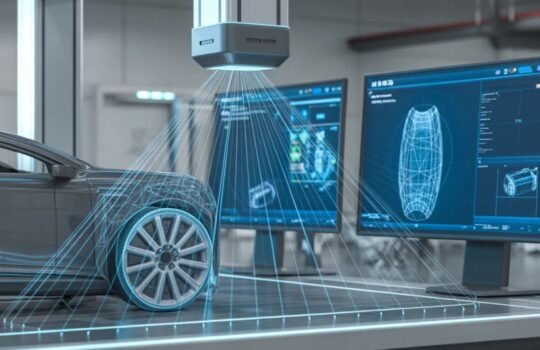
3D scanning for product development is the process of capturing an object’s exact shape, dimensions, and surface detail with a scanner, then converting that data into a digital 3D model for design, prototyping, and manufacturing. It replaces manual measurement and physical trial-and-error with precise, data-driven models – cutting design iteration time and reducing the need for costly physical prototypes.
In today’s fast-paced world, businesses need innovative tools to stay ahead, and 3D scanning is revolutionizing how products move from concept to market. It’s widely used across automotive, aerospace, healthcare, and consumer goods industries. In this blog, we cover how 3D scanning works, its key benefits, and how it fits into modern product development workflows.
The Evolution of Product Development
Traditional product development relied heavily on manual measurements, physical prototypes, and extensive trial and error. These methods laid the foundation for innovation but were often time-consuming, costly, and prone to inaccuracies.
Digital technologies like 3D scanning have redefined how products are designed and manufactured. By capturing detailed 3D data of physical objects, this technology eliminates guesswork and enables precise, data-driven decisions at every phase of development.
Key Drivers of Change
- Demand for Precision: Modern products require intricate designs and exact specifications, which 3D scanning delivers with high accuracy.
- Faster Time-to-Market: Businesses need to streamline processes to stay competitive, and 3D scanning speeds up design iterations and prototyping.
- Integration with Advanced Manufacturing: Technologies like 3D printing complement 3D scanning, creating seamless workflows from digital model to physical part.
What is 3D Scanning and How Does it Work?
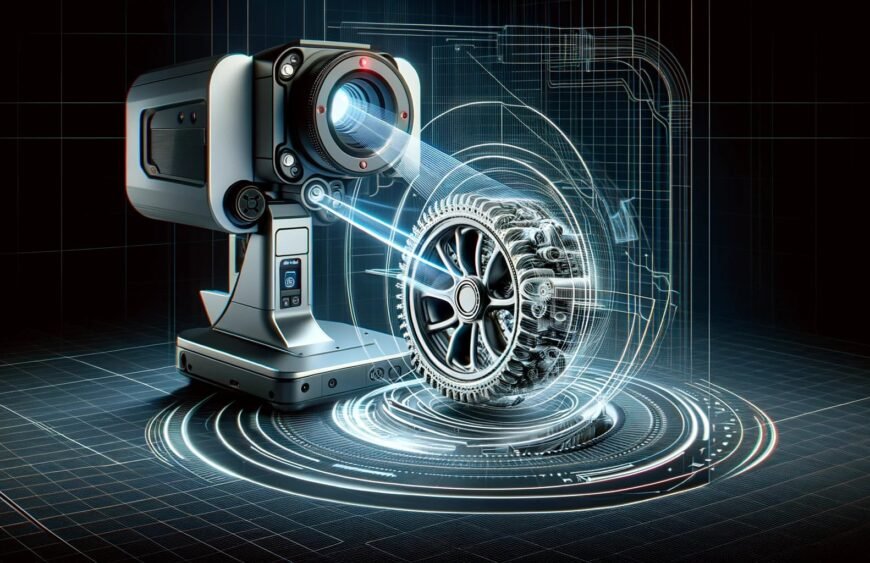
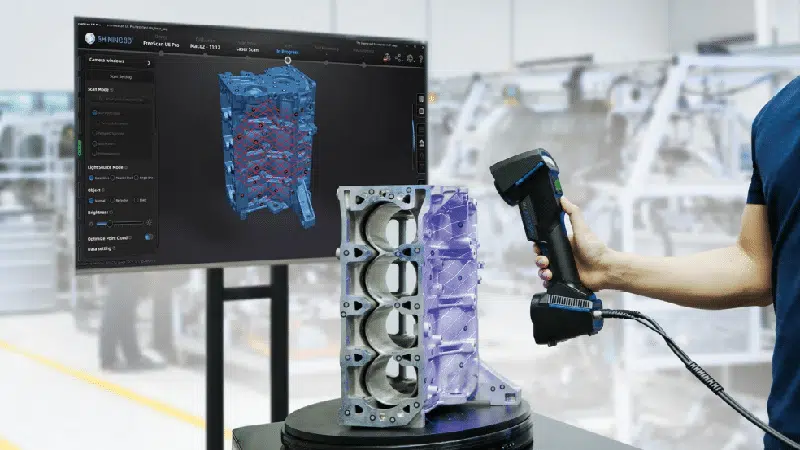
3D scanning is a groundbreaking process that captures the physical shape, dimensions, and surface details of an object and converts them into a digital format. Using advanced techniques such as laser scanning, structured light, or photogrammetry, 3D scanners collect millions of precise data points, known as a point cloud. These data points are then processed to create a detailed, three-dimensional model of the object.
This digital model serves as a foundation for various applications, including design optimization, reverse engineering, quality inspection, and rapid prototyping.
The Process of 3D Scanning
- Data Capture: The scanner uses lasers, light patterns, or photographs to capture the geometry and surface details of the object.
- Point Cloud Generation: The raw data collected is converted into a dense point cloud representing the object’s dimensions.
- Model Reconstruction: Specialized software processes the point cloud into a digital 3D model, ready for analysis or manufacturing.
- Post-Processing: The model can be refined, modified, or integrated with other design tools to meet specific project requirements.
Benefits of 3D Scanning in Product Development

3D scanning has transformed the way products are designed and developed. By capturing precise measurements and details of physical objects, it allows designers to create highly accurate digital models. These models can be modified and optimized without the need for repeated physical prototypes, saving both time and resources. Reverse engineering further enables the replication or improvement of existing products, driving innovation.
- Speed: Accelerates the creation of prototypes and reduces time-to-market.
- Cost Efficiency: Reduces material waste and the need for physical iterations.
- Innovation: Facilitates reverse engineering, enabling new designs and solutions.
- Versatility: Adapts to a wide range of industries, including automotive, healthcare, and aerospace.
Faster Prototyping and Development
With 3D scanning, the process of creating prototypes is significantly accelerated. The ability to seamlessly integrate scanned data into CAD software allows for quicker iterations and adjustments — crucial for industries aiming to bring products to market faster.
Sustainable and Cost-Efficient Development
3D scanning supports sustainable practices by minimizing material waste and reducing the need for physical prototypes. It also cuts costs by streamlining workflows and enabling better decision-making throughout the product lifecycle.
Challenges and Opportunities in 3D Scanning
Overcoming Barriers to Adoption
While 3D scanning is transformative, it comes with challenges like high initial costs, complex software, and the need for skilled operators. Smaller businesses may find it difficult to justify the investment. However, advancements in technology and affordability are steadily addressing these barriers.
The Road Ahead
The future of 3D scanning is bright, with trends like AI integration, portable scanners, and cloud-based solutions driving innovation. These advancements promise faster processing, improved accuracy, and broader accessibility.
Why Tesseract is the Right Partner for Your 3D Scanning Needs
Tesseract is a leader in delivering innovative 3D scanning and printing solutions tailored to modern product development needs. With state-of-the-art equipment, a highly skilled team, and extensive experience across industries, Tesseract ensures precision and efficiency in every project.
Proven Success Across Industries
Tesseract expertise spans various sectors, including automotive, aerospace, healthcare, and consumer goods. By offering customized solutions, the team has consistently helped clients reduce costs, improve accuracy, and bring products to market faster.
Conclusion
3D scanning is transforming product development by enabling precise designs, faster prototyping, and sustainable practices. Its impact spans industries, driving innovation and efficiency. Partnering with experts like Tesseract ensures seamless integration and maximizes the benefits of 3D scanning.
Frequently Asked Questions
What is 3D scanning used for in product development?
3D scanning is used to capture accurate digital models of physical objects for design optimization, reverse engineering, quality inspection, and rapid prototyping.
What’s the difference between 3D scanning and reverse engineering?
3D scanning captures the raw geometric data of an object as a point cloud. Reverse engineering uses that scanned data to reconstruct a fully editable CAD model, often to replicate, modify, or improve an existing part.
Which industries use 3D scanning most?
3D scanning is widely used in automotive, aerospace, healthcare, and consumer goods industries – anywhere precise digital models of physical parts are needed for design, inspection, or production.
What are the main challenges of adopting 3D scanning?
High initial equipment costs, complex software, and the need for skilled operators are the main barriers – which is why many businesses choose to work with a specialized 3D scanning service rather than invest in-house.